
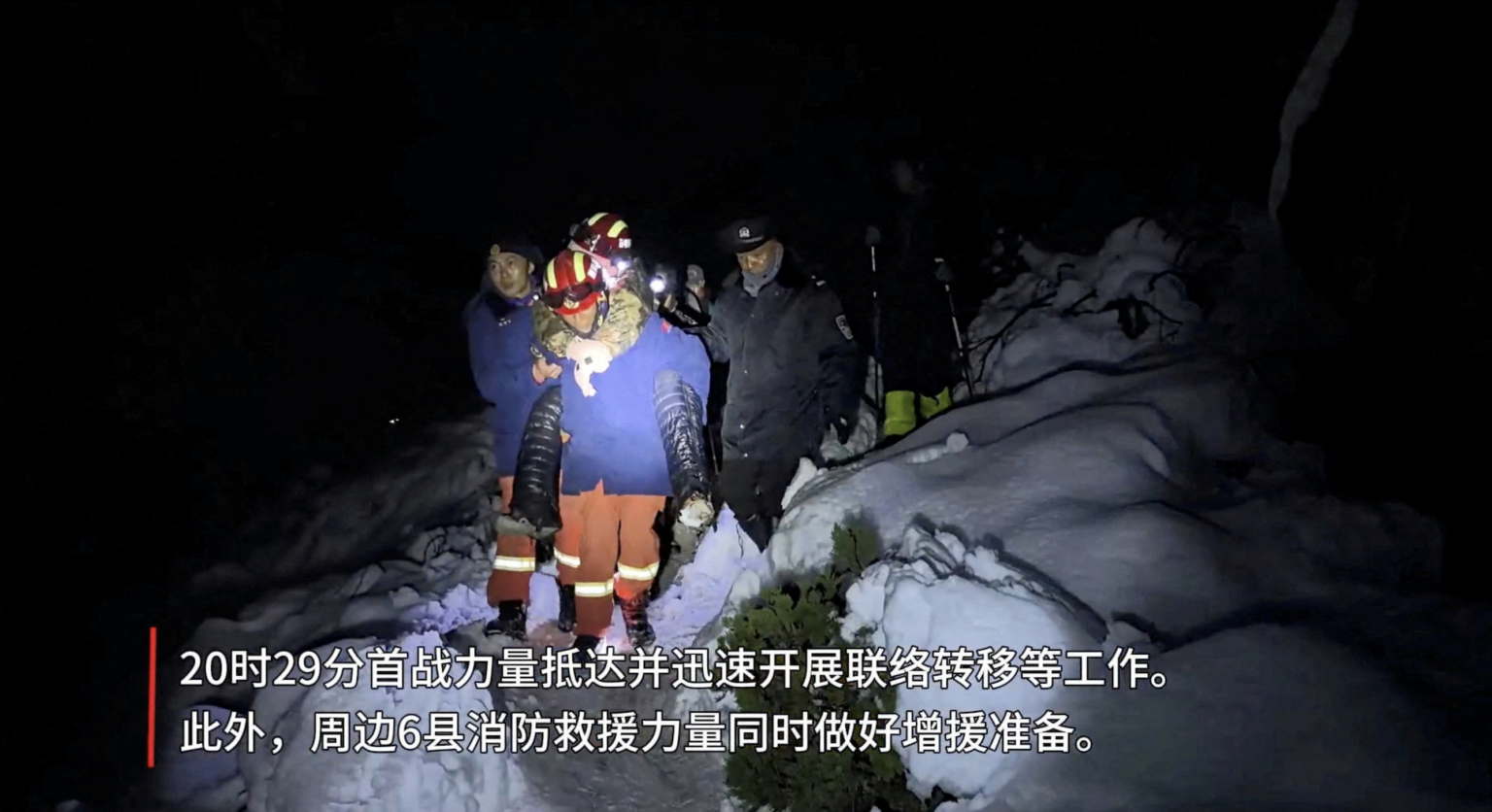
The evacuation of over two hundred tourists stranded on the Kangshung Face of Mount Everest in Tibet's Karma Valley is expected to be completed by Tuesday. During the eight-day holiday that began in China on October 1, thousands of mountain hikers were drawn to the interior of the country.
However, the sudden snowstorm over the weekend made it impossible for hundreds of them to return safely.
Rescue efforts began on Monday, one day after heavy snowfall blocked roads at an average altitude of 4,200 meters above sea level.
On Sunday alone, about 350 tourists were brought to safety, while hundreds more were still waiting to be rescued. Officials did not initially provide a detailed statement on the situation.
One of those evacuated is 41-year-old Eric Wen, who described the dramatic return to civilization. “Luckily, some people had been ahead of us and left tracks in the snow that we could follow. Otherwise, we wouldn't have made it,” he said. He added that he had to walk 19 kilometers through deep snow to leave the valley.
Wen and his companions finally reached the Tibetan capital Lhasa on Monday. The Karma Valley is considered by travelers to be one of the last relatively untouched regions – in contrast to the barren north face of Everest, it is covered with lush vegetation and pristine alpine forests fed by glacial meltwater.
But the drama is not only unfolding in Tibet. In the Qilian Mountains on the border between Qinghai and Gansu provinces, a tourist died on Sunday from hypothermia and acute altitude sickness after being trapped by a snowstorm. By Monday evening, 213 people had been brought to safety in the region, Chinese state television CCTV reported.
Further restrictions also apply in northwestern Xinjiang. There, authorities banned hiking and camping in the Kanasi Lake area of the Altai Mountains on Tuesday. A police patrol had encountered a group of sixteen tourists over the weekend, one of whom had to be taken to hospital with symptoms of hypothermia. According to local media, he is now in stable condition.
Rescue workers and police also persuaded more than 300 other tourists to abandon their plans for trips to the mountains. The roads, which were covered with ice and snow over the weekend and also blocked tourist transporters, have since been cleared.
However, authorities warn that the risk of further snowstorms remains high and are urging residents and visitors alike to avoid remote mountain regions.
(reuters, lud)