
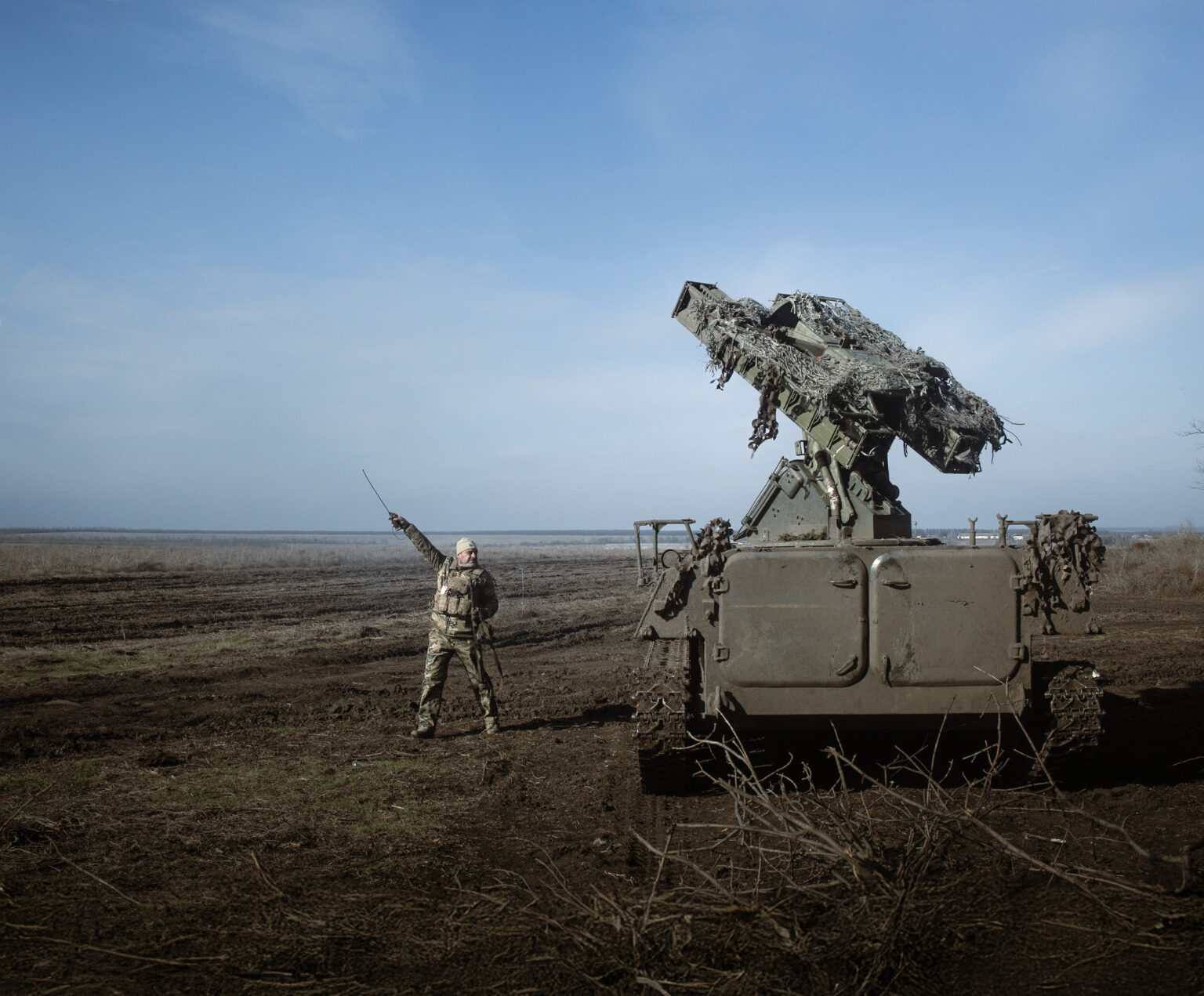
At the end of September, representatives of the European Commission (EC), Ukraine, and the defense ministers of nine countries on the eastern flank of the EU and NATO—Slovakia, Hungary, Estonia, Latvia, Lithuania, Finland, Poland, Romania, and Bulgaria—took part in a joint video conference.
The aim of the meeting, which was convened by Lithuanian EU Commissioner for Defense Adrius Kubilius, was to discuss accelerating the construction of a so-called drone defense wall along the EU's eastern border. The head of EU diplomacy, Kaja Kallasová, was also present.
“Ambitions of the elites”
The defense ministers agreed that the establishment of a drone defense wall is urgently needed. The Kremlin described efforts to prevent Russian drones from entering the alliance's airspace as “personal ambitions and political games of the ruling elites of the EU.”
According to Kubilius, the project is still in its early stages. It is said to be a combination of sensors, various weapons, and jamming systems that can detect and neutralize approaching drones.
He considers it essential to procure more modern drone detection systems, which are currently lacking in the Union. He also emphasizes the need to continue developing a detailed conceptual and technical plan.
NATO Secretary General Mark Rutte welcomed the EU initiative. In his opinion, the alliance's member states cannot afford to spend millions on missiles to destroy drones that cost only a fraction of that amount—often just a few thousand euros.
The Slovak model
According to Defense Minister Robert Kaliňák (Smer), Slovakia attempted to implement its own, more cost-effective model aimed at “eliminating the drone threat itself.”
“There is an extremely expensive difference between what a drone can do, i.e., the damage it can cause, and what this missile means. That is why we talk about multi-layered air defense,” Kaliňák said at the end of September on the discussion program Politika 24 on Joj 24.
The Slovak Air Force's F-16 fighter jets are ineffective against drones (they will not be operational until 2026), and the 12 Black Hawk helicopters that could theoretically be used against drones were purchased by our armed forces without weapons.
Lessons from neighbors
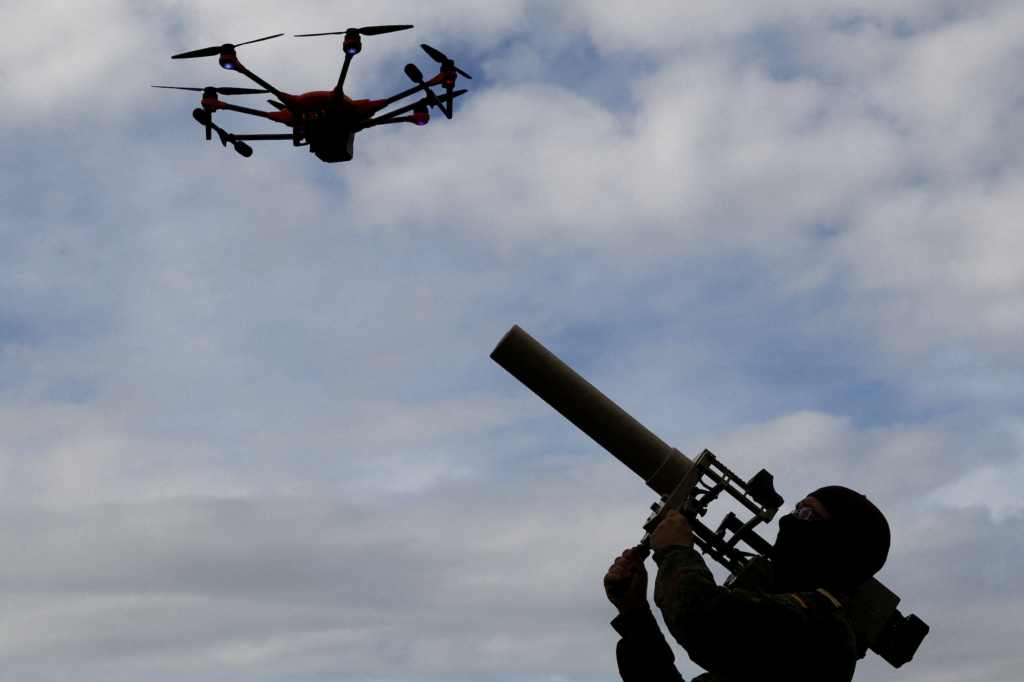
The Russian invasion of Ukraine has not only contributed to the development of combat with drones, but also to the development of countermeasures against them.
Initially, these were exclusively improvised cages welded onto wheeled and tracked vehicles (not only armored) vehicles and tanks, reminiscent of the street fighting in Berlin at the end of World War II, when the Soviet Red Army protected its machines in a similar way from the widespread German Panzerfaust cumulative projectiles and Panzerschreck anti-tank missiles.
Gradually, however, it came to the installation of drone protection directly on the assembly line on both sides of the conflict in Ukraine. To ensure the smooth running of logistical supplies and services, the Ukrainians are installing drone protection nets above the roads.
Not all drones are the same
Similar measures help in attacks with FVP drones, which are controlled by the operator in real time. The operator can see the target until impact thanks to a camera on the drone. FVP stands for “First Person View.”
These small drones are used both to kill people and to disable larger technical devices – they were used, for example, during Operation Spider's Web.
In addition to small drones for tactical use, there are also large drones for strategic use, which, unlike their smaller counterparts, do not take off from the ground or from the hand, but are launched like a rocket from a ramp.
Both types of drones have their advantages and disadvantages and resulting applications. However, NATO airspace was not disrupted by small FVP drones, but by large suicide drones (in Poland) and reconnaissance drones (in Romania) with pre-programmed routes.
Drones against drones
It is financially disadvantageous and unsustainable in the long term to use an anti-aircraft missile (PVO) or fighter jet against every large drone.
The US Army has developed several laser weapons to destroy drones, but will only introduce some of them after testing next year.
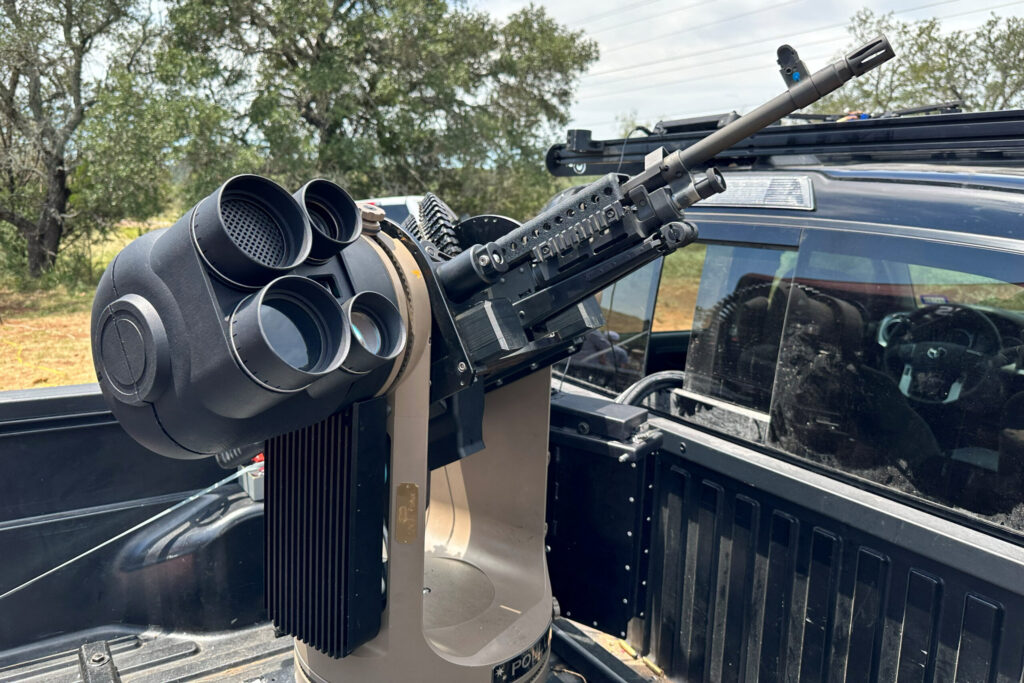
In August, the American Bullfrog anti-drone guns, which are controlled by artificial intelligence, were also tested under non-combat conditions, but it is still too early to talk about their use in Europe.
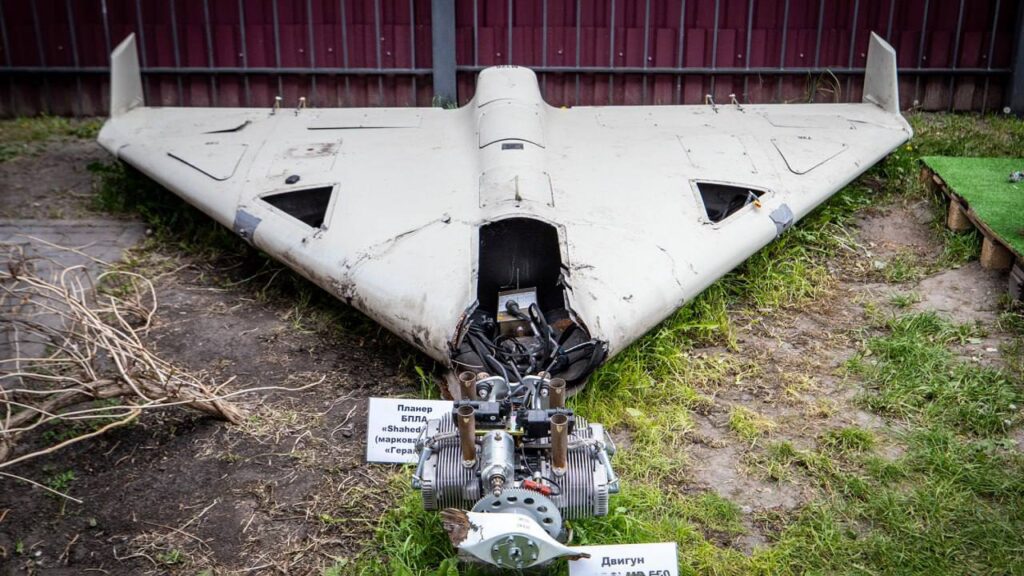
A missile from the Patriot air defense system costs €3.7 million, and the US can produce 650 of them per year. In contrast, Russia produced more than 6,000 Shahed drones last year and is receiving more from Iran – in June of this year alone, Moscow sent more than 5,000 suicide drones against Ukraine.
To combat them, the Ukrainian defense forces are using domestically produced Sting four-rotor FPV drones. While the price of a Ukrainian quadcopter is around €1,800, the Russian Shaheed drone it neutralizes costs more than €29,000.
The first video of an attack on a flying Shaid with a small FPV drone was recorded on May 19 this year and marked a breakthrough in drone defense.
On October 4, the Ukrainians demonstrated the effectiveness of the Stings directly in Denmark, outlining the future of creating an anti-drone wall in Europe.
At the end of September, the UK confirmed that it would work with Ukraine to build a protective wall against the Russian air threat using drones – specifically, Ukrainian drones manufactured in the UK.
Of course, in addition to a supply of helicopters, the imaginary wall against drones on the eastern flank of NATO and the EU must also be equipped with high-quality radar devices of various types that are capable of detecting the movements of suicide or reconnaissance drones in a timely manner.
Based on this information, NATO operators can deploy their FVP drones against enemy drones and successfully neutralize them before they threaten military or civilian targets in the Alliance's territory.
However, other weapons must also be available in case the FVP drone operators fail – in the foreseeable future, the use of American laser and machine gun anti-drone weapons is therefore also to be expected.
However, it cannot be ruled out that Slovakia and other countries on the eastern flank of the alliance will begin to build up their anti-drone defenses on their own. The anti-drone wall project in its current form has been criticized and essentially rejected by German Chancellor Friedrich Merz and French President Emmanuel Macron, the representatives of the two strongest economies in the EU and the European part of NATO.