
Ukraine has been working hard for several years to join the European Union. It has had candidate status since 2022 and began accession negotiations in 2024. After our eastern neighbor's accession to NATO proved politically unrealistic following the Trump administration's inauguration, Ukraine sees membership in the Union as a guarantee of its security against Russian aggression.
However, the admission of a new member to the club of EU countries requires a unanimous decision by all member states in the Council. Each stage of the accession process is subject to unanimous approval, with each member state able to block accession at any time with its veto. These principles are enshrined in Article 49 of the Treaty on European Union.
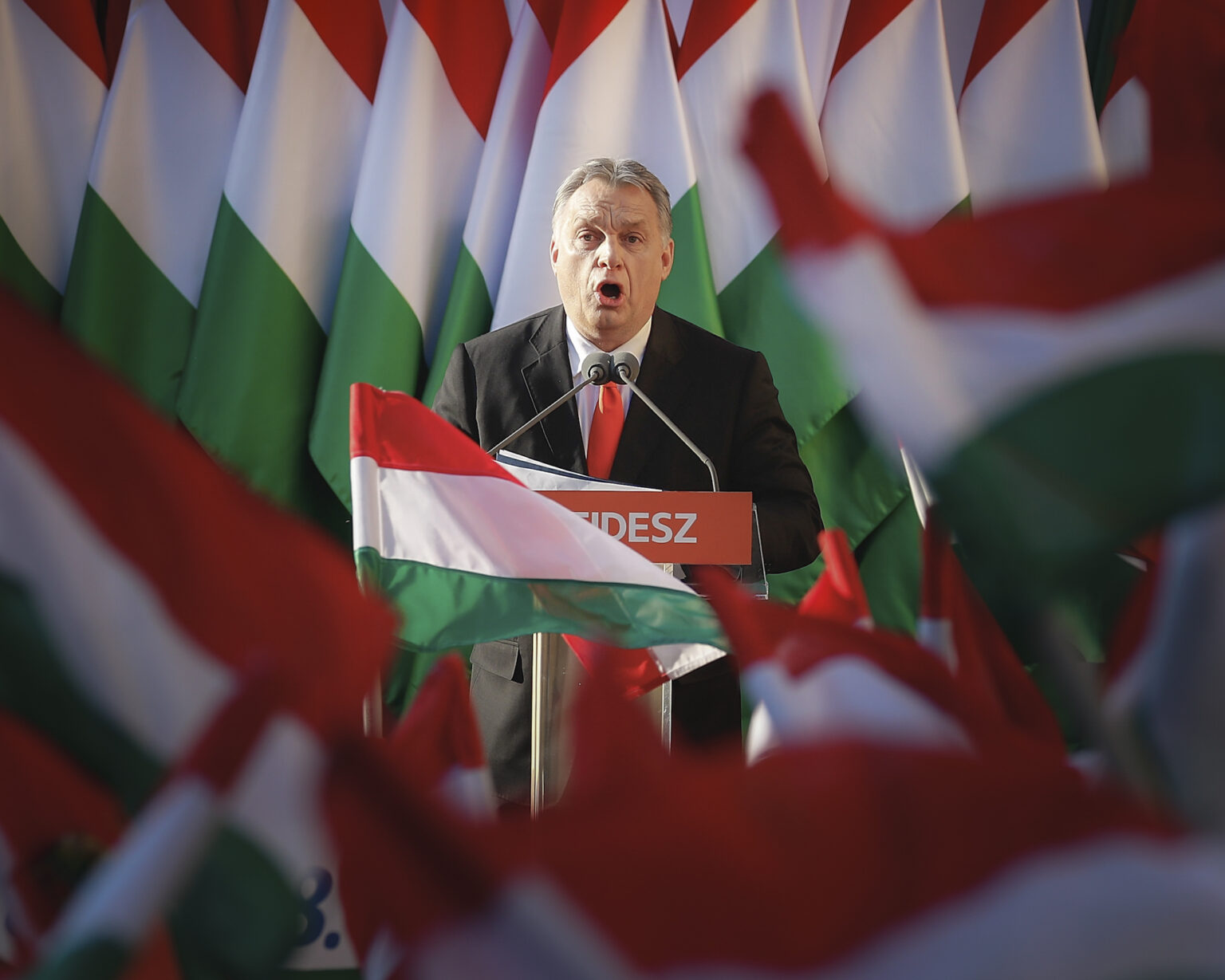
Ukraine's membership and transition to the next phase of negotiations are openly blocked by Hungary under the leadership of Viktor Orbán, who is primarily concerned about energy security, agriculture, and the impact of the Russian war, but also criticizes the situation of the Hungarian minority in Ukraine.
Ukrainian President Volodymyr Zelensky did not hesitate, as part of his efforts to join the EU, to threaten Hungary that Ukraine would continue its attacks on the Druzhba oil pipeline if Hungary did not stop blocking its accession to the community.
EU leaders are not even bothered by deliberate military actions with energy and security policy consequences for a member state of the Union and continue to seek ways to admit the country into the European Community while it is at war. These efforts have gone so far that, because of Ukraine, they are prepared to change the rules for admitting new members, which would set a dangerous precedent for the takeover of power by dominant states.
Efforts to change the ground rules
European Council President António Costa is currently attempting to circumvent Hungary's veto by proposing to replace the unanimity rule in the EU accession process for Ukraine with a qualified majority.
Under Costa's proposal, a qualified majority of countries would vote to open so-called negotiating groups for Ukraine, but also for Moldova, thereby changing the existing rules. However, the proposal in its current form still requires unanimity for the final approval of a country's accession to the Union.
The European Commission supports Costa's proposal, which rewrites the fundamental provisions of the EU Treaty. Paradoxically, however, even this proposal cannot be adopted without the unanimous consent of all member states. For such an amendment to the founding treaty, the new text must be unanimously adopted by all member states and then ratified in accordance with the constitutional requirements of each individual member state.
Costa is therefore attempting to circumvent the unanimity rule in the vote on Ukraine's accession to the EU by initiating another vote, which also requires the unanimous approval of the member states. It is not rational to assume that Hungary, at least, will not oppose this amendment and will once again exercise its right of veto.
Nevertheless, specialist articles have been published that describe in detail how Hungary's sovereign right to decide on EU membership can be legally circumvented. The authors of these texts often claim that a change in methodology at the intermediate stages (as in the case of António Costa's proposal, for example) does not require an amendment to the founding treaties, but is rather a political decision by the Council.
However, this view has not yet been supported by any relevant legal act or case law, which is why the text of the founding treaty, which requires the consent of all member states, continues to apply. And that also means Hungary's consent.
Member states do not support Ukraine's accession to the EU
In addition to this obvious fact, which prevents any possible change, it is also worth noting the slow reversal of the member states' support for Ukraine as a member state of the Union. Costov's plan is meeting with resistance from several EU countries, including France, the Netherlands, and Greece, and it is unlikely that it would find broad support in Denmark either.
These countries fear that changing the accession rules would simultaneously limit their own ability to block accession applications they consider problematic.
These countries' fears are justified, as such a fundamental change in the rights of member states would represent a significant step toward authoritarian power grabs on fundamental issues, without regard for the opinions of others. This would contradict the very essence of the European Union.
If the EU begins to regularly circumvent the right of veto in the case of “uncomfortable” opinions, legal maneuvers of this kind could become common practice. Similar to this case, it is sufficient for states with a dominant position to decide that “it is the right thing to do” – regardless of the position of the others.
After all, the veto of “rebellious” states must not be allowed to hinder “progress” – and if they cannot be persuaded by arguments or agreements, their will and interests will be pushed into the background.
Majority decisions on fundamental issues mean federalization
The principle of majority decisions inevitably leads to de facto federalization, in which nation states play a marginalized role in preventing decisions they consider contrary to their national interests.
If the EU begins to systematically circumvent a state's right of veto, that state – and its citizens – may lose control over what is decided in the Union. However, such an approach contradicts the classic idea of sovereign states with exclusive veto rights, which is enshrined in the EU's founding treaties.
The recently adopted amendment to the Constitution of the Slovak Republic, which emphasizes the protection of values and national identity, would lose its significance. If one veto is circumvented, another can be circumvented—on such fundamental issues as migration or foreign policy. And states that find themselves in the minority vis-à-vis the majority must comply.
Proponents of this inconspicuous push for EU federalization also point to a past example when the veto right was circumvented in a similar manner. This was at the summit in Brussels on financial aid for Ukraine amounting to €50 billion, when Hungarian Prime Minister Viktor Orbán withdrew his veto and left the negotiating room before the vote. By doing so, he did not block the joint decision of the other member states.
In this case, however, it is important to note the diametrically different situation in which, among other legal and technical issues, the manner of rejection plays a decisive role. In the past, Hungary withdrew its veto and did not vote, i.e., it did not take a position on the issue in question. Currently, however, Hungary is repeatedly vetoing Ukraine's efforts to join the EU and continues to insist on its position.
The current efforts to simply bypass uncomfortable opinions are the result of an unwillingness to respect compromises and seek more challenging paths to political agreement. It is unacceptable that, on an issue as fundamental as Ukraine's accession to the Union, we are looking for ways to bypass the opinion of one state or a minority of states when they do not like something.
None of the responsible politicians has yet competently addressed the essential questions of how a state at war could be a member of the European Union and whether this would mean war for the entire Union and thus also for NATO.
No less important are the questions of whether a Ukraine destroyed by war would offer sufficient economic and security guarantees as a full member of the Union. Other countries, such as Turkey, are still waiting to join because they do not meet the strict requirements, but Ukraine is suddenly to be given room for accelerated accession negotiations and even for circumventing the right of veto?
The Treaty on European Union sets out the conditions that all countries wishing to become members of the European Union must meet. These are the so-called Copenhagen criteria, which all member states had to meet, but in the case of Ukraine, it is questionable whether its situation reflects all the established rules.
The approach to these issues, as well as the steps taken in matters of aid to Ukraine, which are contradictory at first glance, show how far the Union has strayed from the original founding principles of the European Community.
Circumventing the right of veto would be the first step toward federalization, which would fundamentally transform the Union into a new confederation of states in which the small and weaker countries would have neither a voice nor a place.