
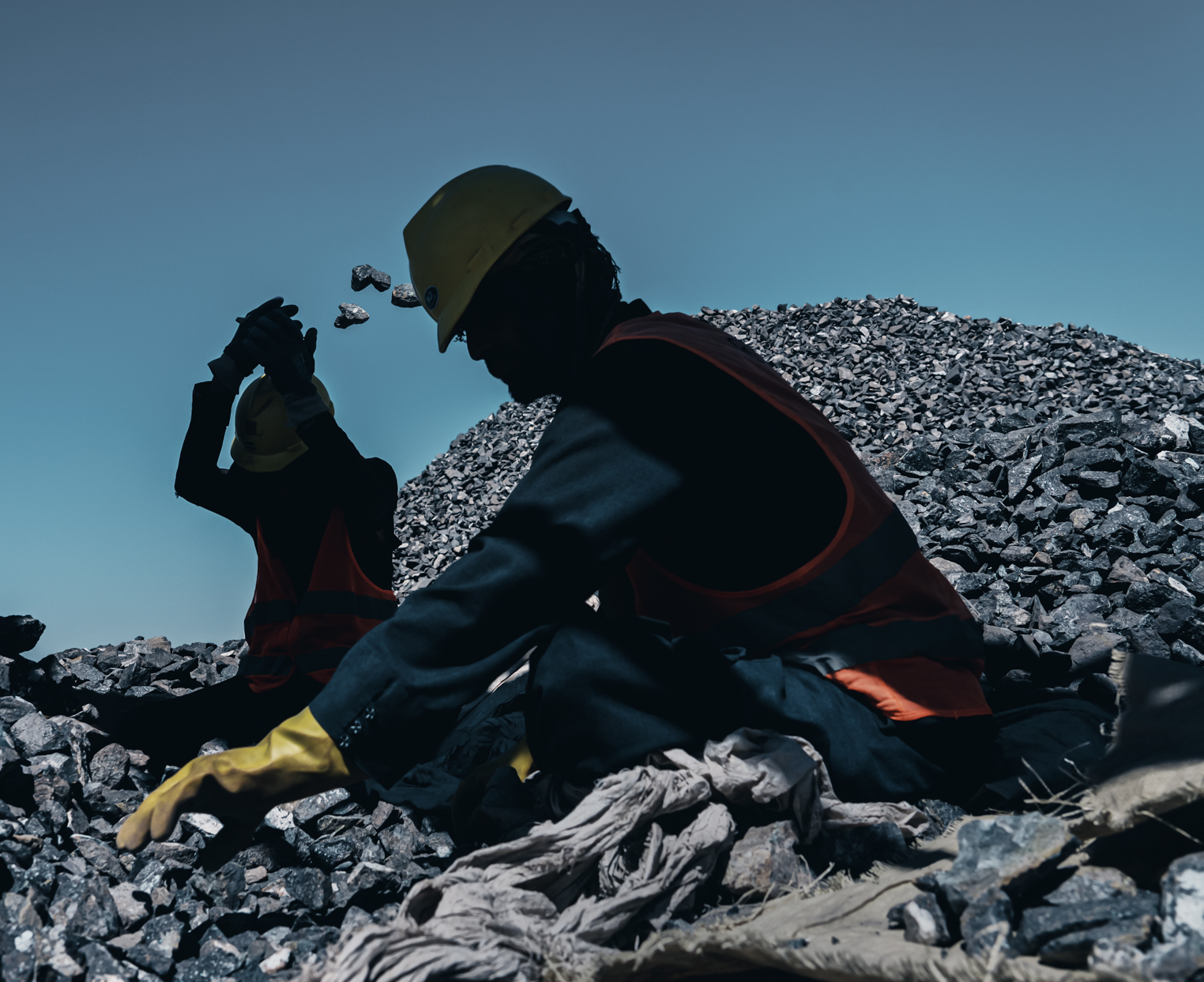
There is currently a global technology and trade war raging between China and the US. This is particularly the case after Washington took a whole series of measures to support its own mining sector. In March, President Donald Trump declared a “national emergency” and activated his executive powers to strengthen domestic production of critical raw materials. How will this war continue?
Rare earths are a group of seventeen metals that are essential for the production of strong permanent magnets, for example. These magnets power electric motors in electric cars, wind turbines, computer chips, and defense electronics. They are also used in laser technology and satellites.
They are therefore used “in everything from iPhones to electric motors.” Due to the complicated chemical processing and costly recycling involved, up to nine out of ten tons of processed rare earth elements currently come from China.
Source: semianalysis
The production and processing of rare earths has long been concentrated worldwide. Between 2014 and 2017, China supplied four-fifths of the rare earths imported into the US and controlled about 85 percent of global processing capacity. In practice, this means that the costs of mining and enrichment outside China often cannot compete with China's extremely low prices.
Production development charts confirm China's dominant position – as early as the 20th century, China's share of global production gradually increased at the expense of the United States and other countries.
Source: USGS
There is currently only one large rare earth mine in the US – Mountain Pass in California, owned by MP Materials. The company produces tens of thousands of tons of concentrate annually, but until now, the minerals extracted have mainly been shipped to China for processing.
In recent years, however, tariffs and restrictions have increased – during the trade war, China imposed a 10% tariff on imports of American concentrates. For MP Materials, it was therefore no longer worthwhile to ship ore to China in April. Instead, Washington began to intervene: the Pentagon is supporting domestic producers with the aim of establishing a “mine-to-magnet chain” directly in the United States.
In a new agreement with the Department of Defense, the US government has essentially gained structural influence over MP Materials. This makes the Pentagon the largest shareholder in the mining company and at the same time guarantees the long-term purchase of permanent magnets from new American production lines. The package also introduces a price cap of $110 per kilogram for neodymium and praseodymium oxides – about twice the previous Chinese prices.
This gives MP Materials the security of knowing that the deposits will not have to be closed if world market prices fall due to Chinese expansion. In addition, the company is building two factories to manufacture magnets – a smaller factory (with a capacity of 1,000 tons per year) will go into operation in Texas as early as 2026, and a larger factory with a capacity of 10,000 tons per year is planned in California by 2028. The Pentagon will apparently commit to purchasing the entire quantity of magnets produced for ten years in advance.
According to analysts, this is a fundamental change. Ryan Castilloux of research firm Adamas Intelligence assesses the agreement as “a fundamental change for the industry outside China and a much-needed increase in magnet production capacity.” Until now, Western markets have been dependent on cheap Chinese raw materials.
As price developments confirm, the suspension of exports by MP Materials in China led to a sharp rise in prices for neodymium and praseodymium to a two-year high. “MP's shipments accounted for a significant portion of shipments to Chinese factories, so a large gap has been created,” Castilloux comments. At the same time, however, he points out that demand from weapons and automobile manufacturers is growing rapidly, so ultimately the ability of future customers to absorb more expensive components will be crucial.
Tom Moerenhout, a professor at Columbia University, emphasizes that the situation remains precarious even with the MP Materials contract. Raw materials containing neodymium and praseodymium are mined in Mountain Pass, but other critical elements—such as dysprosium and terbium, which are needed for high-temperature defense magnets—are produced almost exclusively in China.
The Pentagon is seeking further alliances to source these materials (for example, it has supported Lynas, a company with a plant in Australia), but according to Moerenhout, it is unprecedented for the government to have invested directly in the capital of a private mine and signed purchase agreements “from the mine to the finished magnets.”
The battle for rare earths is thus entering a new phase. The agreement between MP Materials and the US Department of Defense reflects global tensions: the weapon that China has used to its advantage for years is now being wrested from the “Eastern Bloc” by the US. The question remains whether the United States will succeed in quickly establishing itself as an independent manufacturer through temporary subsidies and investments, or whether China will once again negotiate from a position of strength.