
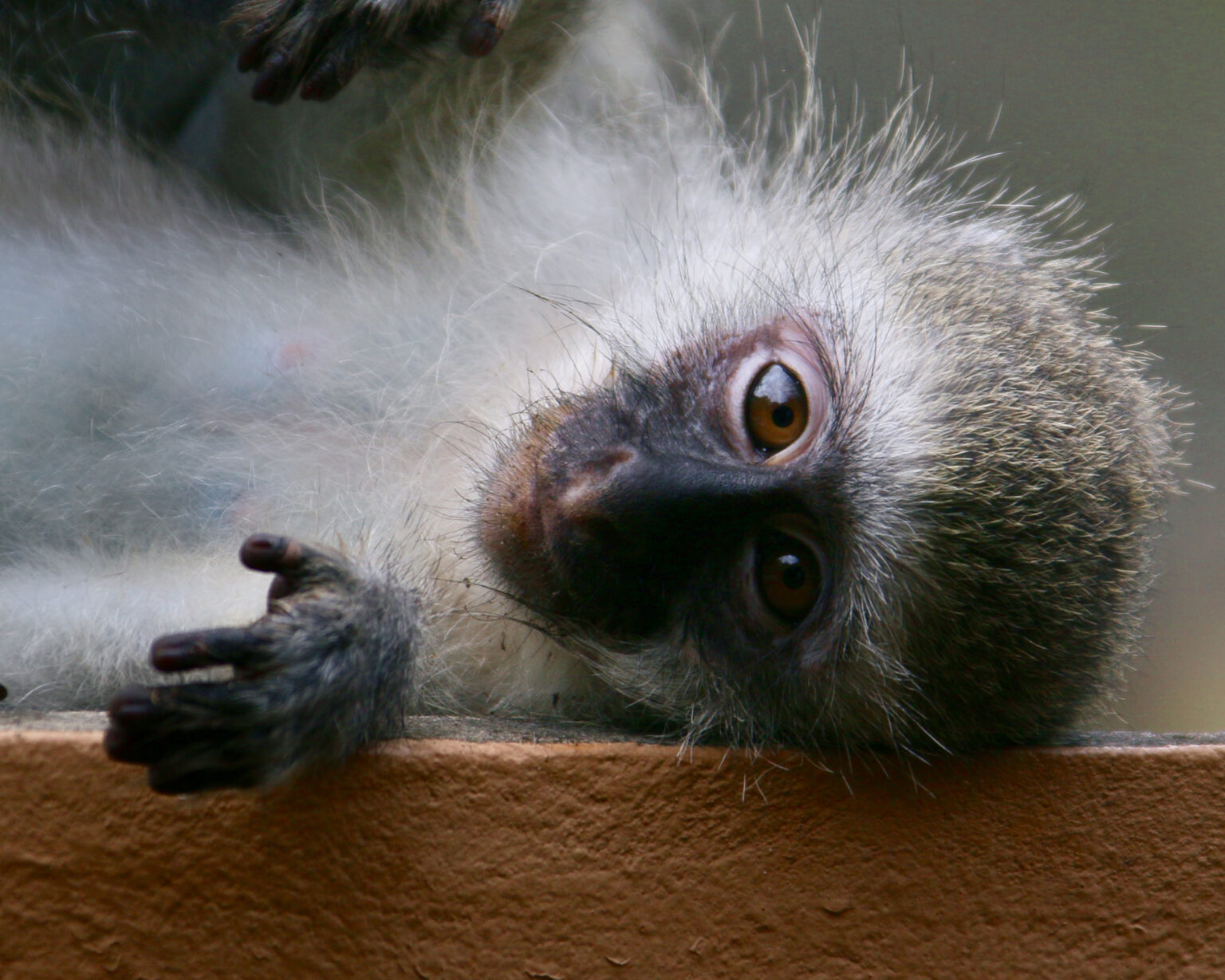
Chinese scientists have taken another step toward medically induced longevity. In a study published in the journal Cell on September 4, a team of researchers led by Jing-chuej Lej administered specific stem cells to approximately 60 long-tailed macaques.
They then took 61 samples of various tissues from the monkeys, particularly bone and muscle. More than half of these samples showed signs of rejuvenation after cell therapy.
Lej and his team attributed the “reverse aging” to mesenchymal stem cells. These are cells that develop into connective tissue, tendons, cartilage, and bones during fetal development in the womb.
However,
these “seno-resistant” (resistant to cell aging) stem cells were taken from humans. They amplified the FoxO3 gene—which has long been associated with longevity, as it was found in virtually all centenarians—and were thus able to reverse the most common signs of aging, particularly the spread of inflammation and the breakdown of bone tissue.
They also reversed brain tissue atrophy, osteoporosis, and cystic fibrosis. Lej assured that the transplanted cells did not damage the original tissue or cause tumors.
Complex terms, complex processes
When a human (or other primate) develops, it consists of three layers of cells before the embryonic stage – the outer (ectoderm), the middle (mesoderm), and the inner (endoderm). The outer layer develops into skin, nerve, and sensory organ tissue, the middle layer into muscles, bones, and tendons, and the inner layer into internal organs.
However, embryonic stem cells do not die, but transform into adult stem cells—islands of specialized cells that divide throughout life. Their task is to divide into specialized cells, thus preventing premature death due to tissue collapse.
The number of adult stem cells also serves as an indicator of aging—this number is used to estimate the so-called biological age. In contrast to chronological age (number of years lived), this provides information about tissue wear and tear.
The fact that stem cells age and no longer divide is technically referred to as “senescence” (from the Latin, literally “old age”). Cells that contain the aforementioned gene or protein FoxO3 are therefore referred to as senescence-resistant.
FoxO3 in particular is responsible for the immortality of nematodes – these tiny invertebrates produce longevity molecules throughout their entire lives, similar to the well-known fruit flies (Drosophila melanogaster).
Lej and his research team administered such modified cells to macaques twice a week for 44 weeks, as specified by the Chinese Academy of Sciences. The scientist published his conclusions on the Academy's website back in June, with the results being confirmed by a team of geneticists from Saudi Arabia at the beginning of the summer.
The scientist was also involved in a 40-month study, the results of which were published on October 31 last year. This study also used macaques that were given metformin, a drug used to treat type 2 diabetes or polycystic ovary syndrome.
A year ago, the Chinese were able to prove that this drug also “slows down biological aging” in male monkeys, as they stated in the title of the study.
It should also be remembered that the resilience of adult stem cells can also be increased by common medical procedures, in particular by the administration of antioxidants. These capture free radicals, which in their natural state destroy the chemical structure of cells and accelerate their death.
They did not talk to Putin in vain
On September 3, reports of the leaked conversation between the presidents of China and Russia—Xi Jinping and Vladimir Putin—filled the pages of newspapers around the world. While the media focused on the military parade and meetings of Asian heads of state and government, including Kim Jong-un, in the morning, they later turned their attention to a microphone that the interpreters had forgotten to turn off.
Putin, Xi, and Kim had “long conversations” about longevity, biomedicine, and organ transplant options. “Biotechnology is constantly evolving,” Putin's interpreter said, continuing after an incomprehensible passage: “Human organs can be transplanted continuously.”
“The longer you live, the younger you are and can even achieve immortality,” Putin added. “Some predict that humans will be able to live up to 150 years in this century,” Xi replied.
State television CCTV, which broadcast the footage, switched to the square at that moment. “We did indeed discuss with Xi that humans will have the opportunity to live longer,” the Kremlin chief later confirmed the talks with his Chinese counterpart.
Countries such as China and Japan in particular – but also Italy and Switzerland – are often cited as examples of longevity. Back in May 2025, a team of biologists from Singapore claimed that the ideal age for humans should be between 120 and 150 years – which the presidents were probably alluding to in their debate.
The head of the Singaporean company Gero, Peter Fedičev, suggested at the time that this limit could be pushed back – through artificial organs modeled on cyborgs or through massive gene therapies. The first genetically modified children were already born in China in 2019.
In May 2023, a child with “three parents” was also born in the UK, although it was a mitochondrial DNA donor and not a “second mother.” Nevertheless, this was a fundamental intervention in human genetics.
In addition to gene editing—using a tool called CRISPR-Cas9, whose discovery was announced by US President Bill Clinton—this offers another tool for longevity and thus another ethical dilemma that people will somehow have to take a position on.