
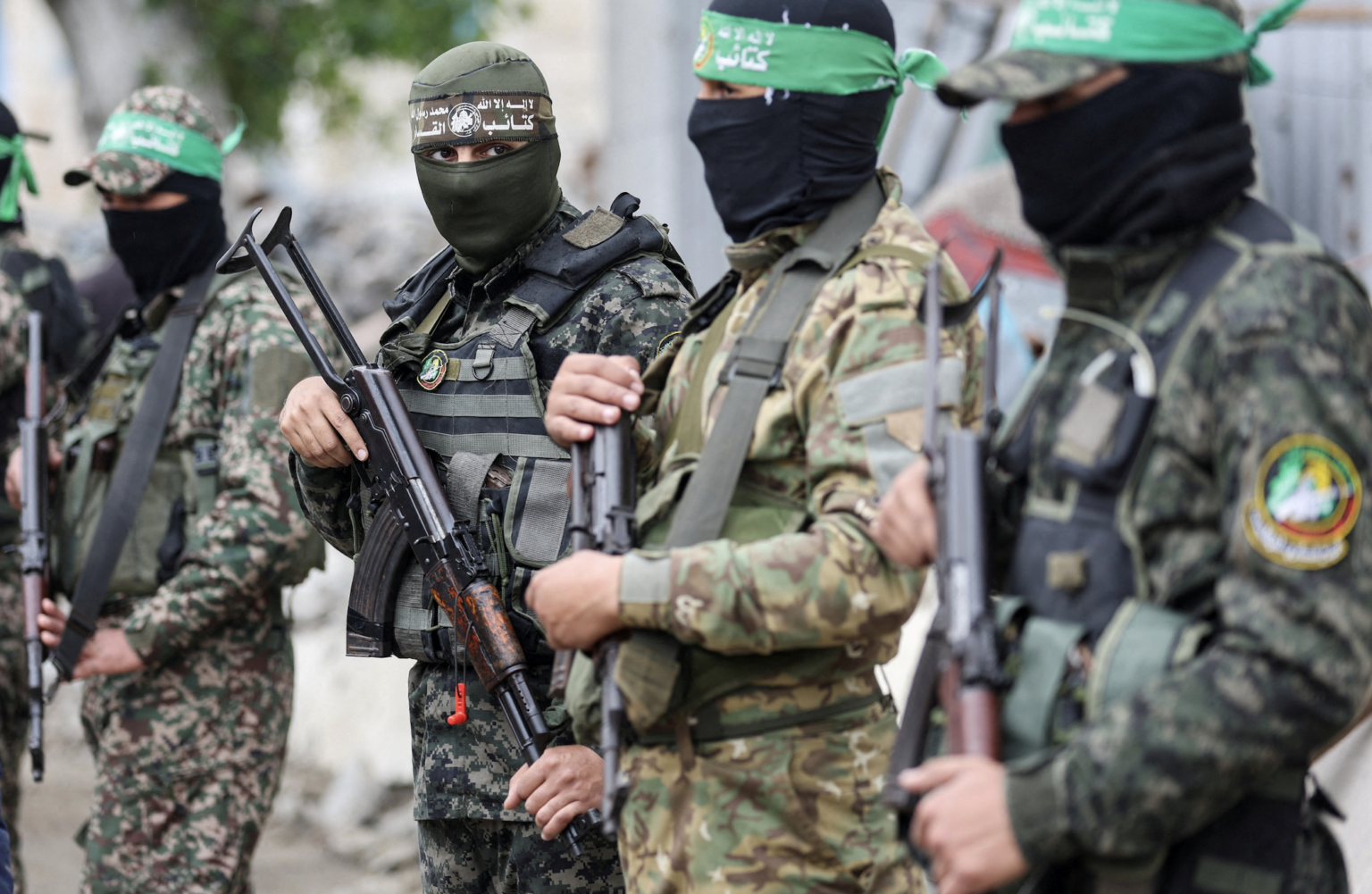
As part of its efforts to restore its influence, the pro-Palestinian militant group Hamas has recently cracked down on groups that challenged its authority. According to security sources, at least 33 people were killed in these operations.
In recent hours, Hamas has also deployed members of the elite “shadow unit” of the Kassam Brigades, who reportedly guarded Israeli hostages during Monday's exchange. A security official said that 32 members of a “gang” linked to a clan in Gaza were no longer alive.
A video appeared on social media showing armed men executing several men they described as “collaborators.” However, Reuters was unable to confirm the authenticity of the video.
The permitted police
Although the United States, Israel, and many European countries have long called for the disarmament of Hamas, US President Donald Trump acknowledged on Monday that the group had been given temporary permission to maintain order. According to Trump, Hamas wants to “prevent problems” and ensure basic stability in the region.
Hamas responded by saying that it would not allow a security vacuum and would protect public order and property. However, the group refuses to discuss its weapons stockpile and claims that it only wants to hand over the weapons to a future Palestinian state.
Officially, Hamas has expressed no interest in administering Gaza, but insists that only Palestinians should decide the future of the area – without foreign interference.
Internal power struggle
However, Hamas' internal control is also threatened by traditional rivalries with local clans. In Gaza City, it faced particular resistance from the Doghmush clan. Israeli Prime Minister Benjamin Netanyahu had previously hinted that his country was arming some clans against Hamas, without naming them.
Hamas is also currently fighting the influential leader Yassir Abu Shabab from the Rafah area, who allegedly has his own paramilitary group and attracts fighters with high salaries. Hamas describes him as an Israeli collaborator, which he denies. Hamas security forces are said to have killed his closest associate and are also preparing action against him.
Another critic of Hamas is Hussam al-Astal from the city of Khan Yunis. In a video, he mocked the group and predicted its downfall after the release of the hostages.
According to Palestinian analyst Reham Owda, Hamas wanted to use these actions to deter groups that had collaborated with Israel and contributed to insecurity during the war. In addition, Hamas wanted to show that its security officials should be part of the new government – even if Israel rejected this.
(reuters, max)