
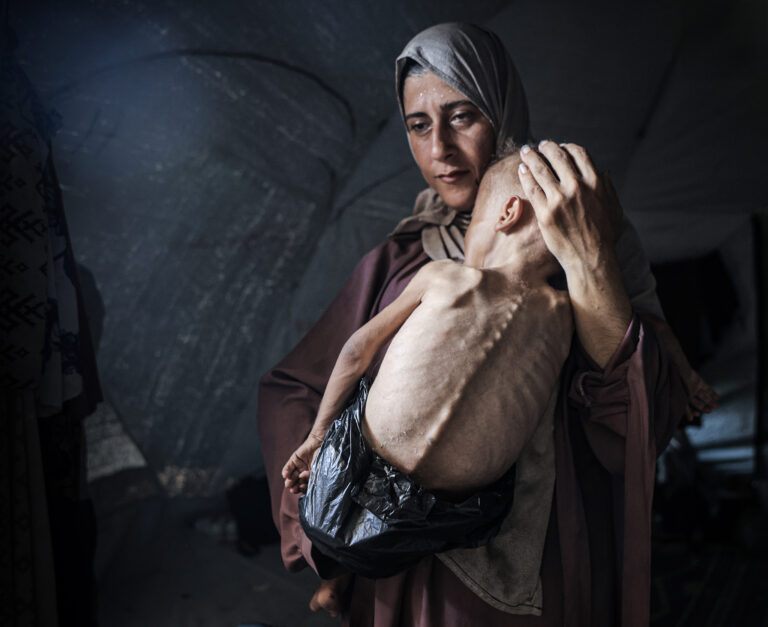
Experts appointed by the United Nations (UN) Human Rights Council announced at the end of August that they had called on the Russian government to explain specific allegations of sexual violence and to present measures it had taken to prevent sexual torture of Ukrainians by Russian soldiers.
These were cases of sexual torture of civilians—both women and men—as part of a targeted and systematic intimidation campaign in the occupied territories of Ukraine.
The UN Special Rapporteur on Torture, Alice Jill Edwards, also addressed similar crimes committed by Israeli security forces against Palestinian Arabs.
In the second half of September, the United Nations Independent International Commission of Inquiry on the Occupied Palestinian Territory, including East Jerusalem and Israel, openly stated that Tel Aviv had committed genocide against the Arabs living in the Gaza Strip.
It should be noted that neither the experts commissioned by the UN Human Rights Council nor Edwards represent the official position of the UN.
Stacks of paper
The European Convention for the Prevention of Torture and Inhuman or Degrading Treatment or Punishment (ECPT), from which the Russian Federation withdrew on September 17, is not the only international convention that obliges several countries to refrain from torture.
These also include the Convention against Torture and Other Cruel, Inhuman or Degrading Treatment or Punishment (CAT), the International Covenant on Civil and Political Rights (ICCPR), the European Convention on Human Rights (ECHR), and others.
According to a report published at the end of last year, the above-mentioned Convention against Torture (CAT), which was adopted by the United Nations General Assembly on December 10, 1984, is being ignored by six countries that practice torture: Cameroon and Namibia in Africa, Jordan and Kuwait in the Middle East, and Mongolia and Thailand.
Cap as gardener
However, the UN is just as powerless in such cases as it is in the case of Russia or Israel – it can only resort to so-called naming and shaming.
Not to mention that countries such as China, Saudi Arabia, and Eritrea, where human rights are often violated, for example in Chinese re-education camps, are also members of the UN Human Rights Council.
Human rights organizations have long criticized the existence of the prison at the US military base in Guantánamo Bay. The prison is not located on US territory, which means that prisoners are not fully protected by the US Constitution or international treaties such as CAT.
However, crimes against humanity have often been committed by representatives of the United Nations, who are supposed to prevent such acts.
Injustice in Kosovo
“In 6 out of 12 studies on the sexual exploitation of children in armed conflict conducted for this report, the arrival of peacekeeping forces was linked to a rapid increase in child prostitution,” according to a 1996 report by the United Nations Department for Policy Coordination and Sustainable Development (DPCSD).
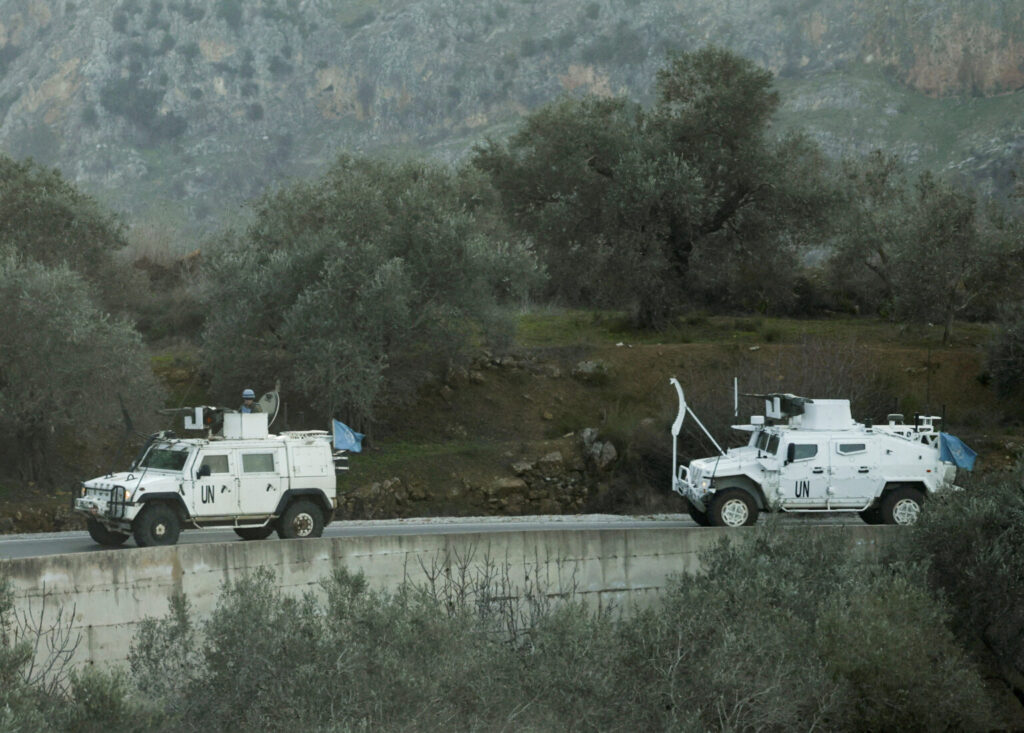
In 2006, Amnesty International accused the United Nations Mission in Kosovo (UNMIK) of crimes against humanity and of failing to investigate known cases in its report “UN in Kosovo – Legacy of Impunity.”
As a reminder, UNMIK was established on June 10, 1999, on the basis of a UN Security Council resolution as an instrument of civil administration of the war-torn Serbian province of Kosovo and continues to operate in Kosovo to this day.
In its report, Amnesty International criticizes the UN for designing the legal framework of the UNMIK mission in such a way that international personnel enjoy almost absolute legal immunity and can therefore commit rape and other acts of violence with complete impunity in most cases.
To date, the UN has not investigated any of its own police officers or officials accused of mistreatment or inappropriate use of force against Kosovar civilians.
According to the Amnesty International report, the UN has also ignored or downplayed victims' complaints, failed to investigate hundreds of cases of abductions, disappearances, and murders after 1999, failed to protect Serbs, and tolerated rape and trafficking of women and girls, which only increased during the presence of international troops.
“The UN mission in Kosovo has become a symbol of the international community's failure to take responsibility for its own actions,” Amnesty International summarizes. Accusations were also made against the Kosovo Force (KFOR), NATO's military peacekeeping mission.
As a NATO force, KFOR was not directly subordinate to the UN, but the mission was part of the international administration, so the UN also bears responsibility for the inadequate monitoring of the soldiers' actions.
A few months before the publication of Amnesty International's report criticizing the UN's actions in Kosovo, the UNMIK established a “Human Rights Advisory Committee” whose task is to assist in the examination of complaints from individuals who claim that the UNMIK has violated their human rights.
Criticism today
When Ukrainian President Volodymyr Zelensky criticized the weakness of international institutions during the general debate before the plenary session of the United Nations General Assembly (UNGA), he also mentioned the UN.
“What can Sudan, Somalia, Palestine, or any other war-torn country really expect from the UN or the global system? For decades, there have been nothing but declarations and statements. And even for everything that is happening in Gaza, there is no solution,” Zelenskyy summarized.
The question of the applicability and, above all, the enforceability of international law is discussed from time to time, even today, when UN staff themselves do not violate international law, but at the same time the organization appears toothless and has no effective means against violators.
The toothlessness of the UN stems from the structure of the organization itself and from the fact that international law is often violated by the very states that are supposed to ensure its compliance.