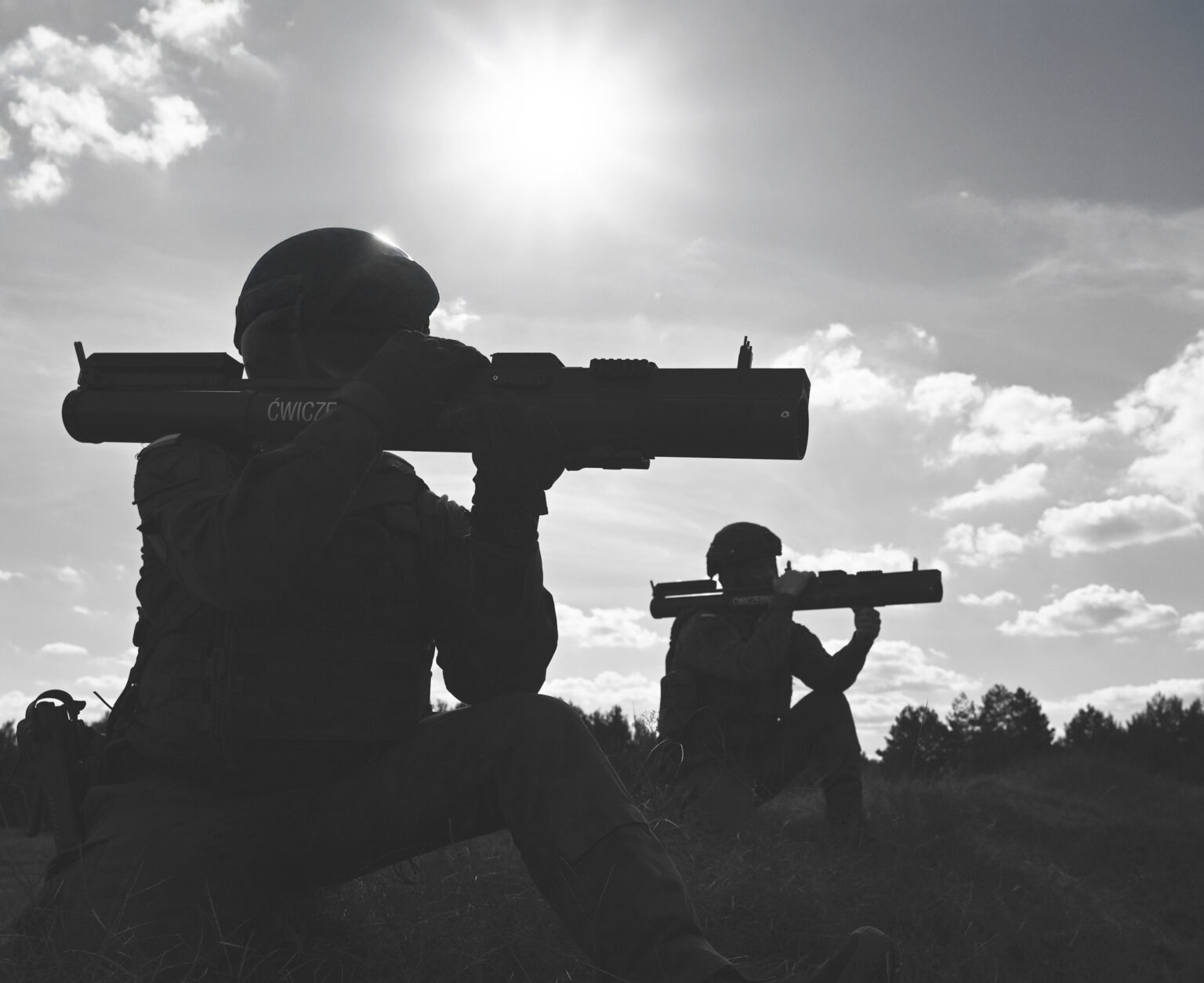
Polish soldiers. Photo: Artur Widak/Anadolu via Getty Images
How should the countries in NATO's eastern wing defend themselves in the event of an attack by suicide bombers?
Poland, Lithuania, Latvia, and Estonia have been preparing for attacks by Russian drones for over a year, but not all drones are the same.
Shortly after 19 Russian drones violated Polish airspace on the night of September 9-10, Sławomir Mentzen (New Hope), co-chair of the Polish opposition coalition Konfederacja, wrote that Poland had wasted three and a half years and had made no preparations for war. It could only use its own F-16 fighter jets and its allies' F-35s against the Shaheeds.
“Shooting down drones that cost $10,000 to $30,000 with missiles that cost $2 million is simply not sustainable. Especially when the drones appear in their hundreds. Already yesterday, we needed anti-drone systems that offer a reasonable cost-benefit ratio,” he added a day later.
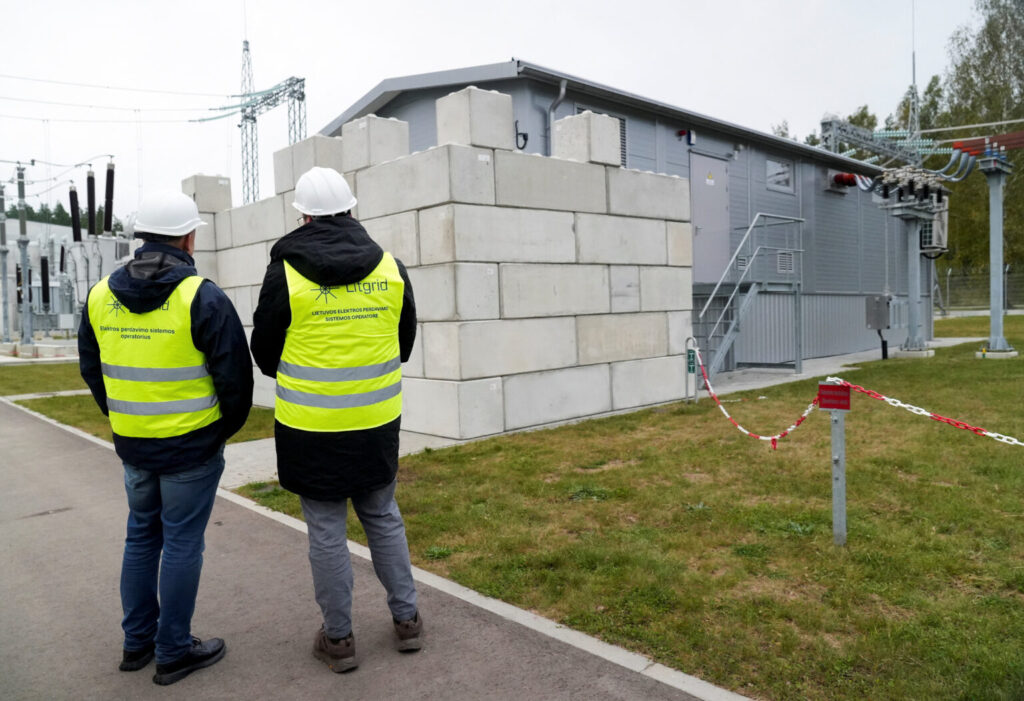
Concrete blocks against FPV drones at the substation of Lithuanian power grid operator Litgrid in Nemencinė. Photo: Janis Laizans/Reuters
NATO Secretary General Mark Rutte expressed a similar view, saying that the alliance's member states cannot afford to spend millions on missiles to destroy drones that cost only a fraction of that amount.
Retired Polish naval officer Maksymilian Dura points out that although Poland purchased four SKYCtrl L air defense systems (PVO) against FPV drones manufactured in Poland in 2023, armored vehicles are not protected against drones in any way. As it turns out, there is also a lack of protection against large Shaheed-type drones.
Eastern protective wall
In May 2024, Polish Prime Minister Donald Tusk (Civic Platform) announced investments in the “Eastern protective wall” – the largest Polish defense line since 1945, worth around 2.3 billion euros.
“The Eastern Shield program is part of the creation of a comprehensive regional defense infrastructure, which is being built in cooperation with the Baltic states,” said the Polish Ministry of Defense. The construction affects the Polish-Belarusian and Polish-Russian borders.
Although the “creation of a suitable infrastructure for drone defense systems” is also part of the project, the defense line is not expected to be completed until 2028.
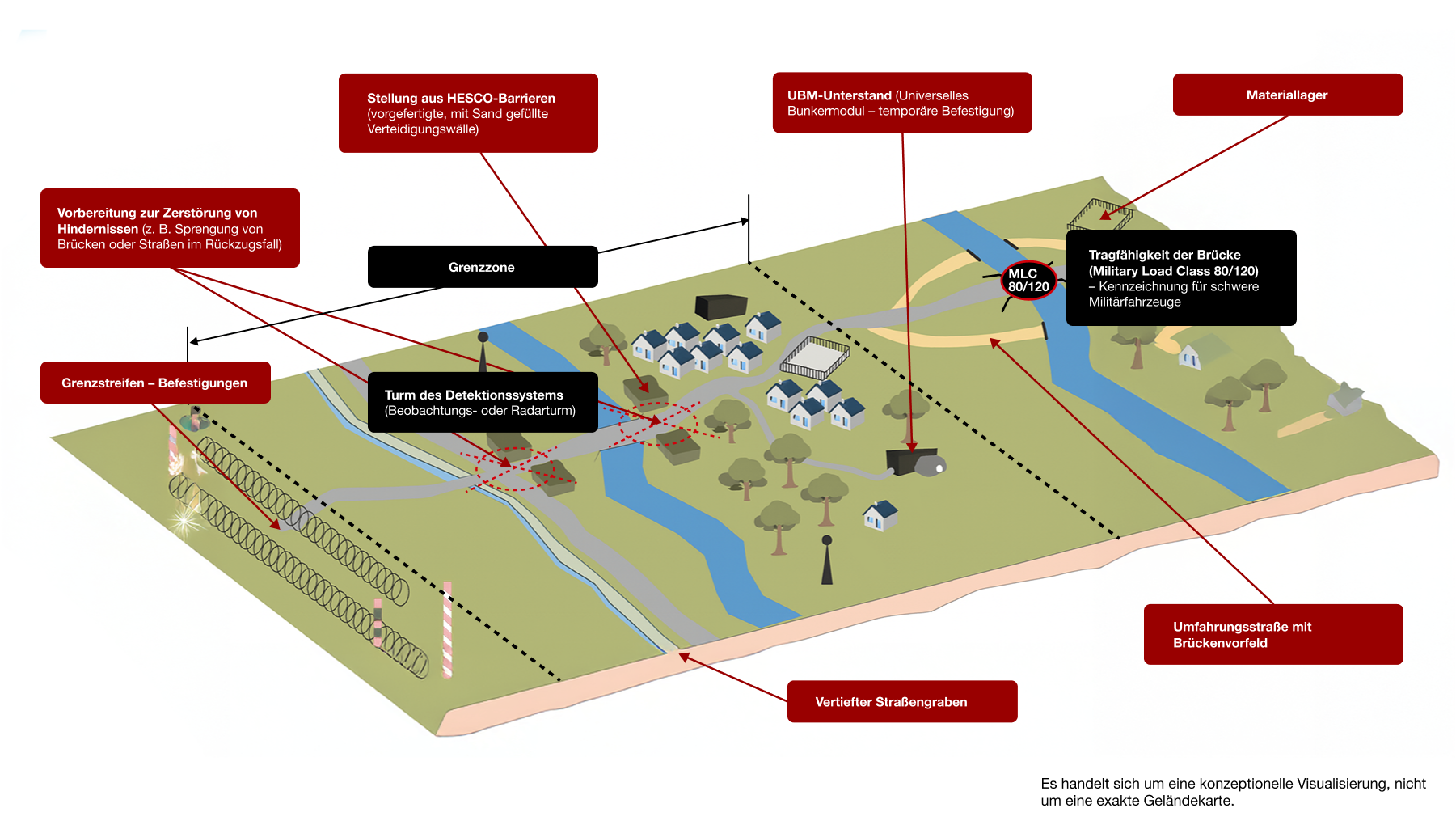
Structured defense line with a depth of 50 kilometers. Photo: gov.pl
“The Eastern Shield program will cover a border section of almost 700 kilometers, of which 400 to 500 kilometers will involve the expansion of various types of fortification infrastructure at different stages of development,” said General Wiesław Kukuła, Chief of the General Staff of the Polish Army.
While Finland has been fortifying its border independently for several years – most intensively since joining NATO after the start of the Russian invasion of Ukraine – the three Baltic states have been jointly building a Baltic defense line on the border with Belarus and Russia since 2024. Construction will take about a decade.
Estonia, Latvia, and Lithuania are aware that they would find themselves in an untenable situation if their land connection to the rest of the alliance were cut off, and are therefore focusing their defense preparations on the vulnerable Suwałki Corridor, the problems of which we have already discussed in Standard.
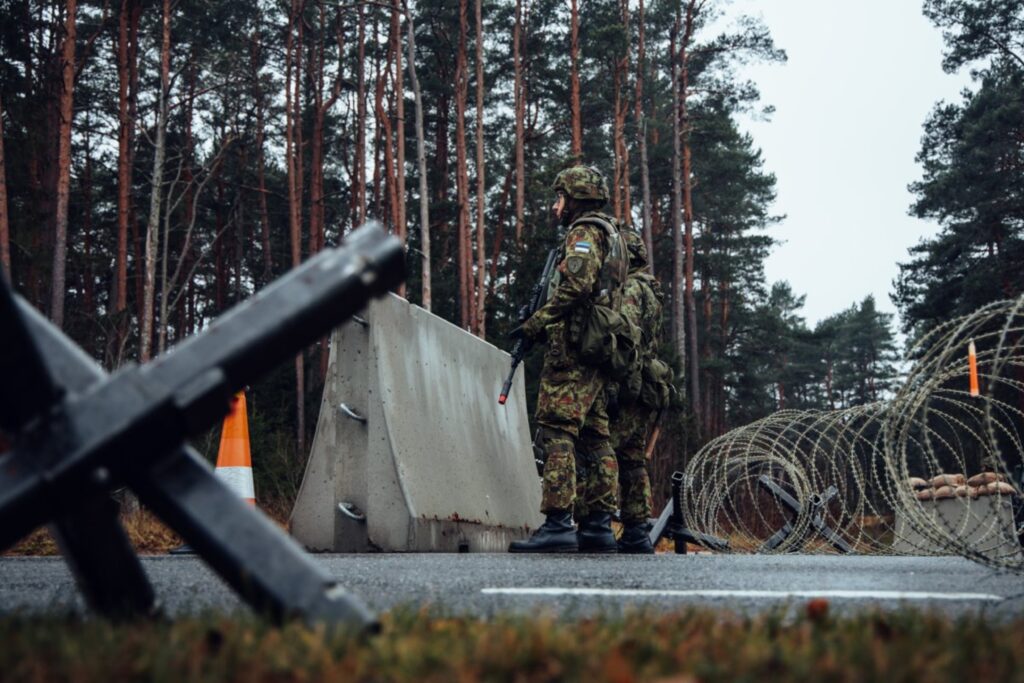
Part of the defense line will be hundreds of concrete bunkers with an area of about 35 square meters, which can protect the crew from direct hits from guns with a caliber of up to 152 millimeters, as well as military depots for equipment and materials, rows of dragon's teeth and barbed wire, dozens of kilometers of tank traps, and places for laying mines.
Barbed wire rolls, barbed wire, and other barriers are also part of the defense line. Photo: kaitseministeerium.ee
Not all drones are the same
In the original draft for the development of an anti-drone infrastructure, Poland and the Baltic states only considered small FPV drones controlled by operators in real time (such as those used during Operation Pavučina), not large Šáhid-type drones that are launched from a ramp like missiles.
As part of anti-drone defense, the Polish and Baltic projects therefore only include concrete bunkers and anti-drone nets, which successfully protect critical infrastructure from attacks by FPV drones but have no chance of withstanding an attack by a Shaheed drone.
A few days after the drones entered Poland, the four EU countries presented a plan to strengthen the security of the energy network, which was disconnected from Russia at the beginning of the year, worth €382 million. At the same time, they asked Brussels to cover half of the costs of this project. Its position is not yet known.
Representatives of the Polish power grid (PSE) are planning to set up their own armed security unit with helicopters. This would help protect the technical connection to Lithuania via the Suwałski Corridor.
Defense plan on the Estonian-Russian border. Photo: kaitseinvesteeringud.ee
The entire continent
Rutte revealed on October 15 that NATO and the European Union are working on creating a joint drone defense system to protect member countries from violations of their airspace.
The President of the European Commission (EC), Ursula von der Leyen, came up with the idea of a drone defense system on the eastern border of the Union after Russian drones entered Polish airspace. Now, however, the EC is proposing to extend drone protection to the entire Union. It is to be a network of sensors, electronic jamming systems, and defensive weapons that would form a networked defense system.
It is to be a network of sensors, electronic jamming systems, and defensive weapons that would form a networked defense system. At the same time, consideration is being given to deploying a system of swarms of small drones combined with artificial intelligence, developed as part of the JATEC initiative between NATO and Kiev.
Following the incident in Poland in September, NATO launched the Eastern Sentry mission, which aims to strengthen the defense capabilities of the countries on the eastern flank of the alliance.
As part of this initiative, fighter jets, naval and reconnaissance units from several member states were mobilized. British Defense Secretary John Healy announced on October 15 that British fighter jets will patrol over Poland until the end of this year.
However, the question remains as to when construction of the anti-drone wall will begin, when it will be completed, and whether Poland and the Baltic states will wait for it or adapt their own defense projects to include drone defense.
The anti-drone wall project in its current form has been criticized and essentially rejected by German Chancellor Friedrich Merz and French President Emmanuel Macron, the representatives of the two strongest economies in the EU and the European part of NATO.