
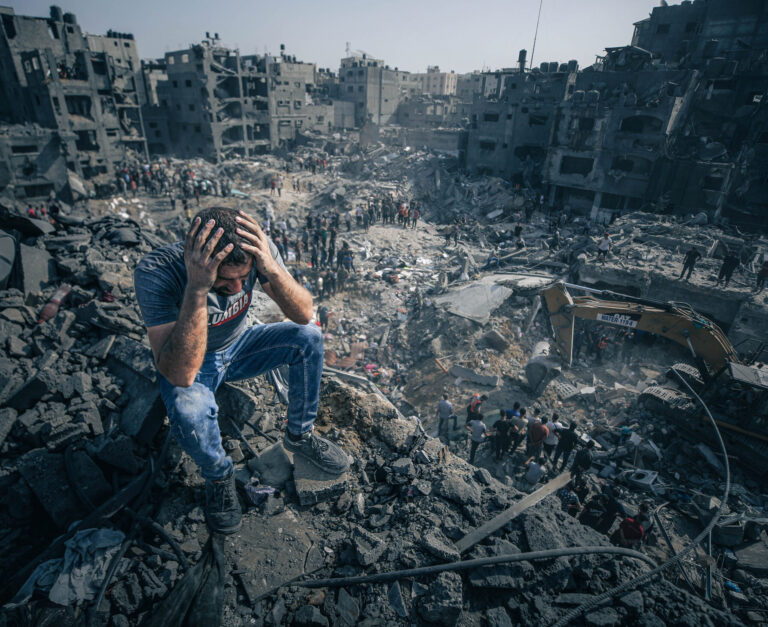
On Monday, Israel celebrated the end of the war with the Palestinian militant movement Hamas in the Gaza Strip. Despite the simplified perception of the West, there has been no unity in this coastal enclave between Israel and Egypt since 2007.
Based on developments in recent months, it appears that a broad coalition of clan militias and armed opposition forces intends to take action against Hamas, with some supported by Israel and others loyal to terrorist organizations such as Al Qaeda or the Islamic State.
The militias of the Druze—a religious-ethnic group in southwestern Syria that is increasingly involved in armed conflicts with the new Sunni jihadist government led by Ahmad Hussein Sharif—also rely on the military strength of Israel as the de facto “great power of the Middle East.”
Palestinian clans against the Hamas government
The demographics of the Palestinian Arab population are diverse. Some parts of society are still organized according to the clan principle, and not only in the Gaza Strip. Parts of western Iraq are administered by Sunni tribes following the fall of Saddam Hussein, and one of the most important tribes in Islamic history – the Hashemites – rules in the Kingdom of Jordan.
In Gaza City, there are family clans that, according to the European Council on Foreign Relations (ECFR), “play a central—and often alternative—role in Palestinian society.” In its assessment, the Council also pointed to the personal connections between militant groups on the one hand and tribes or clans on the other.
One of the most important clan units in Gaza City is the Dogmus clan. This clan has its historical roots in the Ottoman Empire, as evidenced by its name – Doğmuş.
It was precisely this clan that became the target of violence by Hamas on Monday, against the backdrop of celebrations marking the “end of the war” in Israel. The ruling militants attacked the Dogmus' homes in the al-Sabra neighborhood of Gaza City, prompting the clan's men to respond with gunfire.
The Dogmušovci had executed a Hamas member and journalist named Sálih al-Dža'afárí the day before. This was in response to the execution of 25 men from the clan. The violence between Hamas and the Dogmušovci has been going on for a long time, with the militants kidnapping several clan leaders on October 11.
The Bedouin tribes, which number several thousand people, also have a prominent position. Among them, the Tarabin tribe stands out, which lives not only in the Gaza Strip but also in the Negev desert in southern Israel and on the Sinai Peninsula.
One of the main representatives of the Tarabin is Jásir abú Šabáb, founder of the “anti-Hamas” Popular Forces. This militant group is supported by Israel, similar to how Hamas was supported against the Fatah movement in the past. However, these Popular Forces (Kuwát aš-Šabíja) are said to also have the support of the Islamic State.
Abu Shabab has been involved in several attacks on humanitarian aid convoys since 2024, although they claim to have never stolen food or items for children. His group, which recruits men from the Tarabin tribe, operates east of the cities of Rafah and Khan Yunis.
Since the summer of 2025, however, Shabab militants have repeatedly guarded convoys belonging to the pro-American Humanitarian Foundation for Gaza (GHF). They are also supported by Tel Aviv, as is the Counter-Terrorism Force (CSF), which was also founded in Khan Yunis in August 2025 and is headed by former Palestinian Authority security official Hossam al-Astal.
After almost a year of quiet support, Israeli Prime Minister Benjamin Netanyahu announced that his government was financing the clan militias against Hamas. He was responding to a statement by MP and former Foreign Minister Avigdor Lieberman, who said that Tel Aviv was “supplying weapons to Islamic State criminals on the instructions of the prime minister.”
However, the terrorist organization Tawhid al-Jihad, or the “Army of Monotheism and Jihad in Palestine,” is also operating in the Gaza Strip against Hamas. Its founders swore allegiance to Al-Qaeda back in November 2008. However, this group appears to be inactive, although some of its members have posted statements on the Telegram platform pledging allegiance to the Islamic State.
An old French plan is gaining popularity in Syria
About a year ago, Sunni militias united under the Movement for the Liberation of Greater Syria (Hajat Tahrír aš-Šám) launched a campaign from their bases in the northwestern province of Idlib to march through the country's major cities. With their entry into Damascus on December 8 and the overthrow of Bashar al-Assad's government, they officially ended the civil war that had been raging since March 2011.
The leader of this jihadist alliance was a man known until then as Mohammad Jawalani. He had been active in Al Qaeda in Syria and later in the Al-Nusra Front (which, however, remained linked to Osama bin Laden's structures). After the fall of the secular left-wing Baath Party (Renaissance) government, he revealed his real name to be Ahmad Hussein Shara.
Almost immediately, he and his men began to build up an image of “moderate jihadists,” which led to the lifting of anti-Syrian sanctions by the EU and, after the last UN General Assembly, also by the US. Some global media outlets then began to refer to him as “president.”
Despite the media's shift toward moderation, reports of persecution of Christians, Alawites, and other religious groups in Syria began to multiply again. However, one of these groups is leaving nothing to chance, and there are voices within its ranks calling for secession. You may be interested to know that the jihadists in Syria have not changed.
They are the religious-ethnic group of the Druze. These inhabitants of southwestern Syria, parts of Lebanon, and Israel separated from the Shiite Ismailis in Egypt in the 11th century and migrated to the Levant. Although they originally considered themselves a branch of Islam and called themselves al-Muwáhídún (monotheists), they are now classified as a separate religion.
Back in 2015, the Israeli Druze asked Tel Aviv for help after the Nusra Front carried out massacres against their Syrian neighbors. At that time, Shara was at the head of the jihadists, which reignited fears of persecution after December 2024.
A few days after Assad's fall, Israel took several daring actions: it destroyed nearly 80 percent of military depots, bombed the entire fleet, and temporarily “occupied” the demilitarized zone on the Golan Heights.
In early July 2025, there were several armed clashes between Druze and Bedouins in the province of Suwajdá in southern Syria. According to unconfirmed news reports, the latter were supported by Sharov's government. At least 46 Druze were killed in what the non-governmental organization Amnesty International defined as “extrajudicial executions.”
Tel Aviv also intervened in the shootings, sending in its air force at the end of the month, which, in addition to bombing the militants' positions, symbolically fired a missile at the presidential palace.
At the same time, one of the three spiritual leaders of the Druze, Hikmat al-Hidžrí, established a de facto governing body for the province of Suwajdá – the Supreme Legal Committee. This committee joined the calls for the federalization of Syria, which is being proposed primarily by the Kurds in the northeast of the country.
One of the most frequently repeated proposals for federalization refers to the division of the French mandate for Syria from 1921. According to this concept, the Alawites in the west, the Druze in the south, and the Kurds in the east would receive self-governing parts of the country in order to prevent further violence.
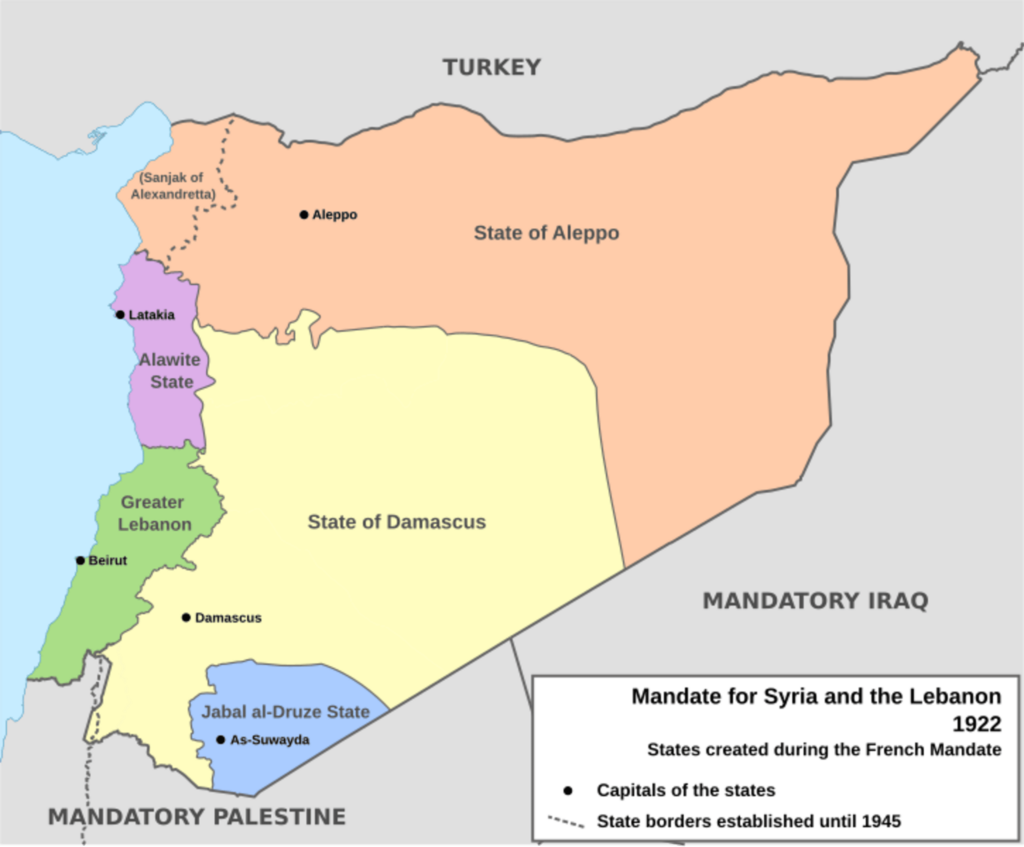
On October 11, Al-Hidžrí called on the UN to exert pressure on Shar's de facto government to end the blockade of the province of Suwajdá. The Druze were allegedly surrounded by Sunni militias in the Džabal ad-Durúz mountains, where their freedom of movement is restricted.
The spiritual leader of the “Unitarian Monotheists” referred to these mountains as Jabal al-Bashan. This is a significant symbolic change, with which the Druze leadership refers to the biblical name of their territory.
Most recently, former Israeli Communications Minister Ayoub Kara made such an open appeal. He is a member of the ruling Likud party, but not an ethnic Jew – he comes from an Israeli Druze family. In a speech in September, he declared that “today, the Druze state was proclaimed in Suwajda,” adding that he expects an Alawite state to be established soon.
After the violent riots in the summer, more and more Druze seem to be losing patience with the Sunni leadership. Similarly, the tribes in the Gaza Strip are increasingly rejecting the Hamas government, with the result that the Middle East as a whole is turning more and more frequently to the “new” hegemon—Israel.