
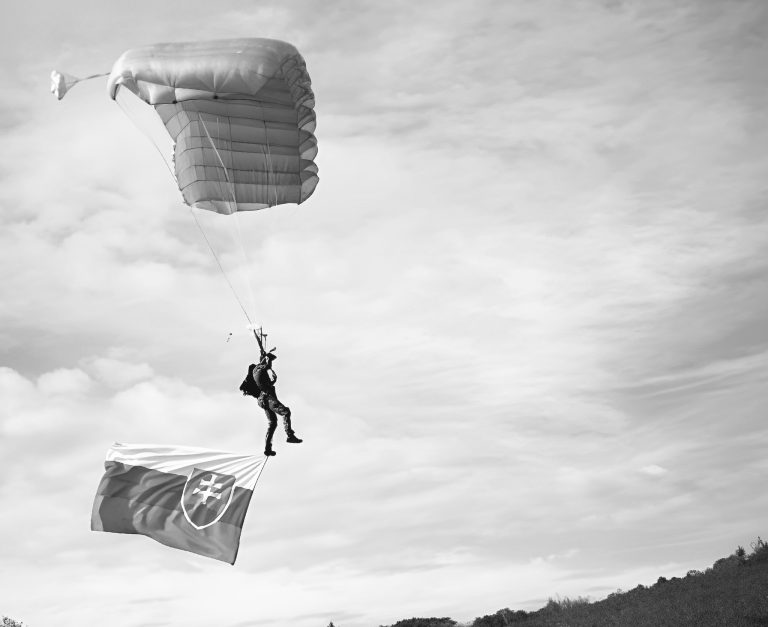
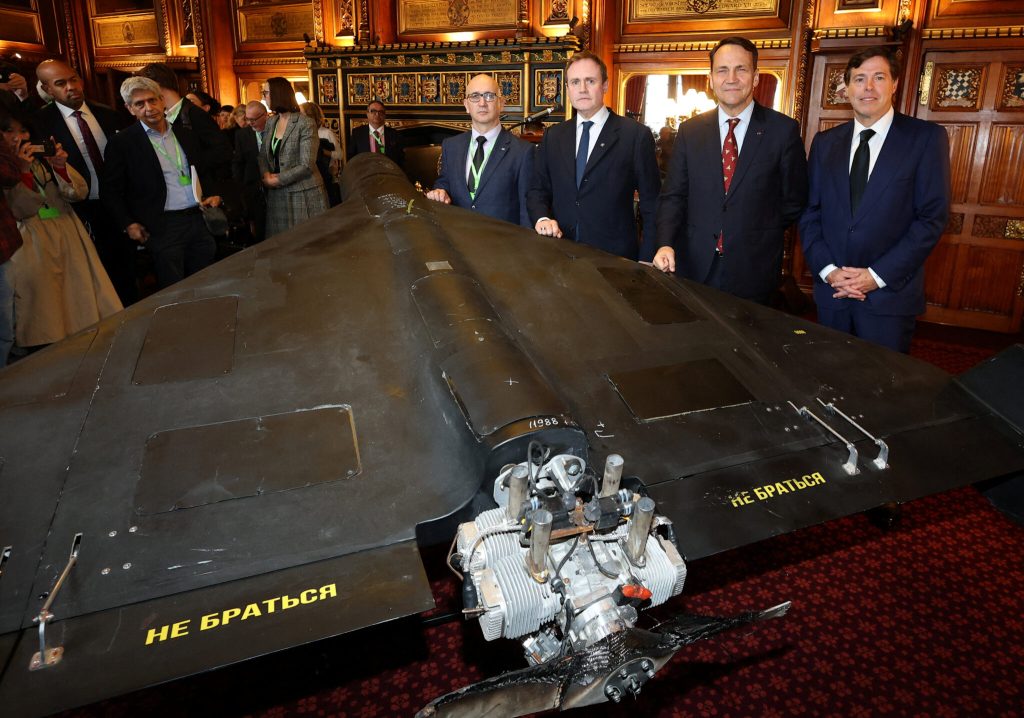
According to Defense Minister Robert Kaliňák (Smer), Slovakia attempted to push through its own, more cost-effective model of a wall at the informal European Union summit in Copenhagen on October 1, which is aimed at “eliminating drone threats” in the form of large Shahed drones that are launched like missiles from a ramp.
“There is an extremely expensive difference between what a drone can do, i.e., the damage it can cause, and what this missile means. That is why we talk about multi-layered air defense,” Kaliňák said at the end of September on the Sunday discussion program Politika 24 on Joj 24.
It should be remembered that the Slovak Air Force's F-16 fighter jets are ineffective against drones. Furthermore, they will not be fully operational until 2026.
“NATO's eastern border must be fully protected, regardless of which countries are involved. Otherwise, it would not make sense, as this would pose security risks for the entire territory of the alliance,” said President Peter Pellegrini at the end of September.
He added that he does not want Slovakia's eastern border to be a kind of unsecured gap to the west. On October 10, he reiterated in Tallinn, Estonia, that Slovakia must be part of the defense against drones.
He also outlined a possible Slovak-Ukrainian collaboration: “It seems that instead of expensive and extremely inaccessible technical equipment, we could use relatively affordable solutions from Ukrainian manufacturers of these systems.”
Fortress Europe
A well-informed source from the Slovak Ministry of Defense told Štandard that the original efforts to build an Eastern European anti-drone wall, initiated by EU Foreign Affairs Representative Kaja Kallas from Estonia and EU Defense Commissioner Andrius Kubilius from Lithuania, met with little understanding in the western part of the EU.
“The architects of Europe—France and Germany—are very sensitive about defense and about anyone wanting to go their own way without joint consultation,” the source explained, adding that Paris and Berlin had the impression that the Baltic states believed that “under the threat from Russia, they can do anything and do not have to consult with others.”
The original anti-drone wall project was also officially criticized, and French President Emmanuel Macron and German Chancellor Friedrich Merz, representatives of the two strongest economies in the EU and the European part of NATO, essentially rejected the project.
Ultimately, it was decided that the drone defense wall should protect all NATO/EU members—not just those bordering Russia—and that it would be a joint project of the European Union and the North Atlantic Alliance.
However, it is still unclear when construction of the drone defense wall will begin, what facilities it will consist of, and to what extent it will be supported by individual states.
The Slovakian Wall
On October 7, at a press conference following his return from Kiev, Kaliňák provided the first insight into what defense against drones in Slovakia might look like.
According to him, Slovakia, like other countries on NATO's eastern flank, has received a favorable offer from Kyiv to purchase new drone detection technologies, including acoustic sensors. According to the defense minister, the price of the detectors is not in the millions, but in the four-digit euro range, and it is possible that Slovakia will accept the offer from its eastern neighbor.
The defense minister ruled out the purchase of the Swiss Skyranger 30 air defense tower system and the German Gepard self-propelled anti-aircraft system. Although they are high quality and have proven themselves against Russian drones in Ukraine, they are too expensive and relatively easy to destroy.
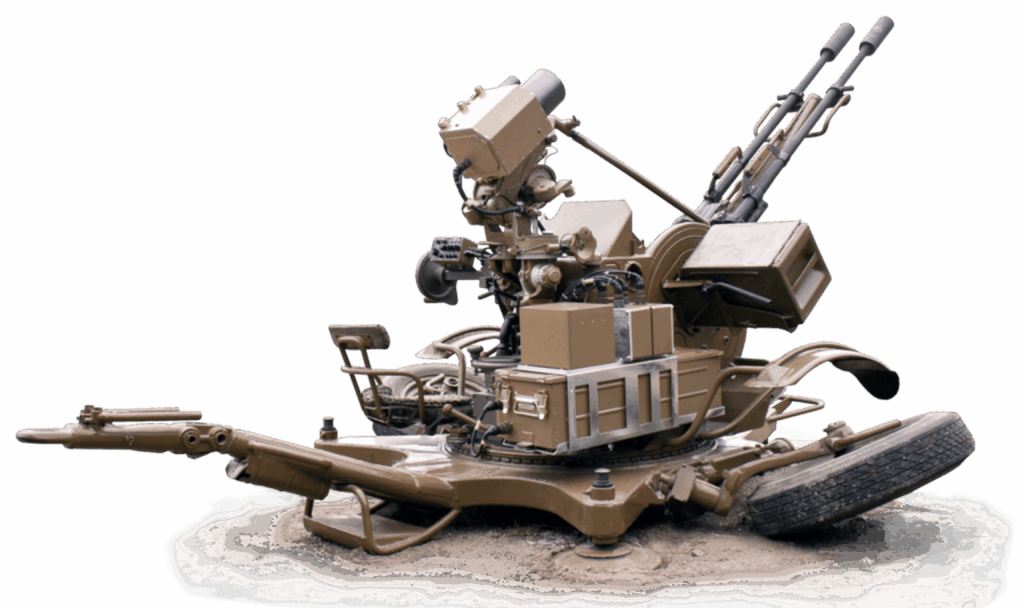
According to Kaliňák, Slovakian medium-caliber guns that function as anti-drone effectors could be part of the anti-drone defense: cannons with a caliber of 23 and 30 millimeters.
The pride of Slovak industry is the domestic 30-millimeter automatic cannon 2A42 or the GTS-30 version from the ZTS – ŠPECIÁL workshop. According to the manufacturer, these cannons are capable of hitting air targets flying at subsonic speeds – including Šáhid drones – at altitudes of up to 2,500 meters.
The modernized ZU-23 M twin anti-aircraft gun is a modernized Soviet 23-mm cannon for which the Slovak company EVPÚ manufactures a modernization kit.
Thanks to this, the weapon from the 1950s remains state-of-the-art. Similar to its Slovak counterpart, it can engage with drones at an altitude of 2,500 meters.
The defense minister mentioned on the TA3 television station that he knows from his Ukrainian counterpart that helicopters are very effective in combating drones. However, the twelve Slovak Black Hawk helicopters that could be used against drones were purchased by our armed forces without weapons. The ministry did not respond to Štandard's question about when they would be armed.
Kaliňák is convinced, however, that in addition to the main air defense resources, we must also prepare for higher-flying drones, i.e., it will be necessary to procure missile defense systems such as S-300 or Patriot for Slovakia.
There are no operators
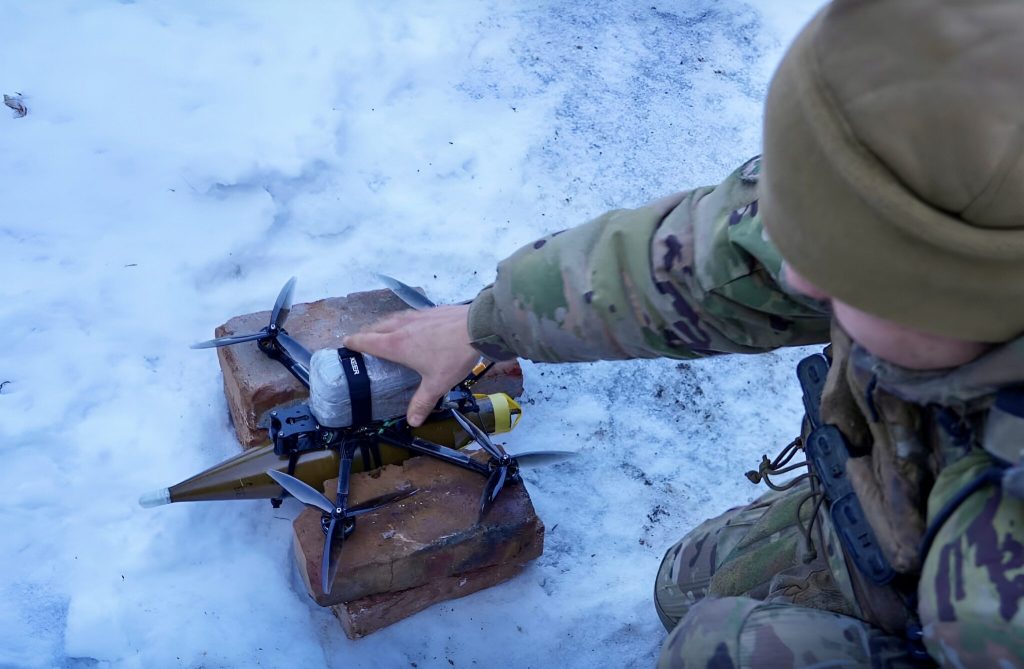
At the end of September, London confirmed that it would work with Kiev to equip the emerging defense against the Russian air threat with British-made Ukrainian FPV drones. These are guided by operators in real time against large drones. Also in play is the use of a system of swarms of small drones combined with artificial intelligence, developed as part of the JATEC initiative between NATO and Kiev.
“There is interest from companies in Slovakia in manufacturing certain types of drones, such as defense drones, which are actually used to destroy attacking drones,” Kaliňák said before the government meeting, adding that this is currently still in the initial design stage.
A member of the Slovak Armed Forces confirmed to Štandard on condition of anonymity that a list of interested parties for a drone operator course was drawn up last year. The General Staff planned to train a thousand operators, which would mean that around five percent of Slovak soldiers would be able to fly drones.
“Chinese DJI Mavic drones were to be used, but so far, the training of operators has not yet begun, at least in our unit,” says a Slovak soldier, adding that even after Operation Pavučina in June, he was not aware of any warehouses or other military facilities in Slovakia that were equipped with anti-drone nets or other protective devices against small drones.
Slovakia is therefore working with Ukraine in the same way as its allies, but unlike other NATO members, it appears to be taking the traditional air defense route, which, together with Ukrainian-made radar and other detection equipment, will form the backbone of Slovakia's defense against large drones.