
The Nord Stream 1 gas pipeline, with a capacity of more than 55 billion cubic meters of gas per year, had been in operation since 2011, with another pipeline added a year later.
The parallel Nord Stream 2 pipeline, which also consists of two pipelines and also runs from Russia to Germany, was completed but never put into operation due to Russia's invasion of Ukraine.
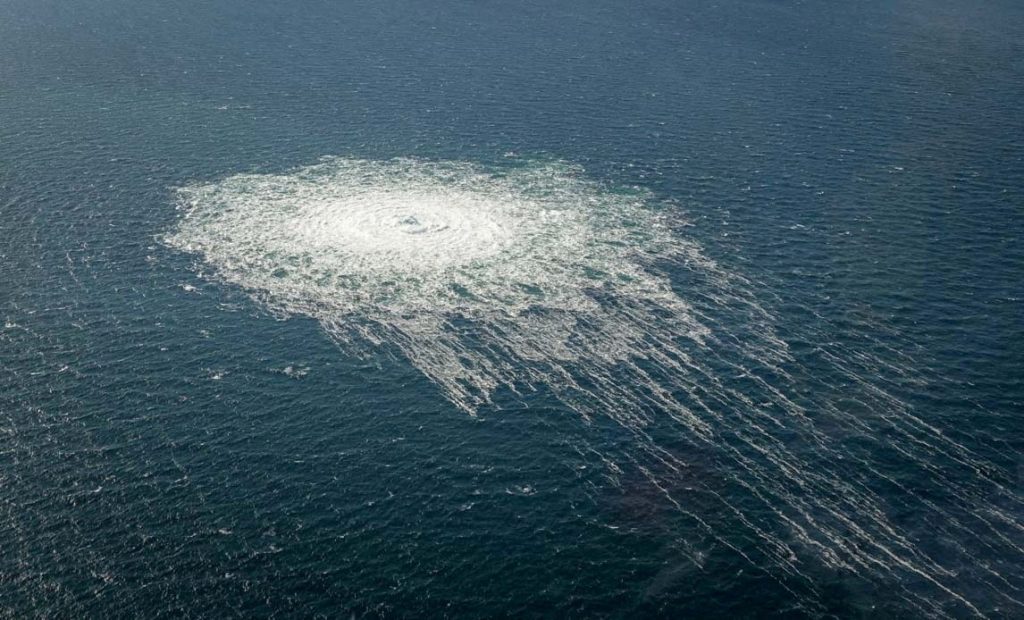
Both pipelines, filled with Russian gas, were damaged by acts of sabotage on September 26, 2022. Explosions severely damaged both pipes of the older pipeline and one pipe of the newer pipeline.
A subsidiary of Russia's Gazprom holds a 51 percent stake in the pipeline. Two German companies each hold 15.5 percent of the shares, with the remaining 18 percent divided equally between companies from the Netherlands and France.
Since Russia was unable to initiate or conduct an investigation into the explosions due to its international isolation following the start of its full-scale invasion of Ukraine, Berlin took the initiative.
Two Ukrainians
Neither the Danish nor the Swedish investigations led to the identification of the perpetrators. On October 10, 2022, Germany launched a major investigation through the Federal Prosecutor General and concluded that the attack on the gas pipelines was carried out by a group of Ukrainians consisting of five men and one woman.
The German prosecutor therefore issued an international arrest warrant in August last year for the Ukrainian Volodymyr Zhuravlev, who was staying in Poland.
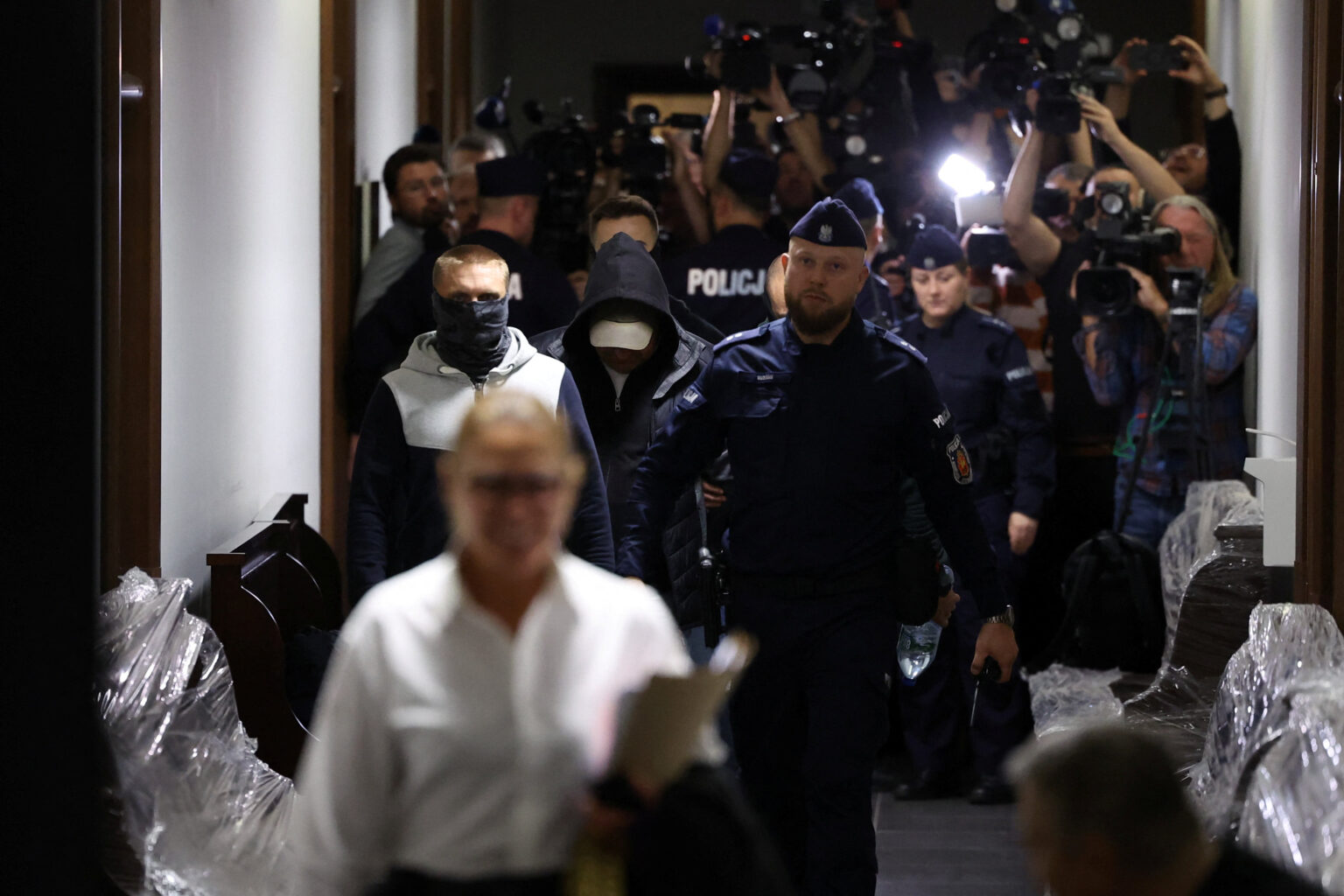
He was arrested by the Polish police on September 30 this year in a town near Warsaw after he had left the EU in the meantime.
According to German investigators, Zhuravlev, a diving instructor, is suspected of having set sail from Rostock in September 2022 on a yacht and attached explosive devices to the Nord Stream 1 and 2 underwater pipelines.
The defense argues that there is no reason for his extradition, as the owner of the pipeline is Russia's Gazprom. Lawyer Tymoteusz Paprocki also argues that there is no evidence to date of his client's involvement in the sabotage. On October 17, a Polish court rejected his extradition to Germany.
“The attack on the Nord Stream infrastructure affects one of the owners of the pipeline, Gazprom, which directly finances military operations in Ukraine,” Paprocki told Reuters news agency.
Shortly before that, on August 21 this year, another Ukrainian, Serhij Kuznecov, was arrested in the Italian city of Rimini.
According to the Italian prosecutor's office, he is alleged to have coordinated the placement of explosive devices near the Danish island of Bornholm from a yacht, where explosions occurred. The German authorities therefore accused him of causing the explosions on the Nord Stream gas pipelines.
Although the court in Bologna had originally approved the extradition of Kuznetsov to Germany, his defense attorney appealed, and the court ultimately decided that Kuznetsov would not be extradited to Berlin for the time being.
His lawyer, Nicola Canestrini, explained that the Court of Cassation in Rome had justified its decision on the grounds that the 49-year-old Kuznetsov's rights had been violated during the court proceedings following his arrest.
According to information from the weekly magazine Spiegel, Kuznecov is a former agent of the Ukrainian Security Service (SBU). The Italian authorities are investigating whether he was also involved in attacks on ships belonging to Russia's so-called shadow fleet in the Mediterranean.
Condemn or praise?
“If Germany prosecutes someone residing in Poland who has destroyed a source of income for the Russian war machine, then we see a clear conflict of interest between Poland and Germany, especially with regard to our view of reality after 2022,” Sławomir Cenckiewicz told the Financial Times, calling on Berlin to drop the criminal proceedings.
Cenckiewicz heads the Polish Office for National Security and is a key adviser to President Karol Nawrocki (supported by Law and Justice).
The Polish president's adviser added that while he did not know whether Poland had helped the Ukrainians in the attack on the gas pipeline, it was “in the interest of the Polish state to protect all those who may have been involved in damaging Nord Stream.”
Polish Prime Minister Donald Tusk (Civic Platform), on the other hand, stated that it was not in Warsaw's interest to extradite Żurawlew to Germany, as “the problem with Nord Stream is not that it was blown up, but that it was built.”
“This is shocking because it forces one to think about what else could be blown up and be considered forgivable or even praiseworthy. One thing is clear, however: we do not want a Europe where prime ministers defend terrorists,” Hungarian Foreign Minister Péter Szijjártó responded to Tusk.
“It is certainly not in Poland's interest or in the fundamental sense of justice to prosecute this citizen and extradite him to another country,” Tusk said. However, he added that the final decision would be made by the court.
On October 6, a Polish court extended Žuravľov's detention by 40 days. His fate remains uncertain. In Germany, he faces up to 15 years in prison.
A justified attack?
“The rule of law means that laws apply to everyone, regardless of whether someone personally agrees with a crime committed in an EU member state,” said the German ambassador to Poland, Miguel Berger.
Maciej Ruczaj, Polish political scientist, former director of the Polish Institute in Prague and former ambassador to Slovakia, points out that while Warsaw is prepared to quarrel with Berlin, paradoxically, “the Ukrainian authorities, for whom Germany is currently an important partner, are reacting with relative restraint.”
In his opinion, Germany's persistent efforts to condemn the perpetrators raise several political and ethical questions that still need to be answered. Was the attack on the gas pipeline, which was built on the initiative of German Chancellor Angela Merkel and Russian President Dmitry Medvedev in the context of the Russian-Ukrainian war, justified or not?