
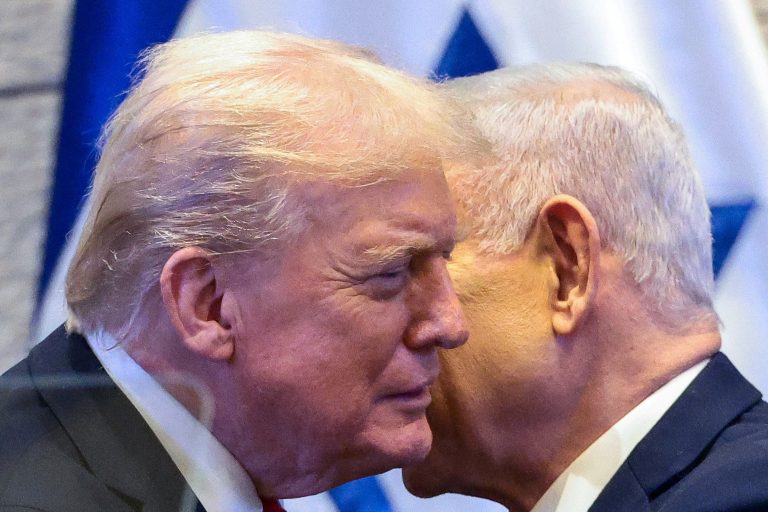
The ceasefire agreement between the Israeli government and Hamas, which has been in place for more than a week, has brought freedom to the last twenty Israeli hostages and two thousand Palestinians imprisoned by Israel. The ceasefire is mainly thanks to President Trump, who was actively supported by Turkish President Erdogan. In contrast, Israeli Prime Minister Netanyahu is losing considerable ground.
The future of the Palestinians is uncertain. On the one hand, international support for a Palestinian state is growing, but on the other hand, the real conditions for this are crumbling. Israel's future is also uncertain, albeit for exactly the opposite reason. Never before has it been so strong in realistic terms, but also so diplomatically isolated and hated by others.
The “Palestinian Mandela” remains behind bars
The Palestinian Hamas movement has finally accepted Trump's peace plan. In reality, it was an ultimatum that American Zionists had coordinated with Israel and refined with Turkey, Egypt, and Qatar. The Hamas leadership has committed to renouncing the Gaza Strip in exchange for amnesty and the possibility of safe passage into exile. Israel is also to gradually withdraw its soldiers.
Responsibility for the Gaza Strip will be temporarily assumed by an international peace committee headed by President Trump, reconstruction will be financed by Arab donors, security will be provided by international forces consisting of soldiers from Egypt, Turkey, Qatar, the Emirates, and other Muslim countries, while Egypt and Jordan will provide training for the police forces. Under these conditions, the Palestinians will then negotiate with Israel on the completion of Palestinian statehood. At least, that is the plan, which neither Israel nor the Palestinians are entirely happy with.
However, the first phase has begun. All twenty hostages held by Hamas have returned to their families. Palestinians from Israeli prisons are also returning. Of the two thousand released, about 250 can be considered terrorists, as they were sentenced to life imprisonment. The rest are more like hostages whom Israel has often arrested without cause over the past two years.
Marwan Barghouti, however, will not be released. This “Palestinian Mandela” has been serving several life sentences for more than twenty years for planning a terrorist attack. He is the most popular Palestinian leader, both in the West Bank and in the Gaza Strip. If the Palestinians could vote freely, he would probably become president.
But then the Israelis would no longer be able to claim that they have no one on the Palestinian side with whom to negotiate. Barghouti offers an alternative to the corrupt and unpopular Fatah, which controls the West Bank, and to the Islamists of Hamas in the Gaza Strip. That is why he remains in Israeli custody.
Peace is uncertain. The reason for this is both Israel and Hamas
. It is by no means certain that the ceasefire will lead to peace. Israel continues to deny unrestricted access to humanitarian aid and makes it conditional on the return of the bodies of the dead hostages. There are about 28 bodies, which the Palestinians have agreed to hand over, and ten of them have already been handed over. However, they claim that they have lost access to the remaining bodies due to Israeli bombing.
The inaccessibility of twenty Israeli bodies is thus leading to the deaths of hundreds of Palestinians every day due to food and medicine shortages. It is clear that Israel will, as usual, seek any excuse to evade its obligations. In March, it used this tactic to destroy Trump's previous peace initiative.
On the other hand, there are also doubts about Hamas. It is using the withdrawal of Israeli troops to temporarily return to its former positions and has been given the green light from Washington, because despite its rhetoric about the terrorist Hamas, the Americans understand that there is no other structure in Gaza that could maintain order.
At the same time, Hamas militants are liquidating collaborators, mostly clans of local gangsters who have become rich over the past two years under Israeli supervision by trading in humanitarian aid. The disarmament and withdrawal of Hamas are only on the agenda for the next phase. But will the resurgent Hamas remain so in the face of expected Israeli aggression?
Trump and Netanyahu pursued different goals
Trump can now enjoy his success to the fullest. While most of the foreign policy successes he boasts about—most recently in his speech to the UN General Assembly—are either not successes at all or were achieved by someone else, the release of the Israeli hostages would probably not have happened without Trump. But even Trump adds that Turkey also played a key role. Erdogan's negotiators convinced their allies in Hamas to accept the plan.
However, Trump has been talking about the hostages since his election. Even before he moved into the White House, he pressured the Israeli government to make the hostages their priority. He was ultimately successful and enjoyed every moment of it: the speech in the Israeli Knesset and the subsequent summit in Sharm el-Sheikh, Egypt, where thirty high-ranking representatives from Europe and Asia expressed their support for him.
Netanyahu had other goals in mind. All of Israel's measures were aimed at depopulating Gaza and finally preventing the establishment of a Palestinian state. Hamas was not to be destroyed because it used terrorism – Israel can come to terms with terrorists of all kinds – but because it stood in the way of Israel's plans. The corrupt Fatah government in the West Bank had long since been neutralized by Israel.
What Israel has achieved and what it has lost
The hostages were convenient for Israel because they could be used to justify the depopulation and destruction of the Gaza Strip. Although Hamas was willing to negotiate their release from the outset, Israel had no interest in doing so. The fact that the hostages are now home makes life difficult for Netanyahu. Hamas is still active in Gaza, and the Israeli public has no interest in continuing the war. After all, the Israelis also celebrated Trump for the release of the hostages, while they booed Netanyahu.
However, Israel has made significant progress toward its fundamental goal over the past two years. It has succeeded in destroying the foundations of Palestinian statehood. Most visible is the total destruction of Gaza and Trump's plan, which in the coming years will not transfer control of Gaza to the Palestinians from Gaza or the West Bank, but will establish an international protectorate.
However, the situation in the West Bank is also catastrophic. The Palestinian government there looks on helplessly as Israeli settlements, often populated by Zionist extremists from the US, are illegally expanded. The settlements have fragmented the Palestinian territory to such an extent that the planned Palestinian state no longer has a contiguous territory.
On the one hand, two years of Israeli aggression have significantly increased the number of states that recognize Palestine as a sovereign state – to 157 at present, including France and Great Britain since September of this year. On the other hand, the real basis for its statehood is dwindling.
Israel's future is uncertain
With Israel, it's the other way around. In terms of real power, it's at the top. Its enemies have either been destroyed (Assad's Syria) or fatally weakened (Iran), and the most powerful state in the world has lobbied like no other. But Israel has never been so isolated.
Other states are shunning it – because of the genocide of the Palestinians, because of its aggressive behavior in the region, and most recently because of the missile attack on Palestinian negotiators in Qatar. When Trump asked Egyptian President Sisi to invite the Israeli prime minister to Sharm el-Sheikh, Turkish President Erdogan threatened to cancel his participation. In the end, Netanyahu stayed home.
He is also rapidly losing support in the US itself, especially moral support. Whereas he used to be able to rely on the money and media of Zionist billionaires and the moral convictions of liberal and conservative opinion makers, today he is left with only the money and part of the media.
Liberals cannot stomach Israel's crimes, while conservatives cannot stomach Israel's interference in American politics. Netanyahu even had to assure Americans this summer that he had nothing to do with the assassination of conservative icon Charlie Kirk. If Israel, as it has done in the past, thwarts Trump's plan, it could lose its last pillar of support. Its future would then be, in Hobbes' words, nasty, brutish, and short.