
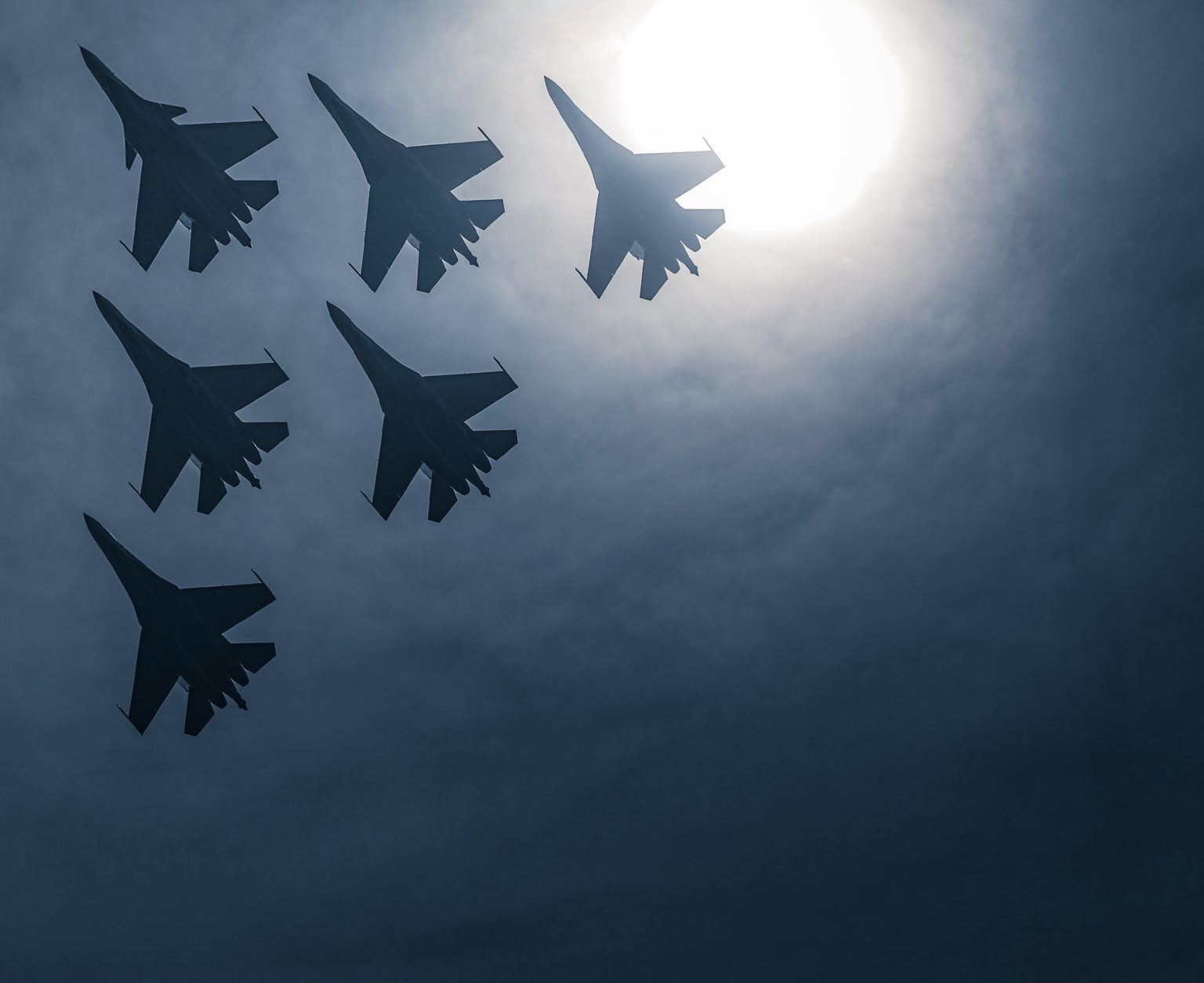
Tensions on the Romanian-Ukrainian border escalated again on Tuesday night after Russia carried out an attack on Ukrainian infrastructure on the banks of the Danube. The Romanian armed forces scrambled four NATO fighter jets—two Romanian F-16s and two German Eurofighter Typhoons. Residents in the northern part of Tulcea County received a Ro-Alert warning message instructing them to seek safety.
Romanian and German fighter jets checked Russian drones
According to the Romanian Ministry of Defense, the alarm was raised after surveillance systems detected a group of air targets moving towards the Danube Delta.
The first two fighter jets took off at 12:50 a.m. from Borcea Air Base, and two more German Eurofighters took off at 2:35 a.m. from Mihail Kogălniceanu Air Base. Their mission was to assess the situation and protect Romanian airspace.
The army had orders to shoot down any drone that entered its territory. However, according to the ministry, none of the Russian drones entered Romanian airspace this time.
“The mission commander had received prior authorization to take action against air targets if they endangered the safety of citizens,” reported Romanian broadcaster Digi24.
Ten explosions just a few hundred meters from Romania
According to the ministry, there were about ten explosions on the Ukrainian side of the border, in the cities of Izmajil and Kilija. The targets of the attacks were the port infrastructure on the Danube, which Russia has repeatedly attacked – it is a strategically important point for the export of Ukrainian grain. The area is only a few hundred meters from the Romanian village of Plauru, where the army built air-raid shelters last year.
At 1:00 a.m., residents of northern Tulcea received a Ro-Alert warning indicating the possibility of objects falling from the sky. The alert lasted about 90 minutes.
“The measure was preventive and served to inform and protect the population. Romania was not the target of the attack,” explained the General Inspectorate for Emergency Situations.
According to the inspectorate's spokeswoman, Cristina Profir, only one call was received during the alarm on the emergency number 112 – a citizen inquiring about the nature of the warning.
Russia violates international law and threatens NATO, Bucharest responds
The Romanian Ministry of Defense described the Russian Federation's actions as “irresponsible” and emphasized that this posed a new challenge to regional security and stability in the Black Sea region.
“Such attacks constitute a violation of international law and endanger not only the security of Romanian citizens, but also the collective security of NATO,” the ministry said in a statement.
At the same time, the ministry assured that all necessary measures to protect the national territory are in place and that Romania, as a NATO member state, remains ready to respond quickly to similar incidents.
Today, experts from the Ministry of Defense, the Ministry of the Interior, and the intelligence services are conducting a reconnaissance mission on the Romanian side of the Danube to assess the consequences of the attack and the security situation in the region.
(lup)