
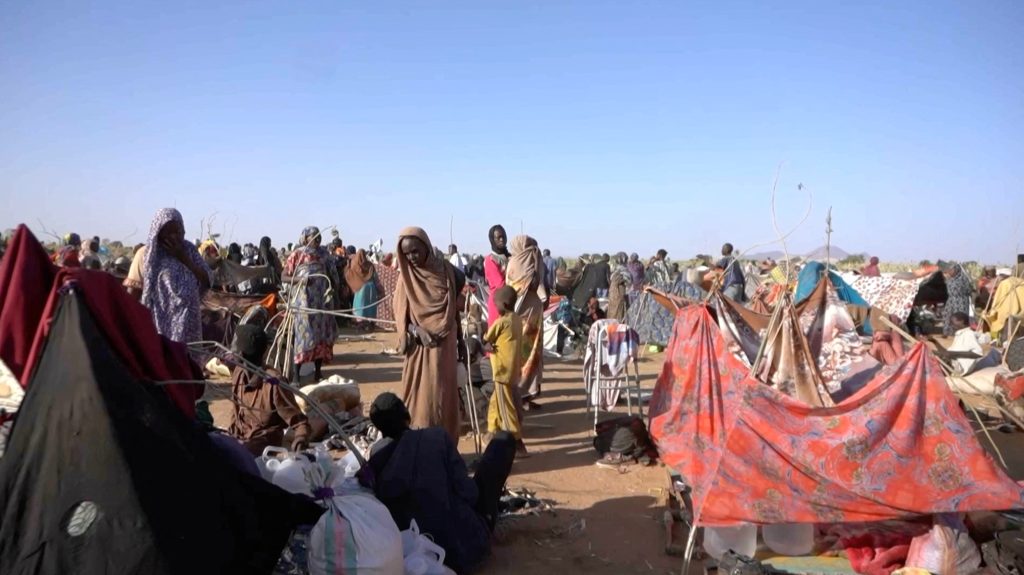
At the end of October, after a year-long siege, units of the Rapid Support Forces (RSF) occupied Fasher, the capital of North Darfur, one of Sudan's 18 regions. Shortly afterwards, the purges began. Despite a wave of refugees that, according to UNICEF, consisted of 600,000 people, a quarter of a million residents remained in the city.
A few days after the city fell, activists from the Fashir Resistance Committee and the non-governmental organization Sudanese Doctors Network announced that members of the RSF had killed everyone who was in the central Saudi hospital at the time of their arrival.
Hundreds of doctors, nurses, non-medical staff, patients, and accompanying persons are said to have been killed. Some doctors were kidnapped by the armed men, who are demanding a ransom of more than $15,000 for them. According to the World Health Organization (WHO), the shooting of hundreds of people in the hospital took place on October 28.
However, the Sudanese Doctors Network reports that all city hospitals “have become slaughterhouses” since the city fell. The WHO is, according to its Director-General Tedros Adhanom Ghebreyesus, “horrified and deeply shocked.”
According to Ghebreyesus, RSF fighters murdered 460 people in the Saudi hospital. However, since the start of the civil war in Sudan, the WHO has recorded a total of 185 attacks on medical facilities in the country, killing 1,204 people and injuring 416.
Arabs and Blacks
About 70 percent of Sudan's population consists of Arabs. Based on videos and satellite images, the United Nations (UN) accuses the RSF of carrying out ethnic cleansing among non-Arab—black—ethnic groups. Representatives of the RSF reject the accusations.
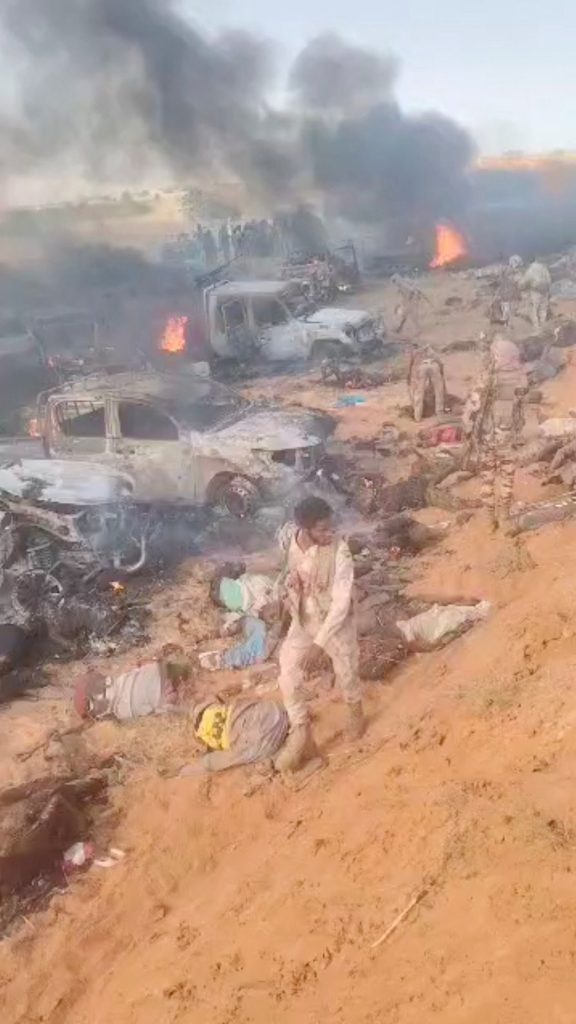
Since government troops left the city and handed it over to Arab militias, satellite images show large “pools of blood” on the ground, “piles of corpses of massacred people,” and people who had been shot while trying to flee the city.
The captured city has been hit by a wave of various acts of violence: house searches, attacks on people near escape routes, executions without trial and without warning, and sexual violence. The African Union condemned “alleged war crimes and ethnically motivated killings of civilians.”
The Rapid Support Forces consist of Sudanese Arabs, and the group's goal is to reduce the number of black people in the country in the name of Arab ethnic and cultural superiority—who are subjected to massive sexual violence, kidnappings, famines, executions, and expulsions from their homes.
A country full of hatred
Estimating the number of victims is very difficult given the confusing situation in the civil war on the African continent. Since April 2023, however, at least 150,000 Sudanese have been directly killed, about 522,000 children have died of starvation, and 12 million people have left their homes.
It should be remembered that Sudan had a population of over 50 million in 2023 and that, despite the unrest, this number is steadily growing. The Sudanese Armed Forces control most of the country, with the Arab RSF in second place in terms of the size of the territory they control.
Smaller areas are also controlled by the Sudanese Liberation Movement (al-Nour) and the Sudanese People's Liberation Movement – North.
In addition to government forces and rebels, third countries are also involved in the war. General Khalifa Haftar, commander of the Libyan National Army and an important ally of Egypt, the United Arab Emirates, and Russia in the region, supports the RSF.
According to some media reports, the refugee crisis that has arisen on the Libyan-Sudanese border suits him – he is trying to present himself as a stable partner who can, for example, distribute humanitarian aid to Sudanese refugees in eastern Libya.
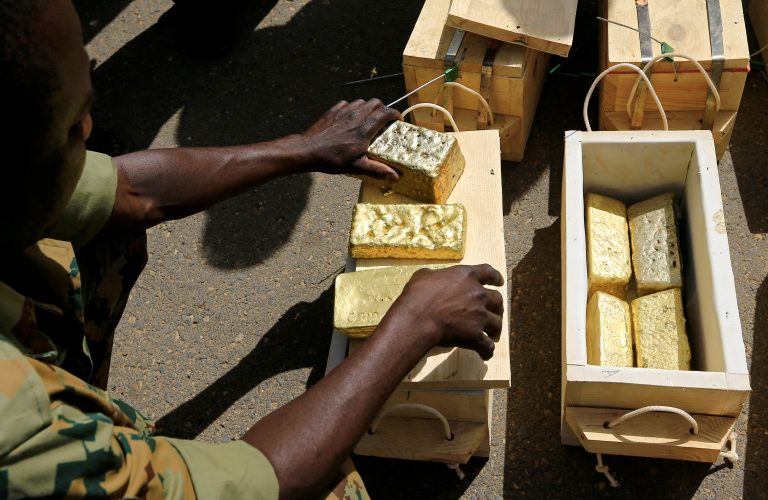
Sudan's external borders are not guarded by anyone, allowing weapons and mercenaries to flow into the country – and gold and white flesh to flow out.
The current civil war is the result of a conflict that arose after the ouster in 2019 of longtime President Umar al-Bashir, who had come to power in a coup in 1989 – the army removed him from power, but the people on the streets demanded democratic reforms and no military dictatorship.
After a period of upheaval, a joint military-civilian government was formed, which was overthrown in October 2021 in another coup: this was initiated by the current head of state, General Abdel Fattah al-Burhan, and his deputy and current RSF chief, General Mohamed Hamdan Dagalo, known as Hemedti.
After the coup, the former allies were unable to agree on the future direction of the country and the commander-in-chief of the armed forces. Since this split, Sudan has been sinking into a cycle of violence.
The Russian-Ukrainian trail
Shortly after the start of the Russian invasion of Ukraine, Sudan supplied weapons to Ukraine. When civil war broke out in the country a year later, Kiev sent its soldiers to support government troops, according to findings by the Wall Street Journal.
Members of the Russian private military company Wagner also fought on the side of the rebels – after the death of Yevgeny Prigoschin in August 2023, they concentrated on protecting the gold mines, which also serve to support the Russian war machine in Ukraine.
In September 2023, Ukrainian President Volodymyr Zelensky stated on social media that he had also discussed the activities of Russian paramilitary groups in the country with his Sudanese counterpart al-Burhan.
“We are waging a full-scale war against Russia. They have troops in various parts of the world, and we sometimes try to take action against them there,” said Kyrylo Budanov, head of the Main Intelligence Directorate of the Ukrainian Ministry of Defense, commenting on the deployment of Ukrainian soldiers.
Thirdly
The current war is nothing new in Sudan. The first civil war broke out in 1955 between the north—now Sudan—and the south—now South Sudan. The conflict between Muslim Arabs on one side and Christian and pagan blacks on the other ended in 1972.
The second civil war began as early as 1983, when the autonomy of the southern part of the country was revoked and Islamic Sharia law was introduced. The war claimed millions of victims and culminated in a peace agreement that restored autonomy to the region in 2005.
In accordance with the agreement, a referendum was held in 2011, in which the overwhelming majority of the population of the southern regions voted for independence, leading to the establishment of an independent and internationally recognized country called South Sudan. With the declaration of independence, the south of Sudan – today's South Sudan – escaped a third civil war, which now only afflicts its northern neighbor.