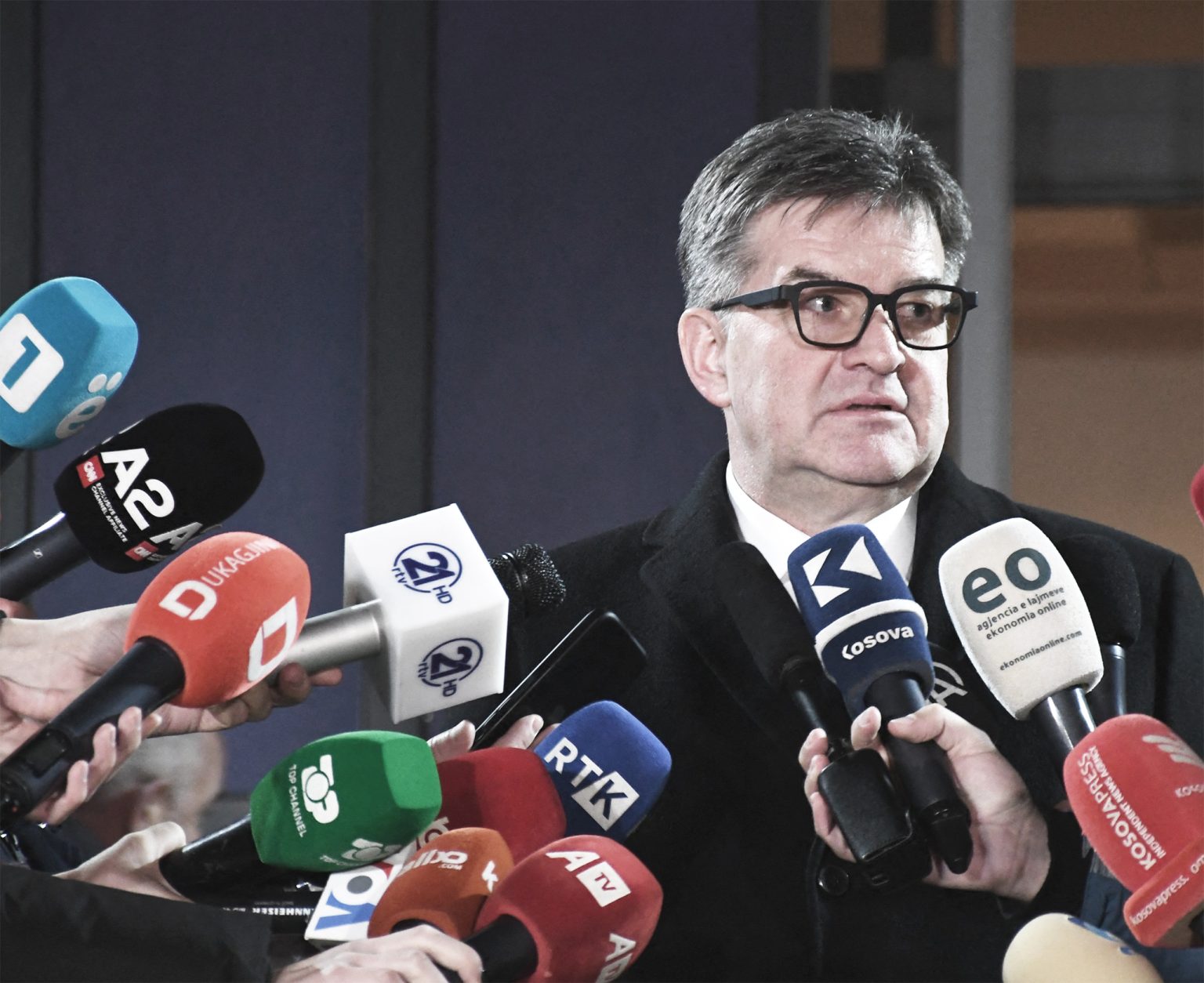
"The reopening of Epstein's case took place after my departure from New York, and the full extent of his inexcusable actions, which I strongly condemn, only came to light after his arrest," Lajčák said.
However, this is not entirely true. The police began prosecuting the sexual deviant in March 2005 based on accusations from underage girls who claimed that Epstein sexually abused them in his villa—often during meetings that began as massages. In June 2008, the criminal confessed to soliciting prostitution from an underage girl and served 13 months in a lenient regime – with permission to leave prison for 12 hours a day. In 2015, one of the victims also sued Epstein's partner and accomplice, Ghislaine Maxwell, who was found guilty in the case, but not until 2021.
These were widely publicized cases that must have come to the attention of Epstein's network of wealthy and influential friends.
However, no evidence has yet been presented to suggest that Lajčák was involved in Epstein's crimes.
Based on the files, Denník N reported that Lajčák received an invitation from Epstein to his Florida residence, where, according to the allegations, the rape of minors took place.
However, there is no confirmation that Lajčák traveled there. In March 2019, Lajčák proposed a meeting with Epstein in Vienna, and according to emails dated March 22, his private plane did indeed land in the Austrian capital. However, there are no photographs or other evidence of the meeting.
The diplomat refuses to comment on the case and does not respond to media reports.
Fico must learn his lesson, Danko repeats
However, the topic is alive on the domestic political scene.
It has been taken up by the coalition SNS, which had a conflict with Lajčák in 2018 over his unwillingness to support the migration pact, which Lajčák had drafted while working for the UN. The nationalists are therefore persistently demanding that Lajčák step down from his position as the prime minister's advisor on national security. Incidentally, they already had a problem with this when Slovak President Peter Pellegrini announced it in the spring of this year.
"I will try to convince the prime minister that Lajčák is dangerous for him," said SNS chairman Andrej Danko on the Markíza TV show Na telo.
Since Lajčák wrote to Epstein from his work account, Danko called on Foreign Minister Juraj Blanár (Smer) to have the ministry review all similar correspondence and determine whether there had been other leaks of sensitive information.
According to KDH Vice-Chairman Viliam Karas, the investigation is necessary because the communication between the two men was related to Lajčák's role as Slovak foreign minister. He consulted with Epstein on the appropriate political response on behalf of the Slovak Republic and, as a member of the government, had access to highly sensitive information.
"Given the publicly known type of services that Epstein provided not only to his friends, it is clear that these could have been used as a tool to blackmail high-ranking individuals," Karas told Štandard.
Lajčák has not yet announced that he wants to leave Fico's team of advisors. "I say that Lajčák can't stay there for even ten minutes," concluded the SNS leader.
The opposition shares the same opinion, arguing that the foreign minister's contact with a sex offender poses a security risk to the state.
Convening the Security Council of the Slovak Republic
Karas even believes that the Security Council of the Slovak Republic should convene to discuss the case.
"Epstein was not just an ordinary lobbyist; he worked for the secret services of at least two member states, either as an agent or an informant," explained the KDH politician.
According to him, the Security Council should adopt a report on whether the Slovak Information Service and Military Intelligence knew about Lajčák's communication with Epstein, whether they warned him that he was a problematic person, and whether they informed the three highest representatives of the state about it. "If this did not happen, I consider it a failure of the Slovak security forces," Karas concluded.
We asked the President of the Slovak Republic whether he would propose convening the Council and the Office of the Government of the Slovak Republic, or whether the Prime Minister would initiate it. We did not receive a response from either institution.
Other ministers could also propose a meeting of the Security Council, but none of them did so.
The Ministry of Foreign Affairs merely repeated to Štandard that it would not interfere in the investigation. It also avoided answering the question of whether, at the initiative of the SNS, it had begun to monitor the content of communications that members of the ministry may have had with Epstein.
Fico is silent, and so is Hlas
The head of the Slovak Prime Minister's Advisory Board and MEP Erik Kaliňák said on Sunday's STVR program O 5 minút 12 that Lajčák has Fico's trust and he sees no reason why he should leave his post.
The Prime Minister himself has not announced any changes to his advisory board. When asked about this by journalists after Wednesday's government meeting, he replied only: "Next question."
However, in his speech on the anniversary of the Velvet Revolution, the prime minister returned to the communication between Epstein and Steve Bannon on March 15, 2018, in which Bannon wrote to him that "the government in Slovakia will fall—according to plan." Fico called for a re-investigation of the murder of Ján Kuciak and his fiancée Martina Kušnírová, which preceded his resignation.
However, Epstein sent the message about the fall of the government about two hours before Fico officially resigned, and given the two weeks of large protests, a government reshuffle was expected at that time.
The leader of the second strongest coalition party, Hlas, and Interior Minister Matúš Šutaj Eštok therefore told Fico that the Kuciak case had been closed and that its reopening was technically impossible. He added that he had not discussed the Lajčák-Epstein case with the prime minister and did not plan to do so.
According to Minister Tomáš Taraba (SNS nominee), it makes no sense for Fico to keep Lajčák close. "You can't, on the one hand, demand an investigation into what Lajčák writes as foreign minister and, on the other hand, trust him as an advisor to the prime minister," Taraba told Štandard.
Korčok ignores his role in the ministry
Since Ivan Korčok was serving as state secretary at the Ministry of Foreign Affairs at the time, the editorial office sent questions to the opposition party Progressive Slovakia, of which he is a member.
We were interested in whether Ivan Korčok knew about the communication between Lajčák and Epstein, how he assessed the fact that the former minister consulted sensitive foreign policy issues with a person without an official position and security clearance, and whether he had ever communicated with Epstein or met him in person.
We did not receive a response. The former presidential candidate responded to the scandal only with a status update in which he omitted his own involvement in the ministry and called on Lajčák to explain his communication with the offender.