It will not be easy to dictate European "net zero" to the world
After the initial shock of 2022, the natural gas supply situation to Europe has calmed down, albeit in a new price reality. Liquefied gas supplies from two countries, the US and Qatar, play a key role.
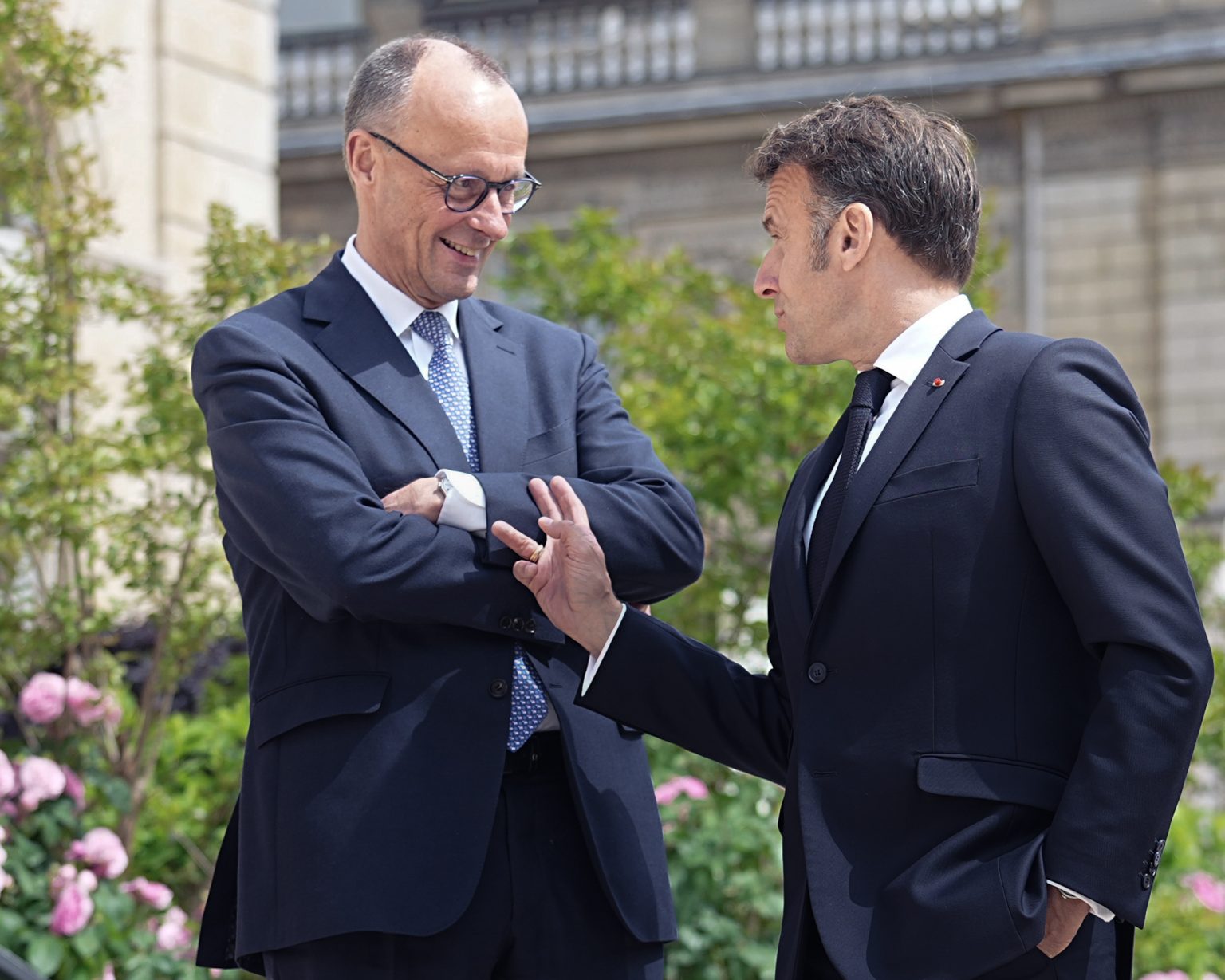
Friedrich Merz and Emmanuel Macron. Photo: Michael Kappeler-Pool/Getty Images
|
Now these two EU countries have reminded us that it is nice to have big ambitions in climate policy, but the EU is not in a position to dictate them to the rest of the world.
As part of building comprehensive European climate legislation, methane emission regulation (MERR) is in place from 2024. This obliges producers and importers of fossil commodities to monitor, prevent and report methane leakage from the extraction of these resources.
This year saw the creation of another package of corporate climate legislation, the name of which I will not attempt to translate - the Corporate Sustainability Due Diligence Directive (CSDDD).
Phased in from 2027, it requires all companies above a certain turnover in the EU to comply with a series of rules throughout their supply chain. The rules cover two areas - human rights compliance and meeting carbon targets.
If they are breached, they carry a draconian fine of up to five per cent of global turnover. This means that, for example, the US Exxon would face a fine of up to €15 billion if it failed to comply with European emissions rules when extracting and processing gas in the US.
In late October, therefore, the US and Qatari energy ministers sent an open letter to EU leaders that could be summed up in the phrase: "Have you thought this through, boys?" In it, they suggested that they might as well skip such a trade risk with the EU and sell their gas, which together accounts for 70 per cent of LNG imports and a fifth of the EU's total gas imports, to Asia instead.
This is not the first critical letter about the CSDDD. Opposition to the new regulation has also been voiced from within the EU. During the so-called Evian meeting with Friedrich Merz and Emmanuel Macron, 46 heads of large European companies expressed concern about the competitiveness of European industry in the global market. With the CSDDD around their necks, their costs will be much higher than those of competitors from Asia or America. However, the letter was not public and when it was leaked, several companies distanced themselves from it.
Perhaps that is why European officials feel on the horse. They measure their policies not by economic effects but by political consequences, and the EU's position of leading the climate crusade still seems unshakable.
Domestic firms can be intimidated by an army of hired climate lobbyists, but American or Qatari firms hardly. Even with them, however, the EU is not playing completely without cards. The demand for low-carbon gas and oil production represents a business opportunity. The world is seeing the first examples of low-emission projects that combine the use of renewable electricity with underground carbon storage, which such activity offers. The commodity from such a project can command a premium price on the market.
The problem, however, is that there are no international standards for low-carbon LNG, and each customer imagines it somewhat differently. However, the first market solutions for international certification are already being offered.
But low-carbon upstream projects are coming to the market in units of units and will make up only a small fraction of the global LNG supply by 2027. Perhaps the EU is rather counting on the US and Qatar to call its bluff and actually miss out on the attractive European market in return for investment in new technologies. The so-called Omnibus, a package of legislation simplifying mandatory reporting and other European corporate red tape, comes with some concessions from the EU under the CSDDD.
However, the EU is notoriously bad at energy strategy planning. We can only hope that this time it understands the game and its cards.
Source.
Placeholder For Topreaded Placeholder For Topreaded
Placeholder
Placeholder
Placeholder For Topreaded Placeholder For Topreaded
Placeholder
Placeholder
Placeholder For Topreaded Placeholder For Topreaded
Placeholder
Placeholder
Placeholder For Topreaded Placeholder For Topreaded
Placeholder
Placeholder
Placeholder For Topreaded Placeholder For Topreaded
Here is placeholder for Article excerpt Here is placeholder for Article excerpt Here is placeholder for Article excerpt Here is placeholder for Article excerpt
Here is placeholder for Article excerpt Here is placeholder for Article excerpt Here is placeholder for Article excerpt Here is placeholder for Article excerpt
Here is placeholder for Article excerpt Here is placeholder for Article excerpt Here is placeholder for Article excerpt Here is placeholder for Article excerpt
Welcome to the comments section of the Štandard daily. Please take note of our guidelines, comments are moderated by us. You can contact the moderators at [email protected].
Participate in the discussion
Comments are available to subscribers only. If you'd like to join the discussion, choose a subscription starting at €6.72 per month.
All comments 0
Register
Comments are available to registered users only. If you'd like to join the discussion, register here.