
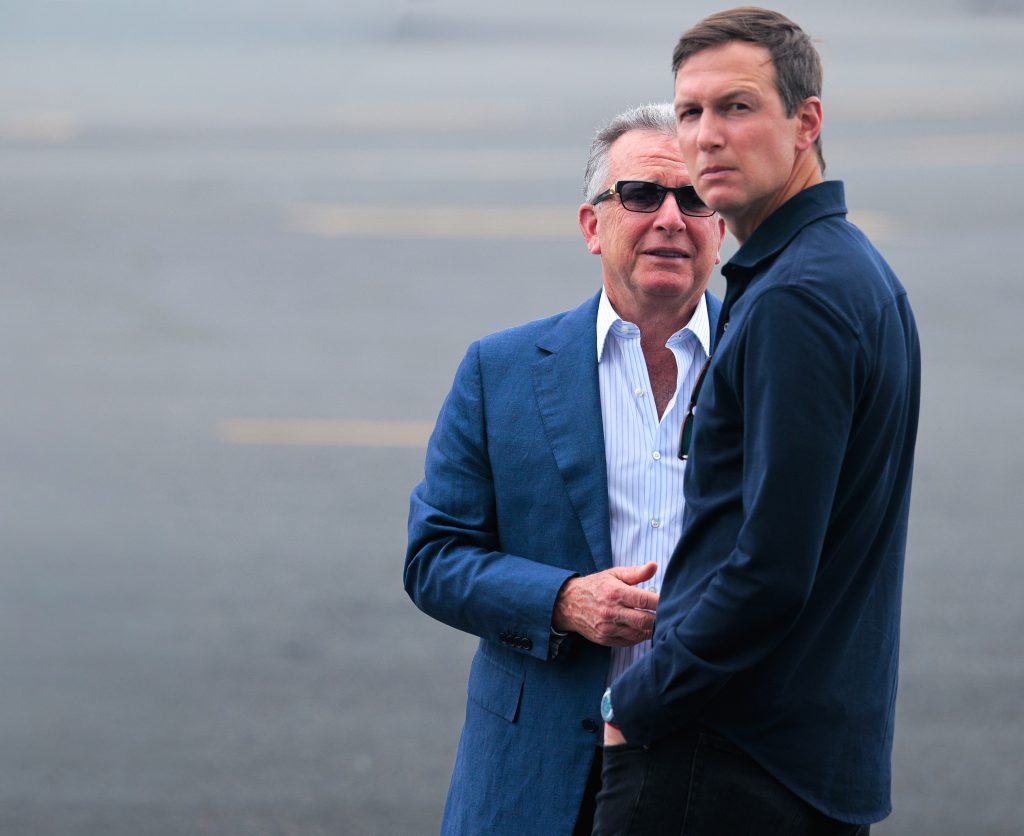
US special envoy Steve Witkoff and President Donald Trump's son-in-law Jared Kushner on Tuesday launched another series of talks with President Vladimir Putin. They traveled to Moscow on Monday evening, aiming to advance a peace deal in the war in Ukraine.
Witkoff was welcomed by Russian special envoy and director of the Direct Investment Fund Kirill Dmitriev, according to Reuters sources. The two have met at least five times before, with their talks reportedly often covering joint investment opportunities.
The plane carrying the U.S. negotiators landed in Moscow at 1:40 p.m. local time (11:40 a.m. EDT), greeted by interpreters who will attend the meeting with Putin, Interfax news agency reported. The meeting itself began with the emissary's arrival at the Kremlin at 3 p.m. CET.
Trump is relying on the skills of the negotiators, who have managed to calm the situation in the Gaza Strip. He himself ran for re-election a year ago on the promise that he would end the Russian-Ukrainian conflict "within 24 hours" of his inauguration. He later moderated his statement and, after entering the White House himself, launched a series of meetings with Russian officials - the first held in Riyadh, Saudi Arabia.
In August, the US and Russian leaders even met at the highest diplomatic level - Trump and Putin held talks in Alaska. As part of these and previous talks, they discussed the mutual restoration of embassies, and in March they also agreed to a 30-day ceasefire in the air and at sea.
A follow-up to the Alaskan summit was planned in Budapest in the previous months, but eventually abandoned by both sides.
The Trump administration's peace efforts were the best chance to end the war since the first negotiations broke down shortly after the 2022 invasion, a Russian source told Reuters.
Combat background to the talks
The US president's son-in-law and his golfing teammate have arrived in the Russian capital at a time when Moscow's forces' advance is accelerating. The Donetsk and Zaporizhzhya regions, in particular, are seeing thefastest advance since the beginning of the year.
On Sunday, Putin accepted information from Chief of General Staff Valery Gerasimov that the Russians had "liberated" the city of Pokrovsk in the Donetsk region - a strategic point they have been fighting over since July 2024. Ukraine's 7th Rapid Deployment Corps denied the report on Monday, saying Kiev's forces were still holding the northern part of the city.
Meanwhile, the Russians have captured the villages of Zelenyi Hai and Dobropilla in Zaporizhzhya, according to a Defence Ministry statement, although this report could not be independently verified at the time of writing. The Ukrainian General Staff has denied this. "The brazen statements of the leadership of the aggressor country about the 'conquest' of these settlements by the Russian army do not correspond to reality," it said.
Trump dispatched a replacement for former special envoy Keith Kellogg to Kiev in late November. He was too sympathetic to the Ukrainian side, according to administration sources, so he was replaced by "Secretary of the Army" Dan Driscoll.
The Pentagon's deputy assistant secretary for ground forces and a former classmate of Vice President JD Vance, according to Wall Street Journal sources , warned the Ukrainians that the US would again suspend intelligence sharing and arms shipments if Kiev did not agree to compromise terms.
Russia "for years" has been firing missiles at Ukraine "almost as fast as it could make them," but is now producing enough to build up a stockpile, the New York Times quoted Driscoll's sources as saying.
The so-called Secretary of the Army subsequently took part in talks in Geneva, from where he travelled to the United Arab Emirates to meet with the Russian delegation.
Negotiator without credentials, peace proposals without compromise
The paradox is that while Kushner held an official position in the first Trump administration and was instrumental in the Abrahamic Accords [a series of agreements between Israel and Islamic states, editor's note], he does not hold one in the current one.
Nevertheless, he was involved with Witkoff in the cease-fire negotiations in the Israeli-Palestinian conflict, in which they secured the exchange of hostages kidnapped on October 7, 2023, and was one of the hosts of the Ukrainian negotiators in Florida for the November 30 talks.
For the Russians, the springboard for the negotiations is a 28-point plan that the Americans have drawn up based on a list of Russian demands. Although their basis - a neutral Ukraine, a halt to NATO expansion, an end to the sanctions regime, and recognition of the annexation of Crimea - has not changed, Moscow has expanded them to include a demand for recognition of four unilaterally annexed areas on the coast of the Sea of Azov.
This plan, which the Western establishment describes as 'pro-Russian', has been reacted to by European leaders, who have significantly reduced it to 19 points. Another plan came out of the negotiations between the Ukrainians and their Western sponsors in Geneva at the end of November, and the situation surrounding the 'peace plan' is thus increasingly unclear.
The conclusions of the Geneva talks were taken up by U.S. and Ukrainian negotiators at the Florida meeting and "refined," Ukrainian President Volodymyr Zelensky said during a visit to Ireland on Tuesday.
"Our diplomats are actively working with all partners to ensure that European countries and other participants in the coalition of the willing are meaningfully involved in the preparation of decisions," he added.
Discussions between Witkoff and Kremlin foreign policy adviser Yuri Ushakov reportedly led to the development of Trump's "pro-Russian" plan, Bloomberg reported. The news service of the well-known New York billionaire also published an alleged transcript of a conversation between Ushakov and Dmitriev - if the transcript is true, it is an intelligence leak obtained from the embassy wiretap.
Now the chances of ending the war are better than ever, the Ukrainian leader said, referring to the meeting in Moscow. He added that he expects information from the US team "immediately" after the negotiations and hopes to meet with negotiators as soon as possible.
He also stated that Russia's frozen assets in Western banks "should have been used for the defence and reconstruction of Ukraine a long time ago." This view was recently opposed by Belgian Prime Minister Bart De Wever, who rejected such a marked erosion of confidence in the investment environment.
He also told reporters in Dublin that he was ready to meet with Trump, although this depended on the outcome of Tuesday's negotiations. The White House chief has refused to meet with the presidents of both Russia and Ukraine until they have made at least some progress on peace efforts.
Europe is making unacceptable demands
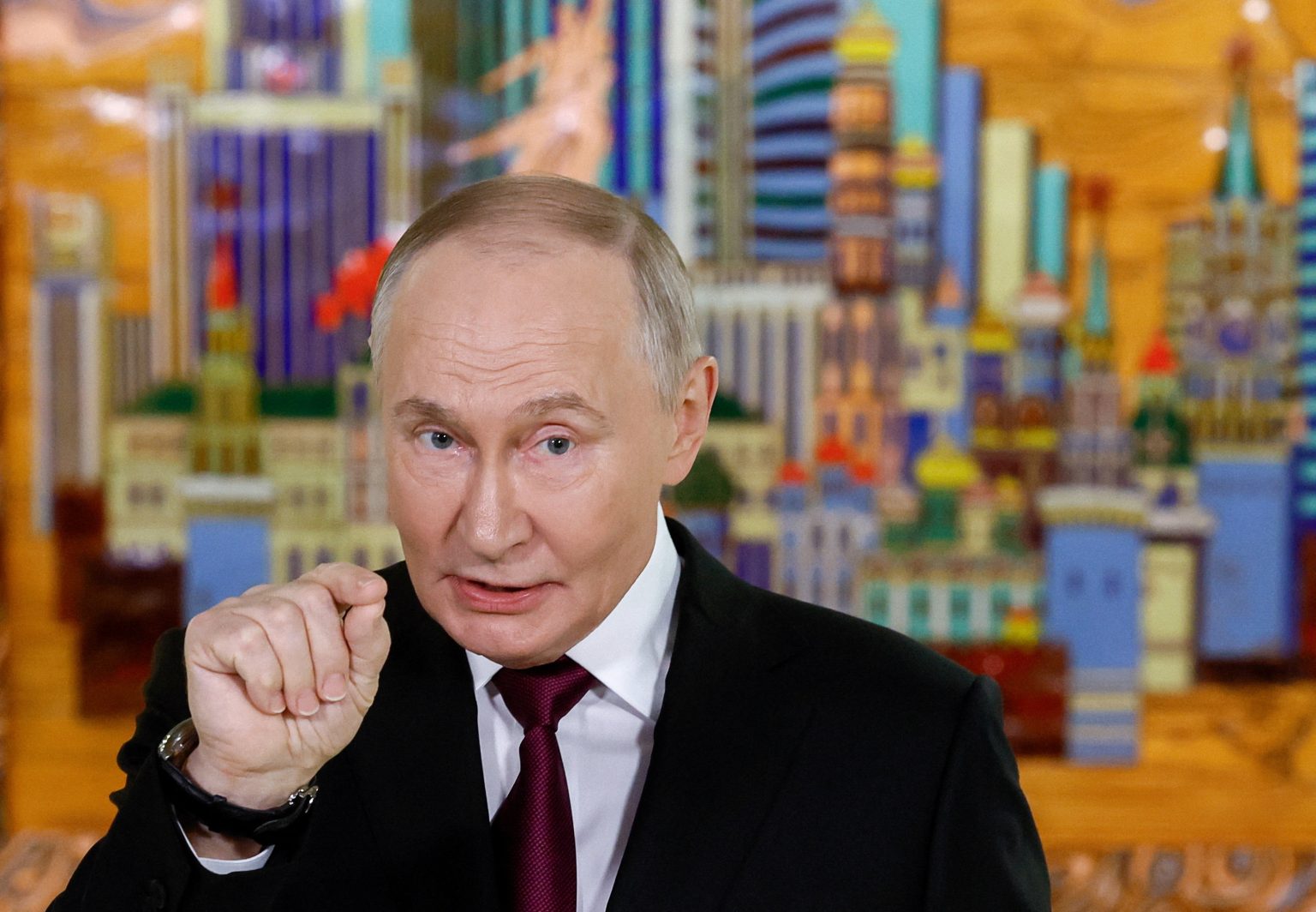
The Kremlin chief repeated his account of the capture of Pokrovsk - which the Russians call Krasnoarmeysk - and added that the city had "special significance" for Russians. "It is a great base for further achieving our goals. It is fully under the control of the Russian army," he said.
Putin was also responding to a series of attacks on Russian tankers off the coast of Turkey. He described the incidents as "piracy" and warned that Russia would increase strikes on Ukrainian ships and facilities. "The most radical solution is to cut Ukraine off from the sea, then piracy will be basically impossible," Putin said in a televised address.
He also threatened action against tankers from countries that help Ukraine. In his own words, he hopes the Ukrainian leadership will "consider whether such a practice is at all reasonable."
On Tuesday, Turkish authorities confirmed that a Russian tanker carrying a cargo of sunflower oil was hit by a drone off the Turkish coast, but the crew suffered no injuries. Ukraine has denied any involvement in the incident.
He also commented on the efforts of European officials to revise the US draft ceasefire agreement. "The Europeans have shut themselves out of the negotiations," Putin said, referring to an earlier statement by his diplomatic chief, Sergei Lavrov, "because they have cut off all contacts."
He went on to say that the leaders of Britain, France or Germany "are preventing the US administration from achieving peace through negotiations" and "do not have a peace agenda, and instead stand on the side of war." The Europeans, according to Putin, are making demands that are unacceptable to Moscow.
According to Putin, Russia does not want war with European states - which, with exceptions, are part of NATO - but it is not afraid of escalation. "If Europe wants war, we are ready now," he stressed before meeting with US emissaries.
"We are not planning a war with Europe, but if Europe wants and starts one, we are ready to respond immediately," Putin declared. He also accused European countries of obstructing US President Donald Trump's peace efforts.
(sab, reuters)