U.S. companies, however, do not actually buy oil from Russia. In this respect, the effect of the new sanctions is nil.
Their role from an international perspective is much more significant. Although the White House cannot order foreign entities not to do business with Rosneft and Lukoil, it can erect a scarecrow big enough for companies in China, India or Europe to do so on their own.
Indeed, the approved document contains a paragraph stating that the US can extend its sanctions to those companies in third countries that continue to do business with Lukoil and Rosneft. Or to those who mediate the exchange of payments for oil supplies, that is to say, banks in particular.
This means that, even if individual oil refiners do not fear the sanctions restrictions and continue to trade, financial houses will be reluctant to continue to transfer money to the accounts of Russian suppliers. Indeed, if they were targeted by US sanctions and cut off from its financial system and the dollar, it would be devastating for them.
They have only just come into force and already their impact is being felt
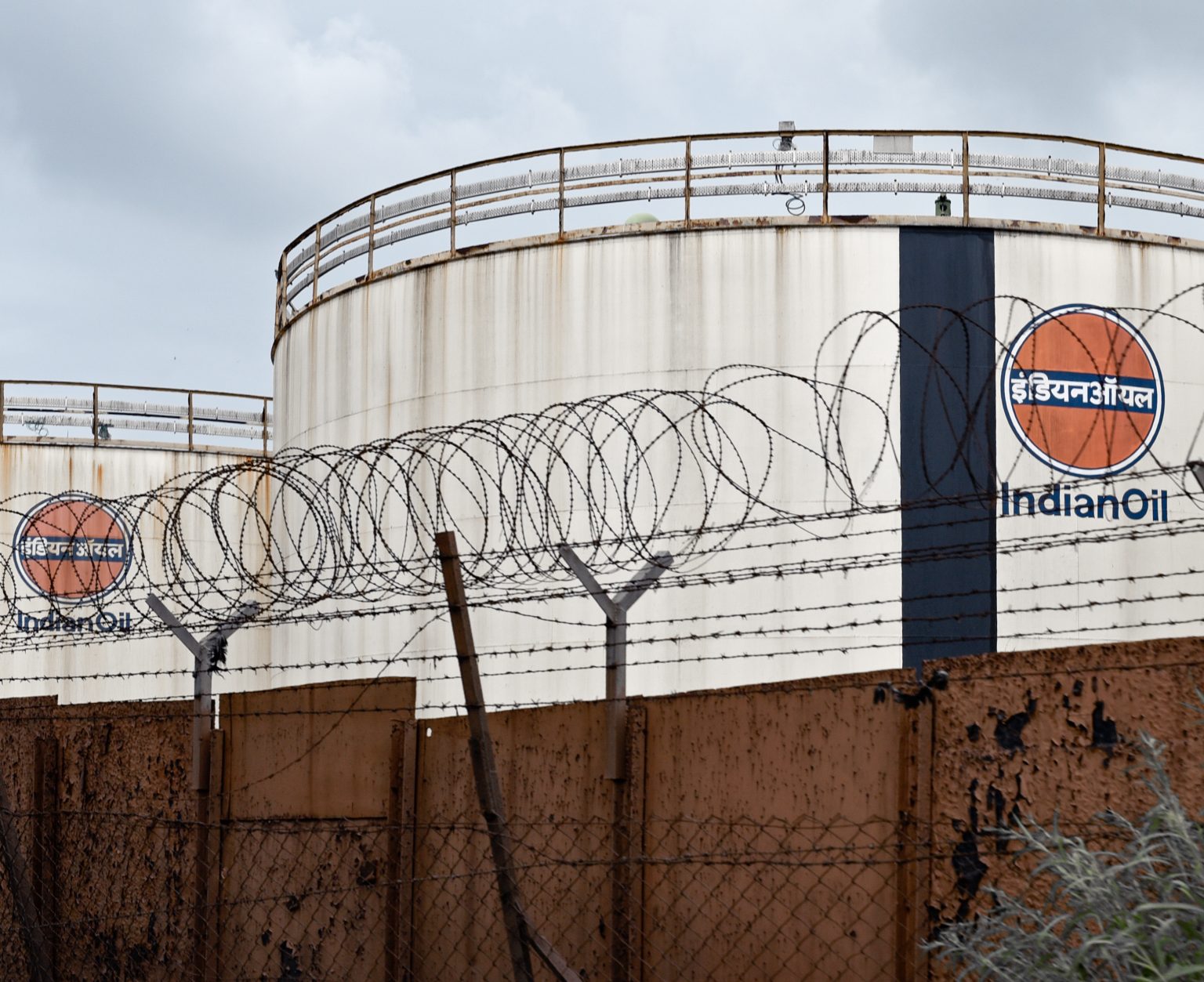
Today, the eyes of the world are focused mainly on the actions of Indian companies. This is no coincidence. The country is, along with China, Russia's most important customer, but it also has relatively strong trade relations with Western countries, so American pressure on it may be paying off.
Before the war, India bought almost no oil from Russia; after the war began and Western sanctions were imposed, companies there were able to negotiate double-digit discounts from the Russians, which increased imports by thousands of percent. Last year, it took in an average of nearly 1.8 million barrels a day, more than a third of its needs.
However, the Carnegie Endowment for International Peace reported the day before the sanctions went into effect that India's purchases of Russian crude oil fell sharply in October-November. By around a third. While on August 3 or 10, when neither the sanctions nor the US 25 per cent additional tariffs on Indian goods (as punishment for trade with Russia) were yet in force, the country imported around 1.5 million barrels a day, on the last two measured days the volume was "only" around one million.
CEIP analyst Vrinda Sahai adds that Indian refiners increased purchases of Russian crude after the initial shock to stock up for some time in advance before the sanctions came into effect. This is illustrated by a Reuters report at the end of the month. The latter reported that Russia's average daily oil imports to India in November would be somewhere around the figure of 1.8 to 1.9 million barrels, the most in almost half a year.
However, that Russian oil imports are likely to fall in the weeks following the sanctions is suggested by other reports. Indian conglomerate Reliance Industries, which accounts for about half of Russian oil flows into the country, said it was stopping imports of Russian crude for its Jamnagar refinery. Meanwhile, the media in turn reported that Indian companies were cancelling a large part of their December orders.
The effect will only be temporary. Neither sanctions nor tariffs are the new wheel
The cause of Indian traders' fears and actions are not only secondary sanctions, but also the tariffs imposed by the White House on New Delhi for doing business with Moscow, or the recent European Union legislation banning the import of products made from Russian-origin crude oil.
Indian refiners thus face some pressure from three sides - not only from Washington and (indirectly) Brussels, but also from Indian exporters to the US, who are burdened by the 25 per cent tariffs, or from parts of the domestic political spectrum.
Nevertheless, the country cannot be expected to fundamentally shift away from Russian oil. Several arguments support this conclusion.
The first is that oil is a commodity that is very easy to trade. The Russians have so much of it that it will not easily disappear from the market. Simply, if the Indians buy it on a smaller scale, they will sell it elsewhere, albeit probably at some discount, which is a tax on the less attractive image of the country of origin.
For example, it may be that states that produce oil themselves will import cheaper Russian commodities for their own use and sell their supplies more expensively to Europe, as is already happening to some extent - an example of this is not just Turkey or Azerbaijan, but especially Middle Eastern states such as Saudi Arabia and the United Arab Emirates.
After all, the fact that supplies from Lukoil and Rosneft are not evaporating shows the expectations of traders on the commodities market. If they were counting on global supply suddenly being a few per cent lower, there would be a fairly significant rise in prices. Nothing like that is happening. Although they initially jumped by a few percent, they continue to follow a long-term downward trend.
Moreover, if one looks at the dilemma of Indian refiners in more detail, they may not actually be that bothered by the factors mentioned above.
They do not have to buy oil from Lukoil and Rosneft. It is enough if a new middleman is created in Russia to buy oil from the giants and sell it on to India. Or if the two companies sell their stocks to other producers who are not yet under sanctions. Quite simply, when money is involved, there is no limit to creativity in international trade.
Moreover, what is already happening on a large scale is that refineries that produce petrol, diesel or motor oil from crude oil are also mixing oil from elsewhere into the Russian commodity. At the same time, the Kremlin operates a shadow fleet of tankers that is difficult to monitor. The origin of the oil is therefore not too difficult to falsify, making it easier to sell the products to Europeans.
The 18th sanctions package, which bans EU countries from importing diesel or petrol refined from Russian crude from third countries, has been in place since July, yet the data on Indian imports does not indicate a major turnaround at all.
Moreover, Sahai concludes her analysis by adding that Nayara Energy, which operates India's second largest refinery, will continue to import from sanctioned entities, as Rosneft owns almost half of its shares. Other Indian refiners, too, are already looking for ways to continue buying through non-sanctioned intermediaries, according to the company.