
An asylum seeker who was legally in the United States attacked National Guardsmen near the White House, killing one member, seriously wounding another, and suffering serious injuries himself.
The perpetrator was a former member of the Afghan militia which, in cooperation with US special forces and intelligence services, was eliminating Taliban insurgents and their supporters.
His current crime is a reminder of the fallacy of the thesis that the West ensures its security through proxy wars by keeping potential threats as far away from its borders as possible. It is also a warning of the threat that may come to central Europe from a divided Ukraine.
Out of area operations
Western intervention against the Afghan Taliban has been defended by arguing that if the US and Europe confront the Islamists in Central Asia, it will halt their westward expansion and avert the threat of a clash at home on European or American soil - the September 11, 2001 attacks on the New York twin towers served as an ominous memento.
The West also wanted to conserve its own forces by bringing local people into the fight. At the time, German Defence Minister Peter Struck even explained that his country's security had to be fought 'under the Hindu Kush', and NATO had developed a penchant for 'out of area' operations, i.e. outside the North Atlantic area.
None of this was true. Above all, the Taliban had no expansionist intentions. It had indeed established a hard-line Islamist regime in Afghanistan, but it was not considering exporting it; it was not threatening anyone beyond its borders, let alone Europe or the US. It is true that the Taliban refused to hand over to the Americans Osama bin Laden, whom al-Qaeda, according to Washington, carried out the attack on New York.
However, the authorship and circumstances of this attack are far less clear than the American propaganda of the time claimed. There were no Afghans involved, but mainly Saudis from Saudi Arabia, or citizens of other Arab states. Moreover, as Tucker Carlson has recently pointed out, the masterminds of the assassination were in the US under the protection of US intelligence services. Thus, the role of the American deep state in connection with the assassination remains an open question.
Western intervention in Afghanistan, as elsewhere, has spread hatred on all sides. It divided the local population into a narrow privileged group working for the US and other occupying powers, and a majority society subjected to the hardships of occupation. Enough has been written about how the West did not win the hearts of the occupied. The rapid rise of the Taliban in the last months of the American presence was proof of their resistance.
The Chosen Ones and the 'special forces' under the supervision of the CIA
But hatred of the West also affects its erstwhile collaborators. Enough of them have been left at the mercy of a new regime hostile to them. But the West has often lost the loyalty of even those it has rewarded with asylum.
One of them is the perpetrator of the Washington attack mentioned at the beginning of this article. As a member of Special Forces "Zero," he was among the select few thousand for whom the CIA secured priority seats on evacuation planes. These units were neither under the Afghan government nor the standard U.S. command; they were local "special forces" under the supervision of the CIA and U.S. "special" forces.
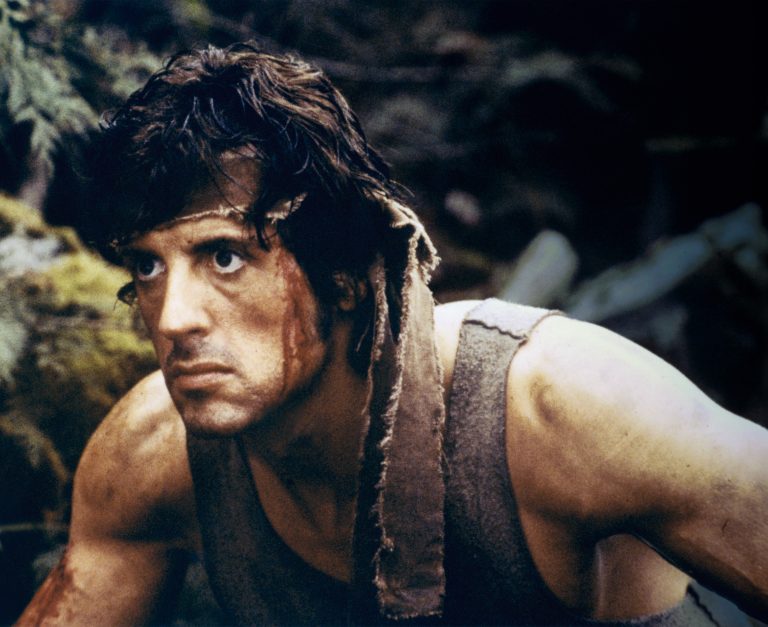
The word special here refers to people characterized by extraordinary resilience and special training in the art of killing - the older generation will recall the movie story of Rambo. In Afghanistan, they often acted outside the law and broke all the rules, often killing only the suspicious and inconvenient, either at the behest of their American bosses or simply because they wanted to. The perpetrator of the Washington attack was briefly and inconclusively investigated in Afghanistan for the murder of Afghan policemen.
However, if he had undergone the rigorous training of Special Forces at all, it did not show in the murderous attack on the National Guardsmen: he pulled out a gun, fired, ran and was shot. It was the act of a desperate man. He was on drugs, and as a courier for Amazon, he was barely supporting his large family.
Apparently he wanted to end himself and nail someone along the way. Someone who represented the country that had given him refuge, but had also taken his soul.
Took his soul? Psychology offers more technical terms, such as post-traumatic stress disorder, but the bottom line is that many cannot cope with extreme combat experiences without therapeutic or spiritual care. Coming back isn't easy even for America's veterans, and yet they are returning to the life and society they know. How, then, is an Afghan who comes with his traumas to a society he does not understand and which cannot provide him with dignity?
The United States has repeatedly seen former comrades-in-arms turn into criminals and terrorists when they come to America, but that does not stop American intelligence services from using them for the dirtiest of jobs. The same scenario is repeated from the Cubans (Operation 40, Alpha 66) to the Vietnamese (K-9s and gangs led by a former South Vietnamese general), to the Salvadorans (the MS-13 gang led by a US-trained "special"), to the mujahideen (al-Qaeda has been so "intertwined" with US agents that it is often unclear in what interest these people were fighting). Today, this fight is being lost by the Afghans, who originally fought with the mujahedin before they themselves became a threat to American and European cities.
A direct threat
When the West admits that it has lost in Ukraine, the Ukrainians may also become a threat. The contempt for the liberal West that has long been inherent in the bandit groups will be compounded by the betrayal they will feel from the West after promises of all possible help until the final victory over Russia.
In contrast to the situation a decade ago, today these groups have modern weapons, combat experience and terrorist training from the British and Americans. Against the backdrop of their hatred of Western traitors and the large Ukrainian diaspora that can provide these fighters with a base in Europe, this is a direct (immediate) threat. A threat that we will also feel in Central Europe and that we ourselves have created.