
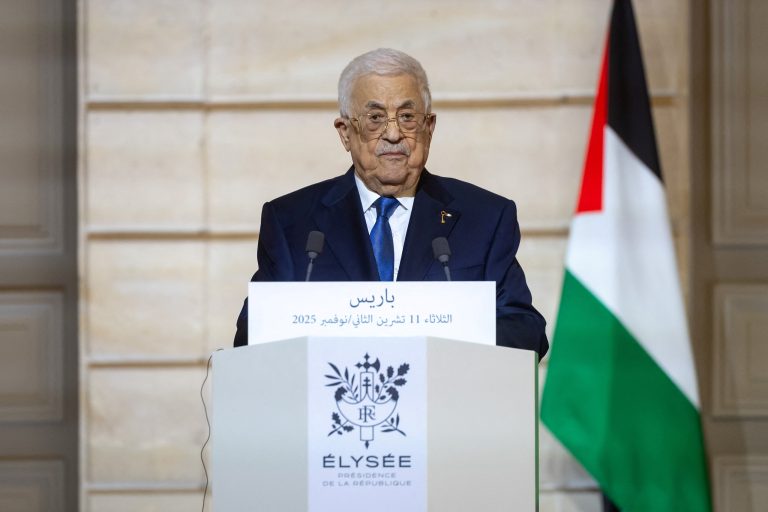
Those interested in the subject of the Middle East will be familiar with the name Mahmoud Abbas. He is the political and administrative leader of a group called the Palestinian Authority, which acts internationally as the Palestinian nation state.
It is true that the headline question is slightly misleading, because it asks about presidents of 'Palestinian origin'. And there are certainly more of them - and more are coming.
The Palestinian diaspora
The unofficial beginning of the emigration of the Arab population is considered to be a kind of civil war between Christian and Druze militias in the 1860s. Since that year, tens of thousands of people have regularly left the Middle East, rising to hundreds of thousands after the creation of Israel in 1948.
Some half a million of the original inhabitants of Palestine - the area between the Anti-Lebanon Mountains in the north, the Jordan River in the east, the Negev Desert in the south and the Mediterranean Sea in the west - fled to neighbouring Lebanon alone after the first Israeli-Lebanese war.
The total number of displaced persons is now estimated at 750 thousand, their descendants sharing a common identity and refugee status - this is the basis of the identity of 'Palestinians'. The biographies of the leaders of the Palestinian resistance are proof of this. Many of them were born 'in a refugee camp' to parents who were 'driven from their homes by Israeli aggression'.
Today, some six million Palestinians live in the diaspora, and one of the countries with the highest number of these 'refugee descendants' is, paradoxically, South American Chile, where some 500 thousand live.
Tens of thousands of other Palestinians live in various Latin American countries, mainly in the central part. Honduras has a Palestinian population of about 250 thousand, Guatemala about 200 thousand, Mexico an estimated 120 thousand, El Salvador about 70 thousand.
Immigrants out, Palestinians in
Since the end of the Cold War, the number of Latin American migrants to the United States has grown to an estimated 25 million. Department of Homeland Security (DHS) statistics indicate that 40 percent of this increase is due to natural increase (children of migrants). About half of these 25 million arrived illegally.
In US President Donald Trump's second term in office, entries into the country have fallen to numbers close to zero. Migrants residing in the United States are at risk of deportation. Yet these massive numbers are still present. It can therefore be said that Latin America is emptying out.
The Palestinian diaspora is unlikely to match this outflow in terms of numbers any time soon, which is why it is surprising to see the developments that we have seen in countries such as El Salvador and, currently, Honduras. The country named after Jesus Christ has a population of around six million, of whom only 70 thousand are of Palestinian origin.
El Salvador's President Nayib Bukele has been a reliable ally of Trump since his first election in 2019. He has spoken frequently at the conservative CPAC conference, offered his anti-terrorism prison CECOT to "house" MS-13 gang members deported from the US, and in November increased the state's reserves of the cryptocurrency bitcoin to 7,500 BTC.
His paternal grandparents were Palestinian Christians who came from the cities of Jerusalem and Bethlehem. His father, Armando Bukele Kattán, later converted to Islam; his mother, Olga Marín Martínez, came from a union between a Catholic and an Orthodox Christian.
In addition to the name Nayib (from the Arabic Najib, "the noble one"), the names of his brothers, Karim Alberto, Yusef Alí and Ibrajim António, confirm his Palestinian identity.
A similar situation occurred last month in neighbouring Honduras. The outgoing leftist president, Xíomara Castro, backed her running mate, Rixi Moncada, in the elections, but she won just over 19% of the vote in the count. She came third, beaten by two Palestinians.
The right-wing candidate Nasry Asfura and the centrist Salvador Nasralla recorded almost the same number of votes in the days just after the elections, with the latter slightly ahead of the former. On Thursday, however, the conservative with Trump's backing overtook him, and after 89.3 percent of the votes were counted, he is considered the candidate to beat.
Regardless of the conclusion of the Central Electoral Commission - which Nasralla has called on to investigate irregularities - the next president of Honduras will be an ethnic Palestinian. Elections in this Central American country are single-round elections, so the winner of the 30 November vote will automatically take over as head of state.