
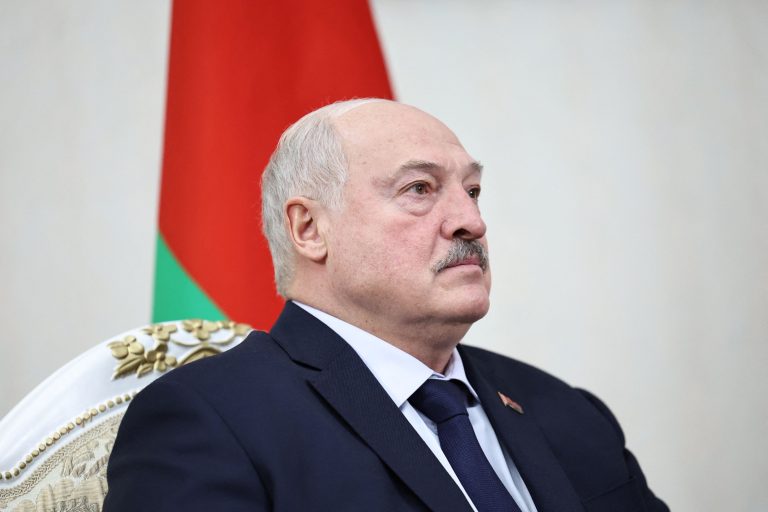
Belarusian President Alexander Lukashenko on Saturday released 123 prisoners, including Nobel Peace Prize laureate Ales Bialiatski and opposition leader Maria Kalesnikava.
In exchange for the move, the United States has pledged to lift sanctions on Belarusian potash, a key raw material for fertiliser production. Belarus is one of the world's largest producers of potash, and sanctions on this sector have hit its economy hard.
Of those released, nine prisoners went to Lithuania and 114 were transferred to Ukraine. Bialiacki, a co-recipient of the 2022 Nobel Peace Prize and a longtime human rights advocate, had been in prison since July 2021.
Upon his arrival at the U.S. Embassy in Lithuania, he met with exiled opposition leader Sviatlana Cichanova, whom he warmly embraced. The Norwegian Nobel Committee expressed "deep relief and sincere joy" at his release.
Maria Kalesnikava, one of the main figures in the mass protests against Lukashenko following the disputed 2020 election, was among the group taken by bus to Ukraine. In a video posted on the Telegram, she spoke of "indescribable happiness" and the joy of her first free sunset after years of imprisonment.
Opposition politician Viktar Babaryk, who was arrested in 2020 while preparing to run against Lukashenko, was also seen in the footage. He pointed out that his son Eduard remains in prison in Belarus.
Kalesnikava's sister, Taciana Khomichova, admitted that she feared that Maria might refuse to leave the country.
U.S. officials have said the dialogue with Lukashenko is part of an effort to at least partially remove him from the influence of Russian President Vladimir Putin. For years, Western countries have shunned him because of his suppression of opposition and support for Russia's war against Ukraine.
Sanctions were imposed by the US and EU after the violent crackdown on protests in 2020 and tightened after the Russian invasion in 2022.
The exiled Belarusian opposition has thanked both the United States and Donald Trump, saying the release of prisoners in exchange for sanctions concessions confirms their effectiveness. However, it also insists that EU sanctions should remain in place.
Sviatlana Cichanovska stressed that the US sanctions are a humanitarian instrument, while the European ones are meant to lead to systemic change.
In the past, Lukashenko has repeatedly denied the existence of political prisoners and referred to them as "bandits". The Belarusian human rights organisation Viasna registered 1 227 political prisoners before Saturday's release.
According to the U.S. Embassy in Lithuania, the United States will continue diplomatic efforts to secure the release of the remaining detainees.
(reuters, lud)