
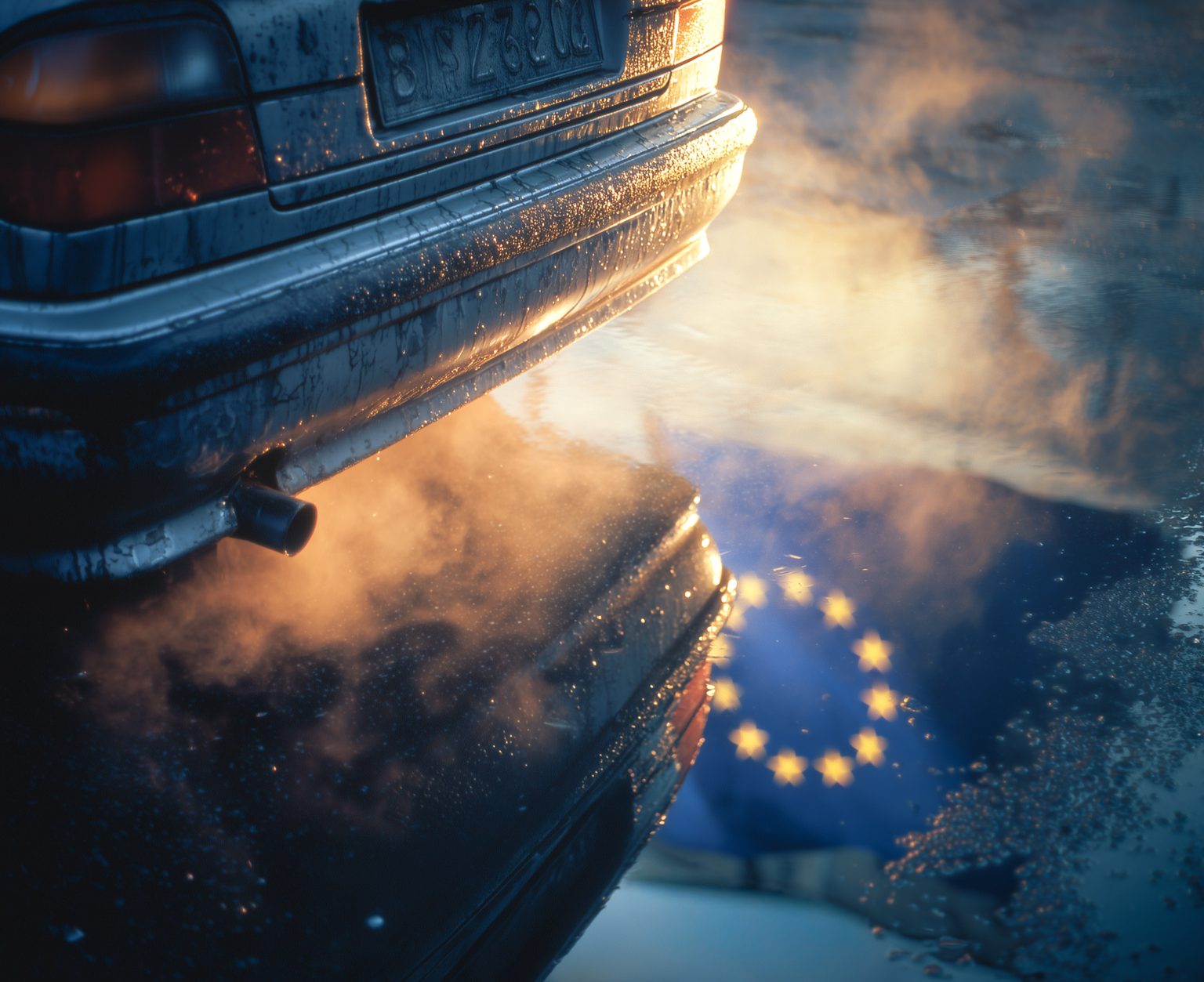
After months of intense pressure from the automotive industry and several Member States, Brussels is signalling a move away from a strict interpretation of the ban, opening the way for hybrids and alternative fuel vehicles.
The proposal was negotiated as part of a wider package of measures aimed at decarbonising transport and boosting the competitiveness of European industry. According to several international media, this is the most significant modification of climate regulation in the automotive sector since the adoption of the Fit for 55 package.
The new proposal does not require zero carbon dioxide emissions, according to Manfred Weber, chairman of the European People's Party.
However, there are also critical voices. "Going from a clear target of zero emissions to 90 per cent may seem small, but if we back down now, we will not only damage the climate, we will also damage Europe's ability to compete," says Polestar CEO Michael Lohscheller.
From zero emissions to a more flexible target
The original legislation was based on the assumption that from 2035, only new zero-carbon cars and vans could be sold in the European Union. In practice, this would mean a complete switch to battery electric vehicles or hydrogen technology.
However, the Commission's new approach no longer envisages such a "zero tolerance". According to information from the negotiations, Brussels is considering a model that would allow manufacturers to continue to sell a limited share of vehicles with emissions after 2035 - for example, up to around 10 per cent compared to 2021 levels.
This could leave selected plug-in hybrids, vehicles with combustion engines using synthetic or other suitable fuels, or new technological solutions that are not yet massively deployed, on the market.
The relaxation of regulation is not just about the 2035 target year. In fact, the Commission has indicated its willingness to reconsider the 2030 milestone by which manufacturers have to significantly reduce the average emissions of their fleets.
Instead of strict annual limits, emissions could be assessed over a longer time horizon. Such an approach would give carmakers more flexibility in production and investment planning, while reducing the risk of heavy penalties at a time when EV sales in some countries are developing more slowly than originally expected.
Political and industry pressure
A combination of political and economic factors are behind the Commission's change of stance. In particular, Germany and Italy have long argued for a relaxation of the ban, arguing that a full and rapid switch to electro-mobility could jeopardise jobs and the competitiveness of the European automotive sector.
At the same time, carmakers point to slowing demand for EVs, their still high prices, underdeveloped charging infrastructure and growing competition from China. Overly ambitious regulation threatens to weaken the European industry at a time when it is facing strong global technological pressure, according to the manufacturers.
Foreign media also point to the intense lobbying by large corporations such as Volkswagen and Stellantis, which have long advocated the principle of technological neutrality and wider acceptance of alternative solutions.
Critical voices from the environmental spectrum
The proposed modifications have drawn strong criticism from environmental organisations and parts of the political spectrum. Critics warn that the concessions may slow the transition to zero-emission transport and undermine the credibility of the European Union's climate commitments.
Some member states, including France and Spain, warn that relaxing the rules may favour combustion technologies at the expense of investment in electromobility.
However, the European Commission stresses that the 2050 climate neutrality target remains unchanged and the proposed modifications are designed to ensure a realistic and socially sustainable transition.
The EU's baseline target remains officially unchanged
The requirement for zero carbon dioxide emissions from new cars from 2035 is therefore to remain in place. However, the Commission suggests that the path to this target could be more flexible. Instead of a de facto ban on internal combustion engines, exemptions and additional conditions could be applied.
In practice, it would no longer be each individual car that would be assessed, but the average emissions of the manufacturer's entire fleet. Quotas for the share of internal combustion cars, the counting of synthetic fuels or various forms of emission offsets could come into play.
"This is a signal that Brussels is aware of the technological and economic limits of rapid electrification," says the Financial Policy Institute. It says this is an effort to maintain the drive towards low emissions, but without significantly weakening the EU's own car industry.
However, the sanction mechanism should not be changed. Manufacturers who exceed the permitted emission limits will continue to face heavy fines for every extra gram of carbon dioxide. That is why analysts warn that although the rules may be relaxed, the pressure on manufacturers to switch to cleaner technologies will remain strong.
Tuesday's announcement does not yet mean a definitive change in the legislation. A series of difficult political negotiations are expected. But it is already clear that the original vision of the complete end of the internal combustion engine by 2035 is gradually being reconsidered in Brussels.
Instead of strict regulation, the European Union is increasingly leaning towards a more pragmatic model that seeks to reconcile climate ambition with the economic realities of the market and industry.
How will the EU decide to relax the ban
After the European Commission hinted at a softening of the ban on the sale of new internal combustion engine cars after 2035, a review of the already approved emissions rules is entering the EU's standard legislative process.
The proposal will first be debated in the EU Council, where sharp disputes are expected between countries pushing for tough climate targets and those with significant car industries demanding more flexibility. In countries such as Germany, the Czech Republic and Slovakia, it is not only ecology that is at stake, but also jobs and competitiveness, so a compromise will be sought to mitigate the impact on manufacturers.
In parallel, the European Parliament will consider the proposal and may amend it with amendments. If its position diverges with the Council, this will be followed by trilogues with the European Commission with a view to reaching an agreement leading to final approval.
(reuters, ft, rfi)