
In 2025, the words of the late Pope Francis about a "fragmented Third World War" came true. Back in 2014, the Bishop of Rome spoke of a chain of conflicts afflicting humanity in an area stretching from the African Sahel through the Middle East to Ukraine, and of their combined devastating impact on human well-being.
In recent years, this "World War III in installments" has also begun to converge on an ideological level. At the same time, there is a threat that it will spread to the Western Hemisphere—although the US invasion of Venezuela has not yet begun, contrary to expectations, its outcome will affect the balance of power in the Middle East.
Caracas trades with Iran, Russia, and especially China, and this "axis of revolutions" – as Western neoconservatives call it – is being targeted by both the United States (Beijing's adversary) and Israel (Tehran's adversary). Any change in Venezuela's foreign policy thinking could tip the scales one way or the other.
The real victims of every modern war are civilians. The Western Front of World War I limited its destruction of human life to the battlefields, but in the next war, this principle changed radically.
The proxy conflicts of the Cold War, in turn, primarily involved militants, who form a kind of gray zone between the military and civilian sectors. And although armies are fighting in the war in Ukraine, both sides are trying to weaken each other's economic base, which feeds the armies with its revenues.
The war in the Gaza Strip is being waged by Israel through its regular armed forces, while on the other side are the militants of the Hamas movement. The Israeli army is also destroying civilian infrastructure, which it considers to be a cover for militants, and regularly uses the phrase "terrorist tunnels."
However, both conflicts inevitably affect the lives of civilians and often take them.
In November, the Office of the United Nations High Commissioner for Human Rights updated the tally of civilian casualties in Ukraine and Russia in connection with the nearly four-year war. Since February 24, 2022, the war has claimed 53,000 "casualties," including more than 14,500 killed and nearly 38,500 wounded. Of this tragic number, 745 children's lives were lost and another 2,375 were injured. Last year, Ukraine's population was estimated at 37.9 million.
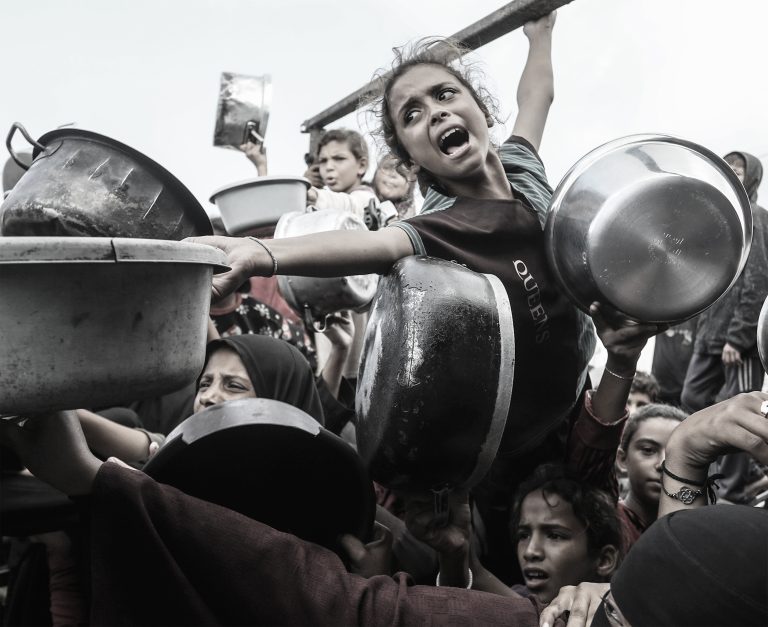
By the end of November this year, the war in Gaza had claimed more than 240,000 "casualties," including approximately 70,500 dead and more than 170,000 wounded. These estimates are regularly published by the Gaza Ministry of Health, which enjoys virtually zero trust from the Israeli public – however, the Palestinian UN agency (UNRWA) works with identical estimates.
It should be noted, however, that the estimates of the Hamas government's Ministry of Health do not distinguish between civilians and militants. An investigative report by The Guardian, +972 magazine, and Local Call, however, cited classified military intelligence reports according to which the proportion of civilians is 83 percent.
Even the living have not fared very well. Russian attacks regularly destroy the energy infrastructure of the attacked state, with Ukrainian and international media reporting 20-hour power outages every day. The capacity of thermal (coal and gas) and hydroelectric power plants has fallen by almost 90 percent.
The population of Gaza is estimated at 2.3 million people, but unlike the spacious Ukraine, the area of the strip is only 365 square kilometers—for comparison, the area of Bratislava is about 367 square kilometers. By October of this year, the wave of destruction had affected at least 83 percent of all buildings, and something like "energy infrastructure" practically no longer exists.
On both battlefields, there were attempts at a truce, which proved unsustainable in Gaza and did not even materialize in Ukraine. Israel has almost always found an excuse to resume its "security" operations, while the latest European war is once again a playground for the superpowers—the US and Russia—both of which have their own interests and ideas.
Neither of these visions actually takes into account the needs of civilians, women, children, the elderly, and the sick. However, with Christmas just around the corner, it would be worthwhile for world leaders to recapitulate certain passages from the Holy Scriptures, especially the Book of Exodus (22:22): "You shall not wrong a widow or an orphan!"