
European Union leaders decided on Friday to borrow money to finance Ukraine's defence against Russia for the next two years, instead of using frozen Russian assets. In doing so, they sidestepped the controversy over an unprecedented plan to finance Kiev with sovereign Russian funds.
"Today we approved the decision to provide 90 billion euros to Ukraine," EU summit president António Costa told a news conference early on Friday morning after hours of leaders' talks in Brussels. "For urgent reasons, we will provide a loan covered by the European Union budget."
The leaders also mandated the European Commission to continue work on a loan based on frozen Russian assets. However, this option has so far proved unfeasible, mainly due to opposition from Belgium, where most of these assets are located.
The idea of EU debt-sharing initially seemed unrealistic, as it requires unanimous consent. However, Hungary, Slovakia and the Czech Republic eventually agreed to allow the scheme as long as it did not affect them financially.
At the same time, EU leaders said that €210 billion worth of Russian assets located in the EU would remain frozen until Moscow pays Ukraine war reparations. If that ever happens, Ukraine could use the money to repay the loan.
The use of Russian assets is too complicated at this stage
"This is good news for Ukraine and bad news for Russia - and that is exactly what we intended," said German Chancellor Friedrich Merz.
The stakes were high because without EU financial aid, Ukraine would run out of money in the second quarter of next year. The EU fears that would bring the threat of Russian aggression against the bloc itself closer.
The decision came after hours of discussions on the technical details of an unprecedented loan based on frozen Russian assets, on which the states have not agreed politically at this stage.
The main issue was to provide Belgium, where €185 billion of Russia's total assets in Europe are located, with sufficient guarantees against financial and legal risks in the event of possible Russian retaliation for releasing the money to Ukraine.
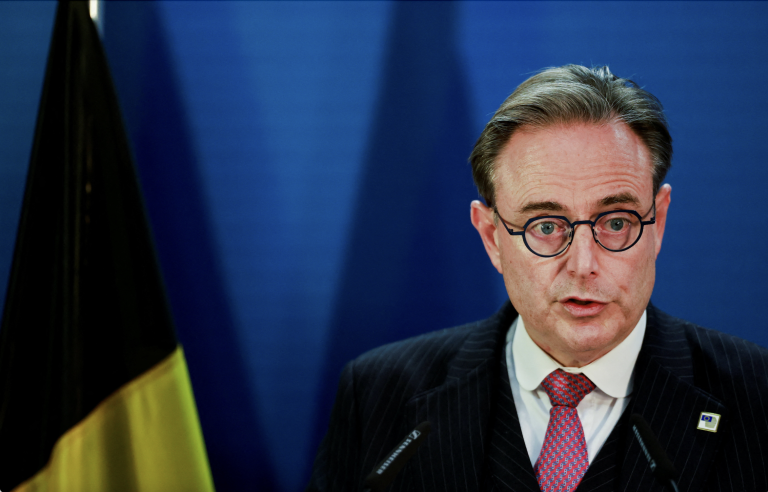
"There were too many questions around such a loan, so we had to move to Plan B. Common sense prevailed," Belgian Prime Minister Bart De Wever told a press conference. "The EU avoided chaos and division and remained united," he added.
"We cannot afford to fail"
Arriving at the summit, several EU leaders stressed the need to find a solution that will secure Ukraine's funding and defence for the next two years. They also wanted to show Europe's strength and determination after US President Donald Trump last week branded Europeans "weak".
"We simply cannot afford to fail," said EU foreign policy chief Kaja Kallas.
Ukrainian President Volodymyr Zelensky, who attended the summit, called on the EU to agree to use Russian assets to provide funding that he said would allow Ukraine to continue its fight.
"The decision that is now on the table - the decision to make full use of Russian assets to defend against Russian aggression - is one of the clearest and most morally upright decisions that can be made," he said.
(reuters, est)