In theory, Europe is capable of financing Ukraine's defense and arming it with purchased American weapons, but in practice, this can only be done at the expense of reducing spending elsewhere. For example, in the booming social sector. And that is politically very unpopular.
Other factors do not contribute to Kiev's optimism either.
Russia has conquered 4,669 square kilometers of territory this year [as of December 9, ed.]. Although this is not much, the advance is the fastest since 2022.
The closure of the cauldron around Pokrovsk and Myrnohrad opens the way to one of the biggest obstacles standing in the way of rapid advancement deep into the interior. We are talking about the Ukrainian belt of fortresses. It consists of a fortified defensive line that stretches from (pre-war) Sloviansk, with a population of 100,000, through the even larger Kramatorsk to Kostyantynivka, with a population of 70,000.
In November, the front in the Zaporizhzhia region also began to move, with the Russians advancing towards the town of Hulaypole. Their weekly territorial gains did not increase in December, but they are still occupying about a dozen square kilometers every day.
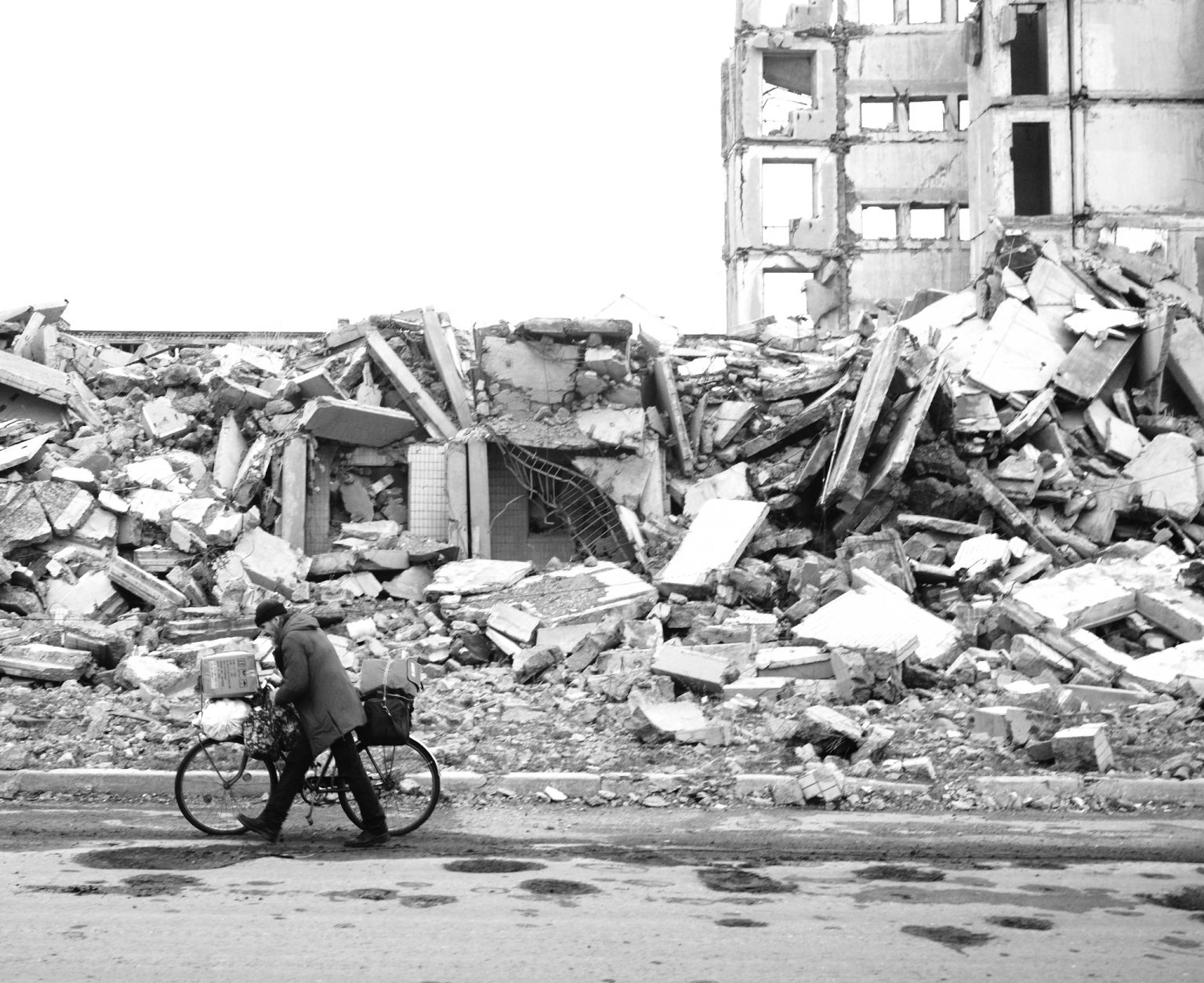
Meanwhile, Ukraine's infrastructure has been devastated. The Russians are attacking power plants, and even nuclear reactors are not spared. Some of them had to be temporarily shut down after the November attack, as a key electrical substation, which is essential for the operation of cooling and safety systems, was hit.
Kyiv is also reporting a gas shortage ahead of winter. This is partly due to attacks on locations where Ukrainians extract gas, but strikes on local pipelines are also no longer rare. Since the beginning of the year, they have not been protected by the Kremlin's commercial interests, as Russian gas no longer flows through them.
The state apparatus is addressing this by importing gas, but even that is not miraculously protected. Russia has already attacked the Ukrainian section of the Trans-Balkan gas pipeline, through which Kyiv imports American LNG from Greece.
All this affects the morale of Ukrainians, but also the production capacity of the economy.
Flashes of optimism are also overshadowed by a mega-corruption scandal. It cost the head of the government office, Andriy Yermak, who was Zelensky's right-hand man.
To sum up, every year since the start of the Russian invasion and Kiev's successful counteroffensive has been worse and worse. Ukrainians are gradually losing ground. Figuratively and literally. That is why the push for peace at the end of the year is a welcome hope, which until recently was taboo west of Ukraine.
Although Russia is militarily on the rise and Vladimir Putin has much more understanding in the White House than last year, the situation in the country of the bear is not rosy either.
Russian production has grown at a rate of around 4% over the past two years, but growth has been relatively uneven across the economy, with living standards and incomes rising mainly in defense and technology-related sectors.
Today, even that rapid growth is no longer the case, with stagnation and GDP growth of around one percent. The multiplier effect of military spending has been exhausted, but the country has not moved significantly forward; only a small portion of the money spent was invested, with much of it ending up lost on the battlefield.
The central bank, meanwhile, continues to be plagued by persistent inflation. It is now several times higher than in Europe or the United States. Although it is falling, it still hovers around seven percent. Monetary policy makers have therefore kept interest rates high for many months, making housing less affordable, limiting corporate investment, and dampening consumption.
Meanwhile, the country is losing its workforce on the front lines. Estimating the exact numbers would require a separate study, but it is safe to say that there are half a million dead and seriously injured (removed from combat and thus from intense economic activity).
Although Russia has significantly more men than Ukraine, demographics are a major problem that is no longer just simmering under the surface. Few children are being born in the country of the bear. Unemployment is at record low levels, and companies have no one to hire. No wonder millions of migrants are coming to the country.
Peace is also looking increasingly attractive to the Kremlin, although it is not as urgent an issue as in the case of Ukraine. Despite disagreements over territory and security guarantees for Ukraine, the presence of common interests brings a necessary glimmer of hope for success in the first months of the new year.