
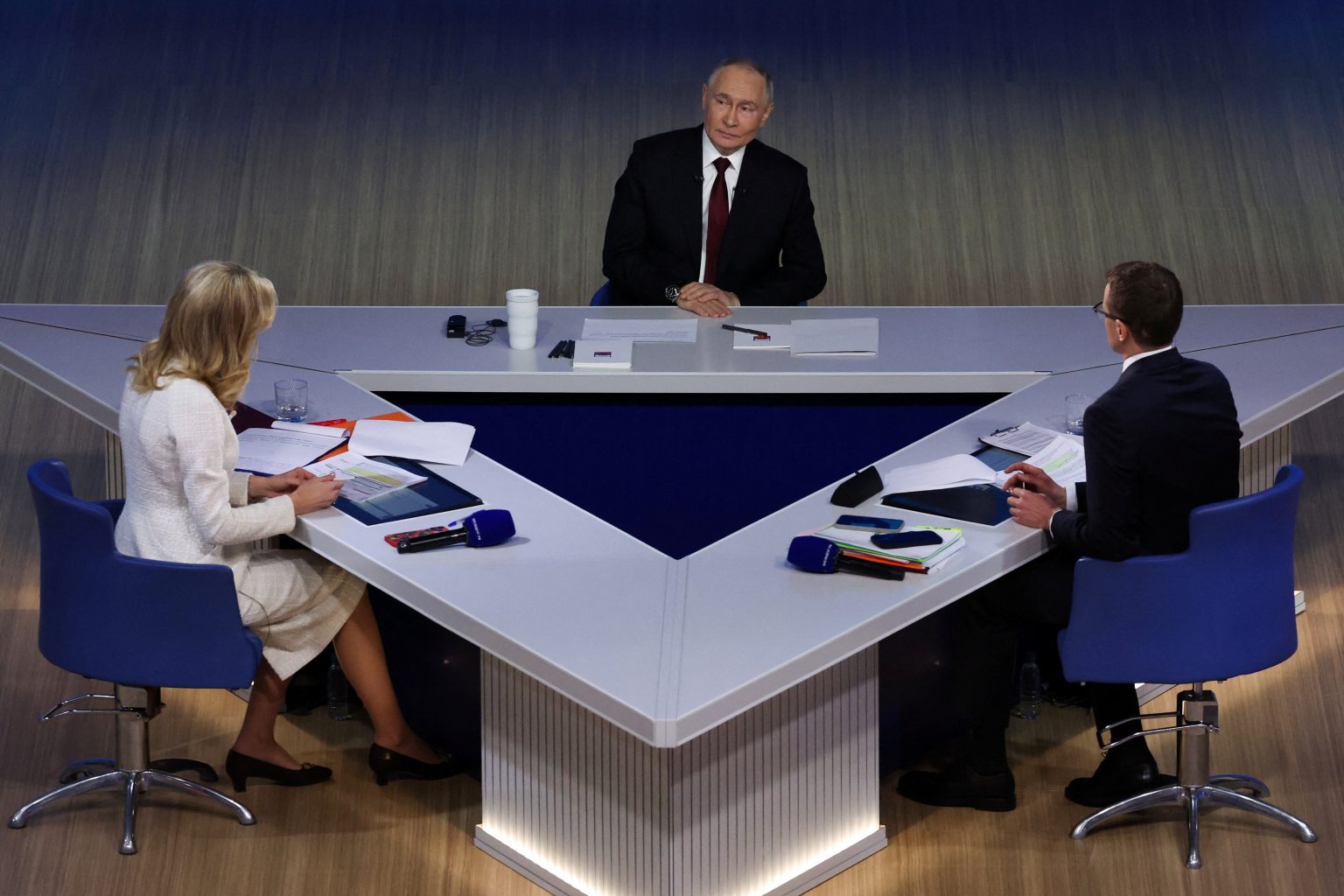
On Friday, Russian President Vladimir Putin appeared on the annual Results of the Year show, where he took questions from the audience for several hours. People from twelve time zones asked them via phone calls or online, although according to Western media, their selection for the Direct Line segment is tightly controlled.
In December's "broadcast marathon, he is likely to send a signal to the United States and European powers of his interest in peace or another war in Ukraine", according to Reuters. It also added that participants were required to test themselves for covid.
Before the broadcast began, the weekly Politico reported that questions from the regions "will be kept to a minimum this year."
AFP also recalled that Putin last week likened EU officials to "piglets" who "ran to the United States to participate in the dismemberment of Russia".
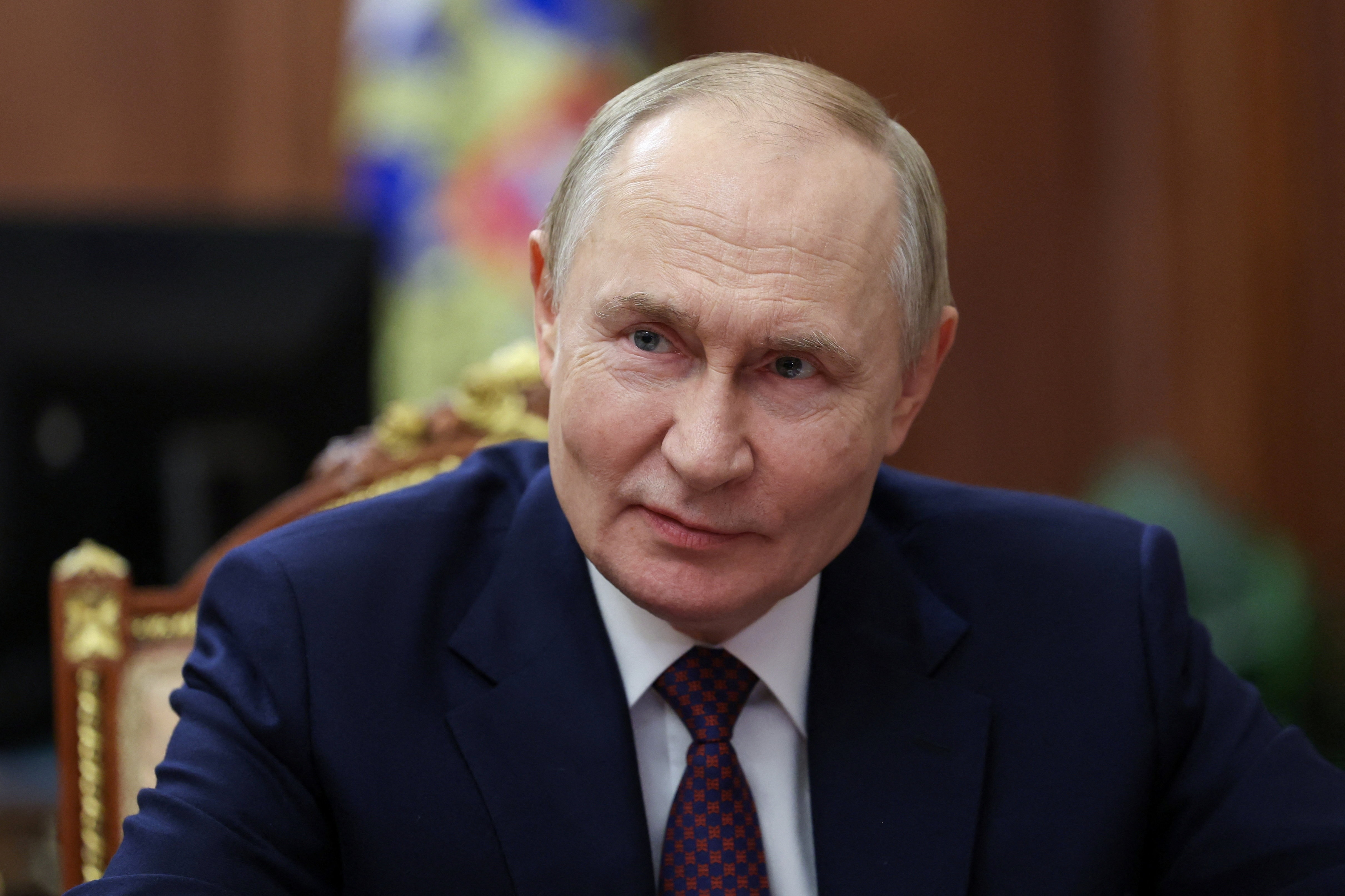
He also added that one of the key goals of the "special military operation" - the seizure of Donbass - would be carried out by Moscow "by combat means" if peace talks fail.
The French agency also contacted several interviewees in the Russian capital to gauge the general mood ahead of the broadcast. "I have loved ones fighting in the Donbass and I don't want us to lose our positions there," a 55-year-old accountant from Moscow told AFP, adding that it was "the only thing that worries me".
But she also wanted to ask Putin more pressing questions, such as the problem of water shortages in the "liberated" territories of eastern Ukraine. Most respondents, however, wondered when the war would end.
Ukraine will not become a NATO member
"We do not see that Ukraine is ready for negotiations," Putin said at the start of his speech. Russia, he said, is "ready and willing to end this conflict by peaceful means."
According to Putin, Russia's conditions have not changed since the July 2024 State Department speech - that is, that Ukraine not become a NATO member and withdraw from the four annexed areas on the Sea of Azov coast.
The Kremlin chief also announced that his army had "liberated" the village of Hulyapol in Zaporizhzhya Oblast. According to Reuters, it is in this region that the Russian advance is the fastest since the beginning of the year. However, Putin said Moscow's forces were advancing "along the entire front line."
Kremlin adviser Vladimir Medinsky added that Moscow had handed over the bodies of 1,000 soldiers to Kiev, in return for which it had received 26 dead soldiers.
The robbery was not successful
Referring to the EU vote on the confiscation of frozen assets - which ultimately failed and the €90 billion loan to Kiev will come from other sources - he said the leaders "failed in their robbery because it could have serious consequences for the robbers themselves".
"It's not just a blow to their image, but also an undermining of confidence in the eurozone and the fact that many countries - not just Russia, but oil-producing countries in particular - are storing their gold and foreign exchange reserves in the eurozone. Once this starts, it can be repeated under various pretexts," he warned.
He praised the domestic economy for its one per cent GDP growth, adding that "this is a deliberate move by the government, the central bank and the entire leadership of the country related to the inflation target", which was at six per cent. "By the end of the year it will probably be lower, maybe 5.7 or 5.8 percent," he assured.
"We have managed to maintain good real wage growth. It's not as high as last year, but still... growth will be 4.5 percent," he continued on domestic issues. Putin also expects the budget deficit to fall from the current 2.6 to 1.6 percent of GDP, which "should not exceed 1.5 percent of GDP in the coming years." Total public debt, he said, is "the lowest among developed economies".
Russia's central bank is independent
On the subject of inflation and the Russian central bank's key interest rate cut, he noted that the Bank of Russia "is an independent institution and I do not interfere in its decisions". However, according to Putin, the main financial institution "acts responsibly" and cuts rates cautiously amid fears of accelerating inflation.
US President Donald Trump is "making sincere efforts" to end the fighting, he continued, adding that the collective West "asked Moscow to make concessions, and we agreed". "The ball is now in the West's and Ukraine's court," he added.
The longtime Russian leader dismissed thoughts of "invading Europe," adding that Moscow was "ready to cooperate with Europe, Britain and the US - on equal terms."
Russia is no longer a major threat to the US
"We are ready to end the conflict in Ukraine immediately if we receive security guarantees," Putin continued. "While NATO is preparing for war with Russia, the new US security strategy does not mention Russia as the main threat," he noted, warning against the blockade of the Kaliningrad (Königsberg) enclave between Lithuania and Poland. "We will eliminate these threats as well," he assured.
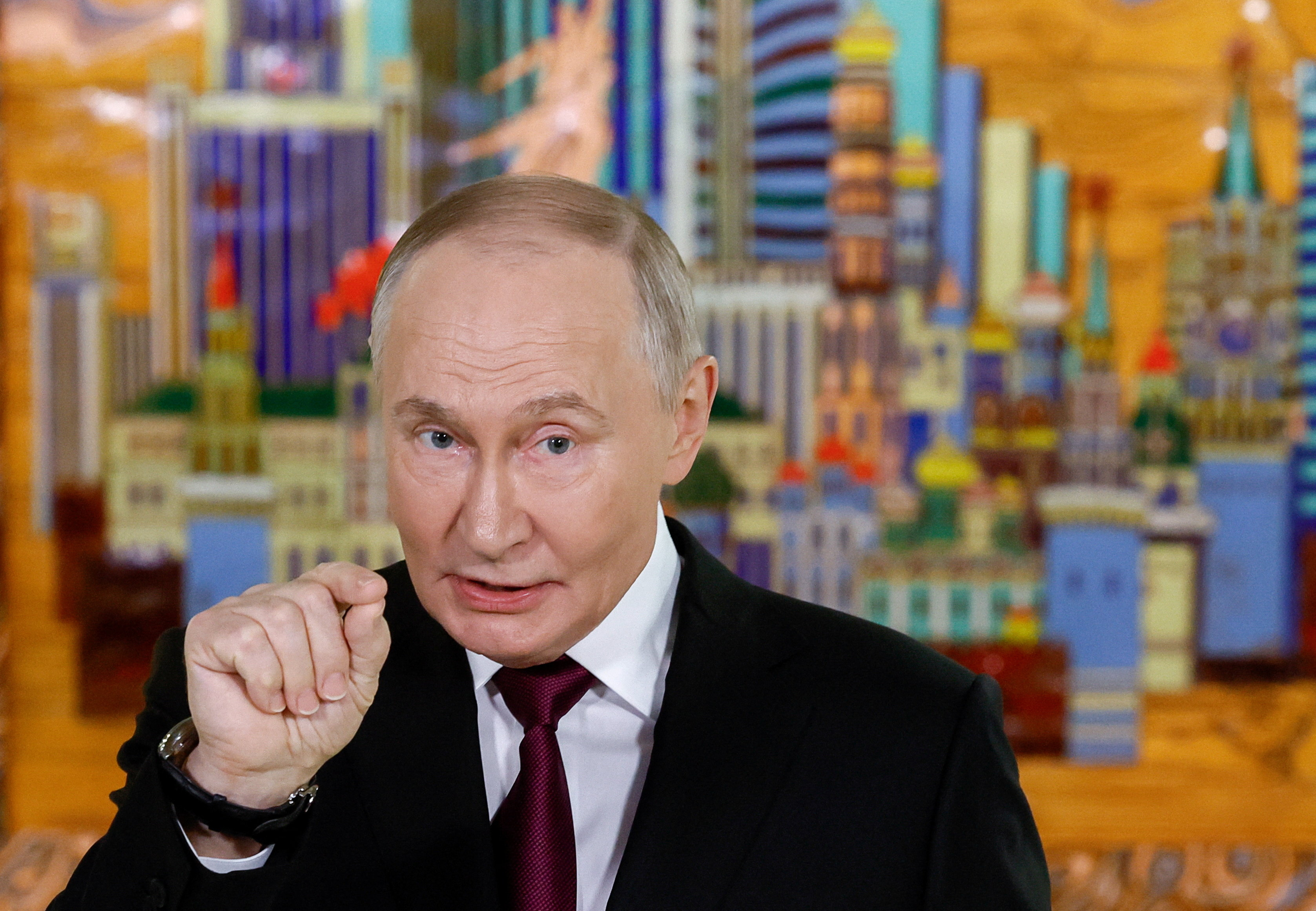
He was equally harsh on Friday's attack by Ukraine's SBU secret service on a tanker allegedly part of the so-called shadow fleet. "Russia always responds," he said.
The SBU also later announced the hit of an oil rig in the Caspian Sea.
Putin also indicated a willingness to reopen the case of French political scientist Laurent Vinatier, who was sentenced to three years in prison in October 2024 for collecting sensitive military information without registering as a foreign agent.
"I will look into this case," Putin said. But he defended the Foreign Agents Act itself. "The law on foreign agents is not our invention. It was adopted in several Western countries, including the United States, back in the 1930s. And all these laws, including the American one, are much tougher," he noted.
Peace of arms during elections
The Kremlin chief is also willing to ensure a temporary ceasefire during "potential elections", while the military would refrain from targeted attacks, he said.
Later, he took that thesis even further, saying Ukrainians living in Russia "should participate in the elections."
(reuters, sab)