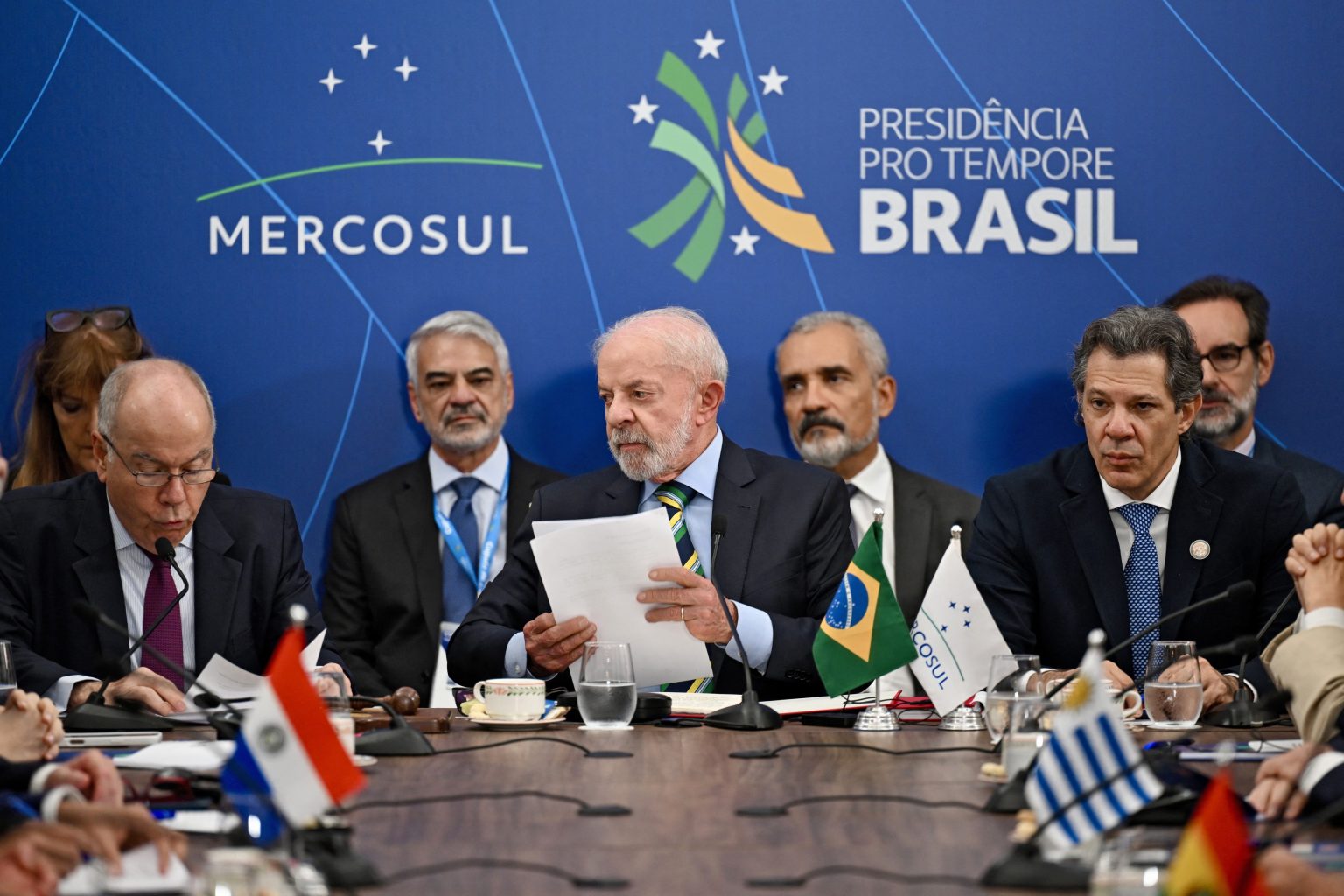
The first is deeper integration within the bloc. During its presidency, Brazil has spoken of the need to strengthen intra-regional integration, modernise rules and promote both investment and infrastructure.
Meanwhile, the country holds the Mercosur presidency for the second half of the year. President Luiz Inácio Lula da Silva presented an agenda based on five priorities at a summit in Buenos Aires in July: expanding trade, promoting energy transformation, developing technology, fighting organised crime and reducing social inequalities.
He described the bloc as the region's bulwark in an "unstable and threatening" world and stressed the need for its modernisation. The aim is to strengthen the common customs tariff, expand trade regimes, increase investment in infrastructure and regional development, and promote the use of local currencies for payments.
Trade is a key area
Brazil is pushing for the finalisation of an agreement with the European Union and for expanding cooperation with partners such as Canada, the United Arab Emirates or selected countries in Asia. It has already completed negotiations on an agreement with EFTA.
In environmental policy, the country emphasises green transformation and sustainable trade. President Lula has called for support for the COP30 climate conference, which Brazil plans to host.
Technological development is to strengthen the region's digital sovereignty - with an emphasis on the development of artificial intelligence, data centres and health innovations. In the area of security, the Presidency supports joint action against transnational organised crime and illicit financial flows by criminal groups.
However, the most explosive issue at the moment is foreign trade agreements, particularly the one with the EU, which the EU has postponed signing because of opposition from some Member States and protests from farmers, with France and Italy in particular calling for a postponement.
Meanwhile, top EU officials had hoped the deal would be signed this weekend. Experts say the delay could undermine the EU's credibility in negotiations around the world as it seeks to forge new trade ties amid trade tensions with the US and China.
Once ratified, the trade deal would cover a market of around 780 million people and a quarter of the world's gross domestic product, and would phase out tariffs on almost all goods traded between the two blocs.
The Brazilian government sees the deal not only as a trade issue but also as a "geopolitical priority." Pressure on the deadline and nervousness in diplomacy are therefore rising. According to Reuters, President Lula has threatened that Brazil may eventually pull out of the deal with the EU if the process drags on. It has taken a staggering 26 years to prepare.
Lula warns: US intervention in Venezuela would trigger humanitarian crisis
Brazil's president warned at the opening of the Mercosur summit that a possible US military intervention in Venezuela could trigger a "humanitarian catastrophe." His comments were reported by AFP.
The head of state's warning comes at a time of growing tensions between Washington and Caracas. The situation has been further escalated by US President Donald Trump, who has admitted that a military solution is "not out of the question".
According to AFP, the United States has increased its military presence in the Caribbean in recent months. The US military has carried out airstrikes there on ships that Washington says were smuggling drugs. Caracas, however, sees this as an attempt at regime change.
"An armed intervention in Venezuela would be a humanitarian catastrophe for the entire Western Hemisphere and a dangerous precedent for the world," Lula stressed.
In an interview with NBC News, Trump responded succinctly, "I don't rule it out, no."
The Brazilian head of state has therefore made no secret of his concerns about tensions on the country's borders, offering himself as a mediator to help prevent armed conflict. "I told President Trump that shooting will not solve anything. It's better to come to the table and look for a deal," he added.
According to the agency, US attacks on alleged smugglers' boats have so far claimed at least 104 victims. Meanwhile, the Trump administration has not yet presented evidence that the attacked vessels were actually carrying drugs.
(reuters, afp)