Meet Guyana. The fastest growing economy, leapfrogging even members of the Union
A surprising country appears among the top economies in the world with the highest GDP per capita. Under the microscope, however, Guyana is not so appealing.
Illustrative photography. Photo: Pedro Rances Mattey/Anadolu via Getty Images
|
It never hurts to take a look at the latest macroeconomic statistics once in a while. As a rule, every time there is something surprising in them.
Last time was no different. In fact, in the last two to three years, a country that no one would have expected to be there has risen to the top of the list of the richest countries in the world. We are talking about Guyana, a small country in the north of South America.
To be fair, the country itself is not that small, with almost 215 000 square kilometres, closer to Poland than to Slovakia, the Czech Republic or Austria. However, the population is considerably smaller, with a population of around 830 thousand people. The metropolis where everything is concentrated is Georgetown, which is about the size of Košice.
Although the countries of South America are not among the largest "misery" of the world, they are also not who knows how rich and developed. The best performing economies there in terms of GDP per capita are Uruguay, Chile, Brazil and Argentina. Guyana, however, literally shines on the International Monetary Fund's map. With a per capita figure in excess of 31 thousand dollars, it exceeds the richest of the aforementioned countries by roughly a quarter.
And not only those. It also outperforms several European Union economies, including Slovakia, Poland, Hungary, Latvia and Greece. Its GDP per capita is somewhere around the level of Portugal.
When GDP is measured in purchasing power parity, an indicator that attempts to account for differing price levels across countries, Guyana's rebound from the vast majority of countries in the wealthy West is even more striking. The IMF, in its latest October report, puts the figure at twice that of Slovakia. It is overtaking countries that have long been symbols of affluence such as Germany, Sweden and Denmark and catching up with Switzerland.
The source of wealth is black gold
Guyana's fairy tale, however, will not last very long. As recently as 2020, the GDP per capita indicator was below seven thousand dollars.
Since 2020, the economy of this small state has grown by an average of almost 35 percent a year. By comparison, the Eurozone expanded by roughly one per cent over the same period.
Guyana, of course, has found no secret recipe for achieving prosperity. The main source of its wealth is its vast oil deposits, which amount to some 11 billion cubic metres.
Although it is well known that there is oil in the north of South America, the search for an economically viable deposit in Guyana has long been unsuccessful. The breakthrough came only in 2015, when the US company ExxonMobil announced a historic discovery of high-quality oil in the deepwater Liza-1 well in the Stabroek block. The petrochemical giant went on to make further discoveries at the site in the following years.
Production began at record speed, with the first barrels leaving the ground as early as 2020. Production currently stands at around 900 thousand barrels (roughly one per cent of world supply), with ExxonMobil expecting this figure to almost double by 2030.
The popular statistic is quite deceptive
Guyana's story, however, is not as rosy as it first appears. The example of the South American country is a memento that it is not enough to look at GDP figures to get an overall picture of a country.
The problems Guyana is grappling with are several.
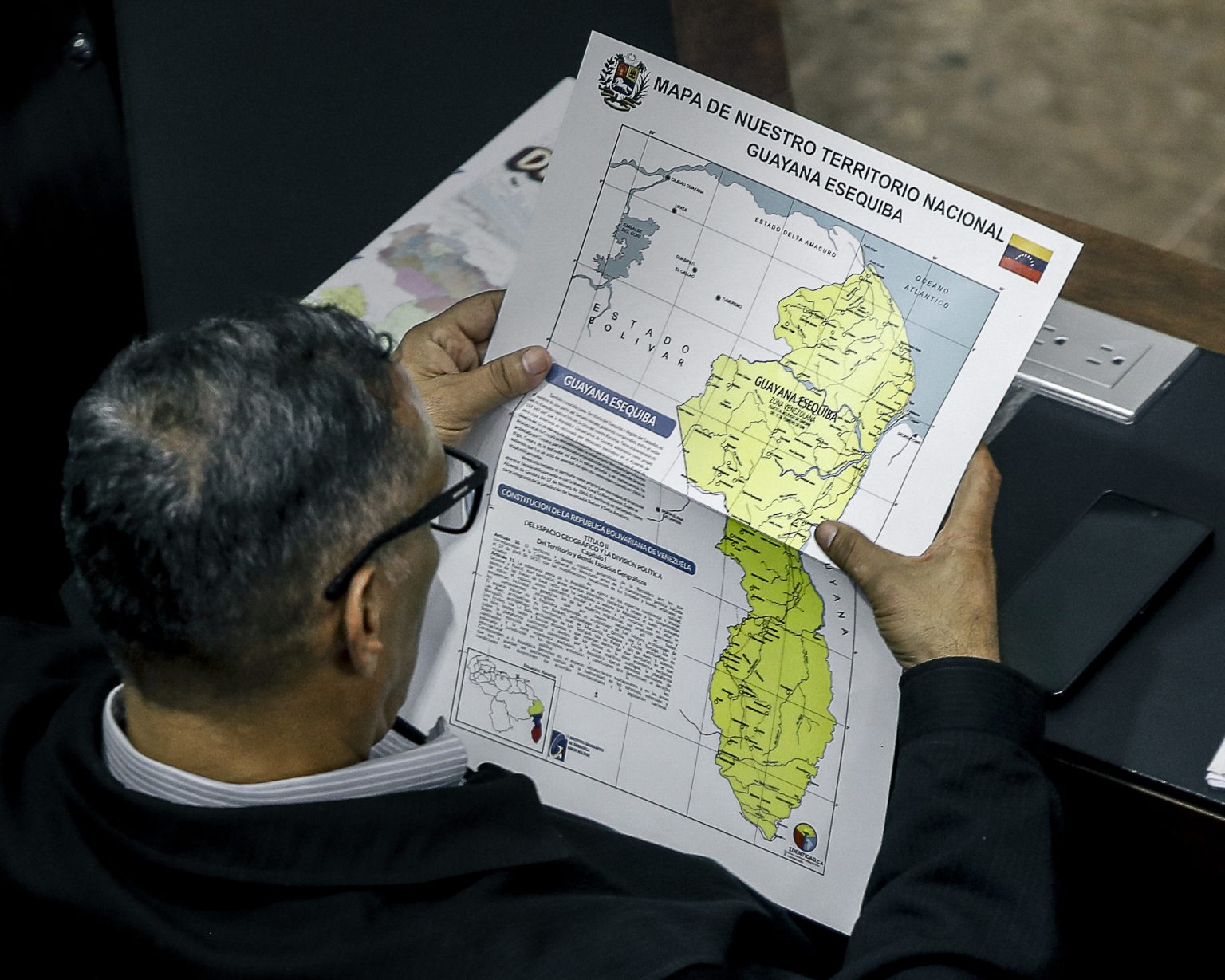
The first is the geopolitical friction with Venezuela. In short, the latter would like to see some of the fabulous wealth from the export and sale of Guyana's black gold in its coffers. And so it seeks to revive old territorial claims over large parts of Guyana's oil territory.
But that is not the only thing that Guyanese are worried about. Indeed, many are not feeling the economic boom. This is because oil production is capital intensive. Although the output is large, a significant portion of the revenue flows in the form of profits to investors. And only part of it is distributed to the Guyanese economy in the form of wages or through tax revenues to the state coffers.
This is evidenced by the Gross National Income (GNI) indicator, which does not calculate the value of goods produced within the national territory, but the annual income of all residents.
When the GNI per capita (about $20 thousand) is calculated, Guyana's wealth does not seem so fabulous. Especially when again compared to European countries like Slovakia (almost 24 thousand) or Poland (roughly 21,500 dollars).
And even with the GNI indicator at purchasing power parity, there is a drop to $53 thousand per capita, which is comparable to Lithuania and the Czech Republic, but not to Germany (75 thousand) or Switzerland (91 thousand).
Moreover, unlike in European countries where most of the national income goes to domestic entrepreneurs or employees in the form of salaries, in Guyana the lion's share of this figure is accounted for by the state, which, thanks to the oil business, collects funds through taxes and various licences or shares.
This money, however, does not go into wages and direct increases in living standards, but into the Natural Resources Fund, only a portion of which is used for government spending or investment in major projects, leaving the rest as a reserve for future generations.
Of course, investment in road or energy infrastructure is the key to a better tomorrow for Guyana, but the contracts for the projects are mostly awarded to foreign construction firms, not local entrepreneurs. Thus, the money reaches the "locals" mostly in the form of wages.
The fact remains that, despite the unimaginable income from the sale of black gold, only a small amount ends up in the pockets of the local population. The result is a high level of poverty, with roughly a third of the country's population living on less than USD 3.65 a day.
Placeholder For Topreaded Placeholder For Topreaded
Placeholder
Placeholder
Placeholder For Topreaded Placeholder For Topreaded
Placeholder
Placeholder
Placeholder For Topreaded Placeholder For Topreaded
Placeholder
Placeholder
Placeholder For Topreaded Placeholder For Topreaded
Placeholder
Placeholder
Placeholder For Topreaded Placeholder For Topreaded
Here is placeholder for Article excerpt Here is placeholder for Article excerpt Here is placeholder for Article excerpt Here is placeholder for Article excerpt
Here is placeholder for Article excerpt Here is placeholder for Article excerpt Here is placeholder for Article excerpt Here is placeholder for Article excerpt
Here is placeholder for Article excerpt Here is placeholder for Article excerpt Here is placeholder for Article excerpt Here is placeholder for Article excerpt
Welcome to the comments section of the Štandard daily. Please take note of our guidelines, comments are moderated by us. You can contact the moderators at [email protected].
Participate in the discussion
Comments are available to subscribers only. If you'd like to join the discussion, choose a subscription starting at €6.72 per month.
All comments 0
Register
Comments are available to registered users only. If you'd like to join the discussion, register here.