
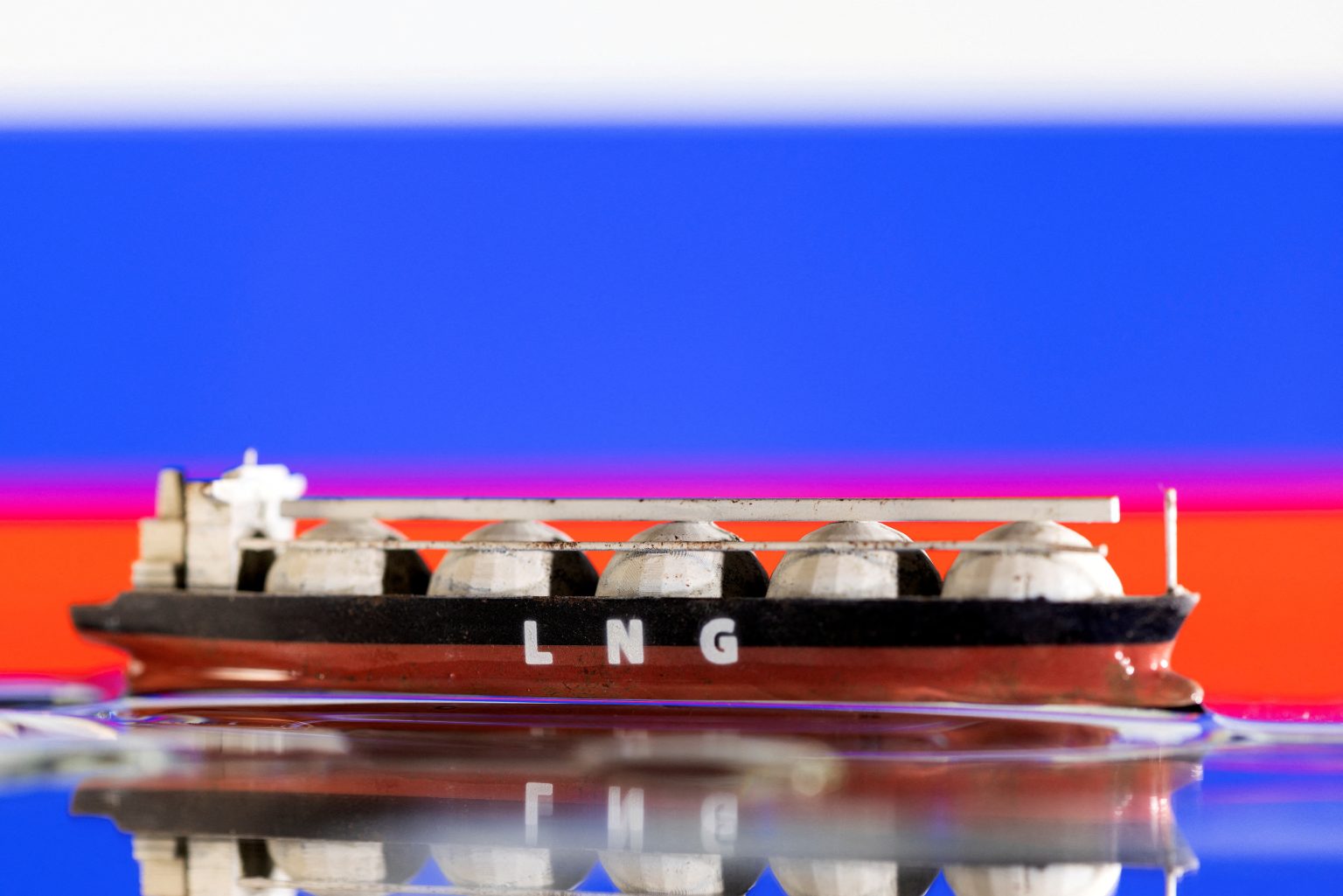
However, Western sanctions are significantly complicating this plan and forcing the Kremlin to openly admit delays in meeting key objectives.
Western sanctions are noticeably slowing Russia's efforts to establish itself as a major player in the global liquefied natural gas (LNG) market.
Moscow has already openly admitted that it will not be able to meet its original production target within the planned timeframe.
Technological limits are changing the Kremlin's plans
Russia has pushed back its goal of achieving annual production of 100 million tonnes of LNG by several years. According to Russian Deputy Prime Minister Alexander Novak, the main reason is Western sanctions, which have made it much more difficult for the country to access modern technology, financing and the specialised infrastructure needed to develop LNG projects.
"Our target was to reach 100 million tonnes. However, it is clear that due to sanctions-related restrictions this target has been postponed for several years," Novak said in an interview with Russia's state-run Rossiya 24 television.
Moscow's ambition was to control about a fifth of the global LNG market between 2030 and 2035. However, Russia currently owns only around eight percent, a position that is mainly based on projects built before the invasion of Ukraine.
LNG to replace Europe, but growth stalls
The development of the LNG sector is of strategic importance for Russia, especially after the sharp decline in pipeline gas supplies to the European Union. The Kremlin is trying to redirect energy exports to Asia, especially to China and India. However, this shift faces serious technological and logistical obstacles.
One of the most striking examples is the Arctic LNG 2 project, which was supposed to be the linchpin of Russia's expansion in the global market. Sanctions limit the availability of specialised tankers, compressors or refrigeration technology, calling into question Russia's ability to rapidly ramp up production without foreign cooperation.
While the government's latest strategy continues to envisage significant growth - to 90 to 105 million tonnes per year by 2030 and 110 to 130 million tonnes by 2036 - these targets already implicitly envisage a multi-year slippage from the original plans.
Developments in recent years suggest that the reality will be rather more moderate. Last year, Russia's LNG production increased by 5.4 percent to 34.7 million tonnes, falling short of initial expectations. This is a signal that sanctions are having a longer-term structural impact, not just a short-term effect.
At the same time, Alexander Novak added that oil and gas condensate production this year is around 516 million tonnes, or 10.32 million barrels per day.
Although this is a slight improvement on the Kremlin's October forecast, developments in the LNG sector suggest that Russia's energy ambitions will increasingly run up against external constraints in the coming years.
(reuters, tasr)