
Three Belarusians and a Ukrainian minor and a Ukrainian adult were detained by members of the Polish police and the Internal Security Agency(ABW) at the end of December. According to information published by the National Prosecutor's Office, all of them were in contact with foreign intelligence via the Telegram application.
On behalf of foreign intelligence, the detained five were photographing 'critical infrastructure objects', i.e. places important for national security. They were paid in cryptocurrency for completing the tasks.
An adult Ukrainian and two Belarusians went to detention for 90 days. If convicted, they face prison sentences of five to thirty years.
Street propaganda and polling
According to the National Prosecutor's Office, the underage Ukrainian woman has been placed in a juvenile detention centre, and the seriously ill Belarusian man is being prosecuted non-custodial for the time being - but is not allowed to leave the country. The detainees worked for the foreign intelligence service for about 11 months, primarily in Rzeszów, Łódź and Warsaw.
Their mischievous activities on the streets of the cities consisted, among other things, in putting up posters and creating graffiti, the content of which the National Prosecutor's Office did not specify. The detainees were also photographing critical infrastructure.
It should be recalled that similar activities have been criminalised in Poland since April 2025 on the basis of the Regulation of the Minister of National Defence on the prohibition of taking photographs of military objects and objects of critical infrastructure without a permit.
By the end of the summer, taking videos or photographing warehouses, bridges, seaports, selected monetary establishments or telecommunications facilities was punishable by a fine or imprisonment, depending on the severity of the act. In total, there were 25 thousand objects across Poland, which should be duly marked with signs in several languages.
Eventually, however, the list of objects was significantly narrowed down from August 2025, but the penalties remained high. The Chief of the General Staff of the Polish Army, General Wiesław Kukula, asked the government for a similar regulation, as the number of "persons linked to the intelligence services of the Russian Federation or Belarus" who have been identifying the deployment of troops or weaknesses in critical infrastructure has been increasing recently.
"This is not a fad or a return to the People's Republic of Poland [i.e. communism, editor's note], these are security issues," Interior Minister Tomasz Siemoniak of Prime Minister Donald Tusk's Civic Platform said of the regulation banning the photographing of strategically important objects.
Tusk warned that Russia is using the same model of operations based on the recruitment of foreigners across Europe. "Russia rarely directly reveals its intentions by involving its own citizens in such actions," the Polish prime minister said.
Tunnel from the east
Warsaw began building a border fence for the ongoing flow of migrants travelling from Belarus to Poland in January 2022, with the basic construction completed in early summer of that year. However, migrants' attempts to forcibly cross the border have not ceased - last year, migrants even killed 21-year-old border guard Mateusz Sitek.
Belarusian border guards, according to the findings of Poles and statements by the migrants themselves, equip foreigners with ladders, wire cutters and other equipment needed to cross the Polish-Belarusian border.
This autumn, as on three previous occasions, the smugglers - or the migrants themselves - have reinvented themselves. In mid-December, more than 180 migrants crossed Poland's eastern border, but more than 130 of them were apprehended by Polish security forces within a day.
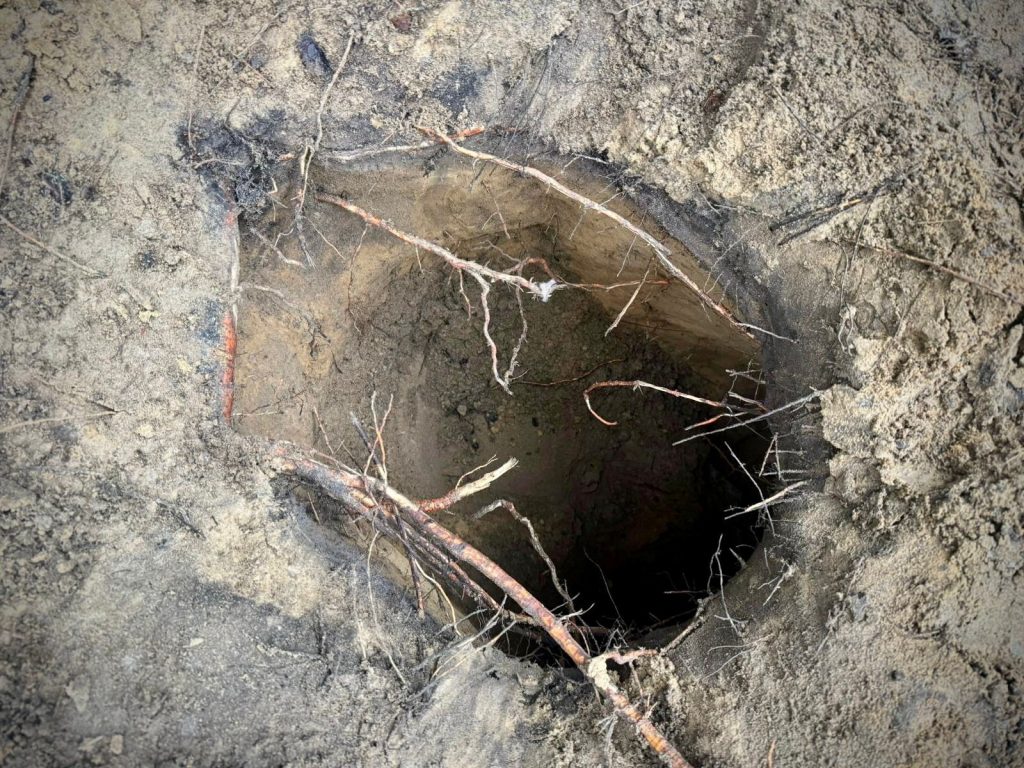
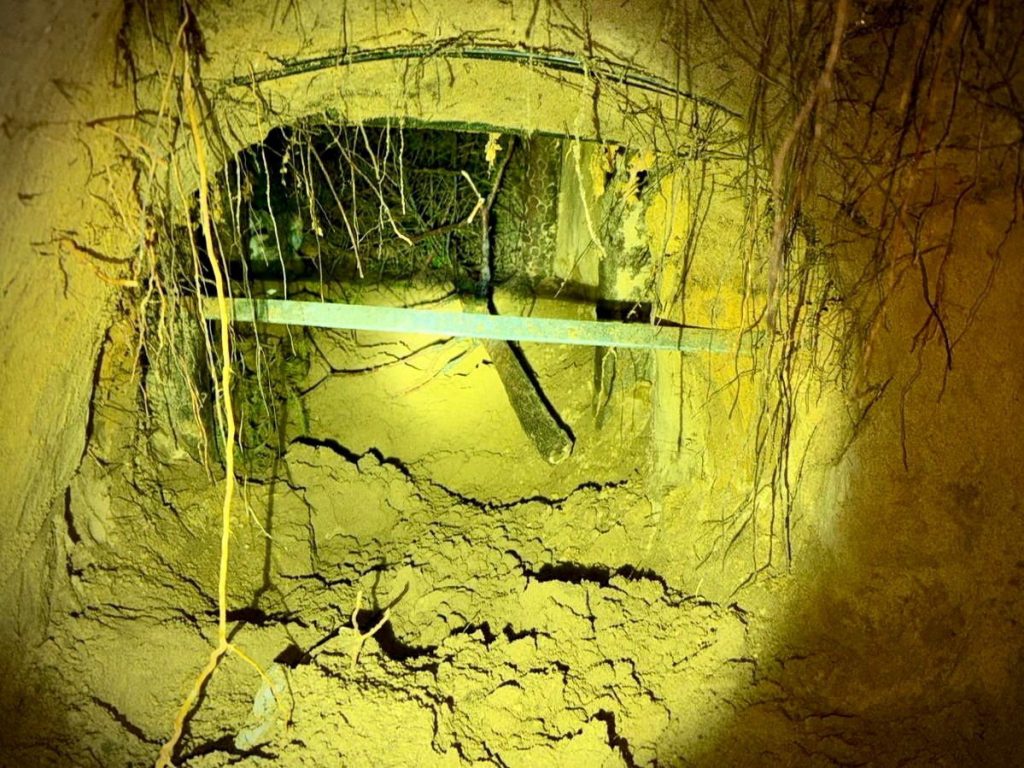
According to Polish Border Guard spokesman Lieutenant Colonel Andrzej Juźwiak, the Poles discovered the entrance to a tunnel near the village of Narewka. It measured several tens of metres and was one and a half metres high.
"Its entrance, which was hidden in the forest, was located about 50 metres from the Belarusian border, and the exit was located ten metres from the barrier on the Polish side," Juźwiak said, referring to a steel fence equipped with extensive security systems.
"Among the detained foreigners were mostly Afghans and Pakistanis, the others were holders of Indian, Nepalese and Bangladeshi passports," Yuzwiak said. Border guards also detained two Poles in the border area who intended to take the migrants further west. They are awaiting trial.
A traitor from the north
The day before the winter solstice, a Polish court sent a Polish man, who has already been charged and is awaiting trial, to 90-day detention for his readiness to cooperate with foreign intelligence and document military transports. According to the ABW , he managed to take several photographs before his arrest.
The Polish prosecutor's office said the man was from Trójmiasto. It is located in northwestern Poland in the Kashubian region, in whose language it is called Trzëgard. The cities in question are Gdańsk, Sopot and Gdynia in the Pomeranian Voivodeship, whose north-eastern border is separated from the Russian Kaliningrad region by only a few kilometres.
However, the Polish man will be investigated by the prosecutor's office in Bydgoszcz in the neighbouring Kuyavian-Pomeranian Voivodeship, where the accused was supposed to have documented the railway infrastructure and the movement of military transports on the instructions of foreign intelligence. According to the prosecutor's office, the man had already been convicted of common criminal activity in the past.
For now, the Tromestrian faces a prison sentence of six months to eight years and is a traitor under Polish law.
As in the case of the Nord Stream gas pipeline detonation, shortly after the attack on the railway line in the Mazovian Voivodeship or in the case of Ringo Mühlmann, it was openly discussed for which country the actions taken were beneficial. In the case of the November and December defendants, however, the Polish authorities have so far remained silent about the client of their services.