
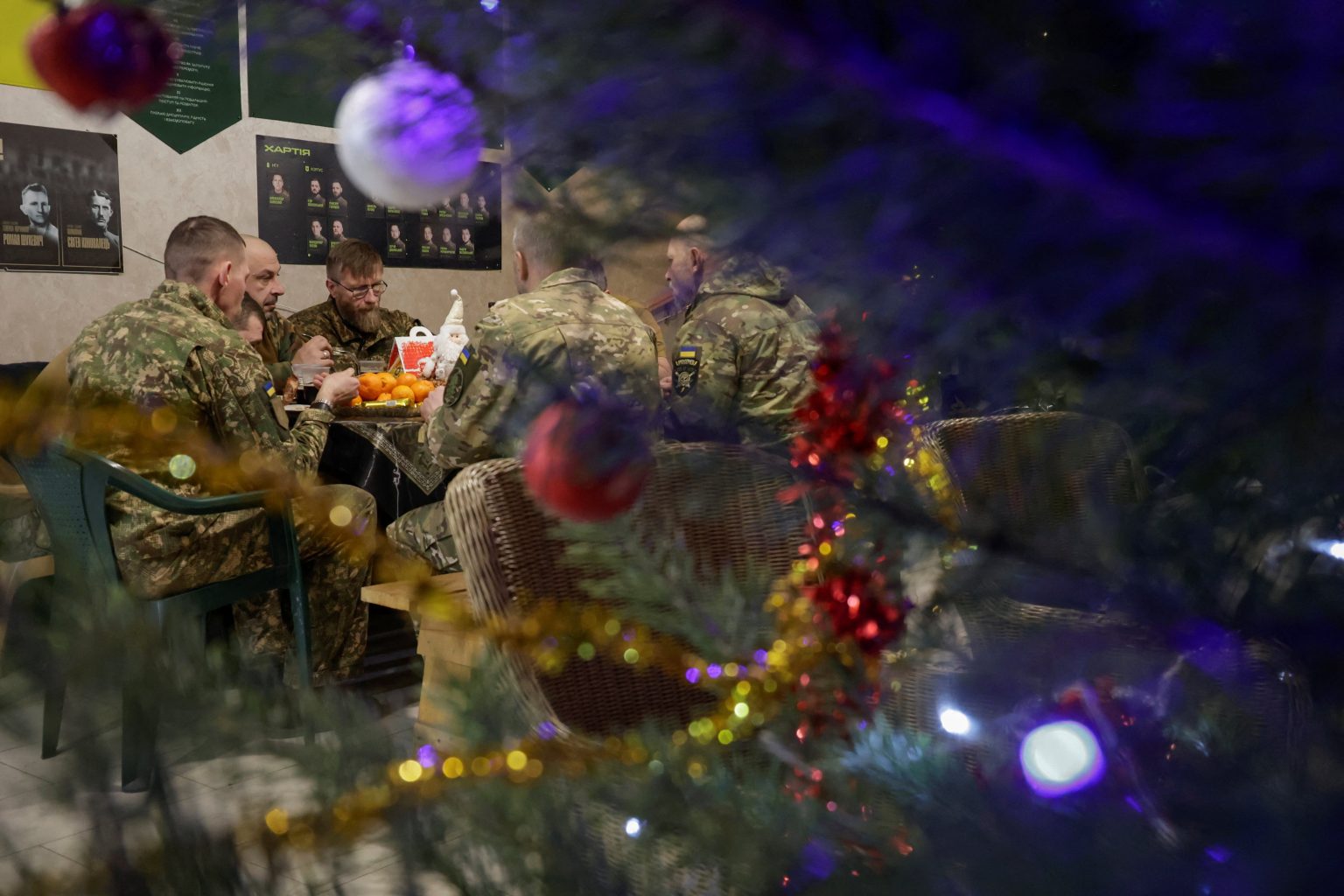
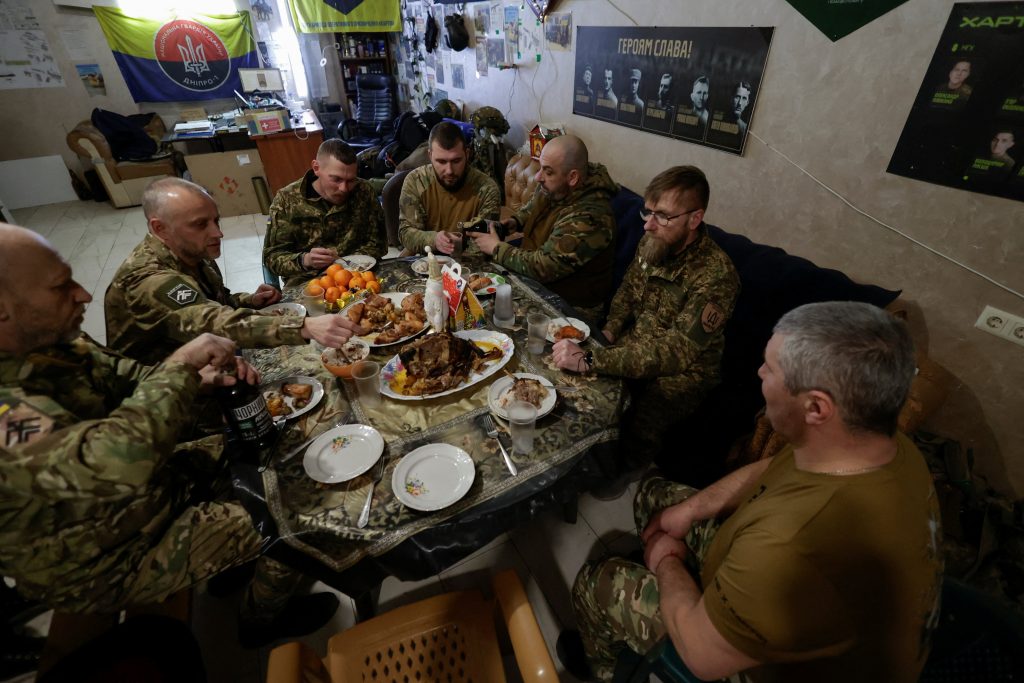
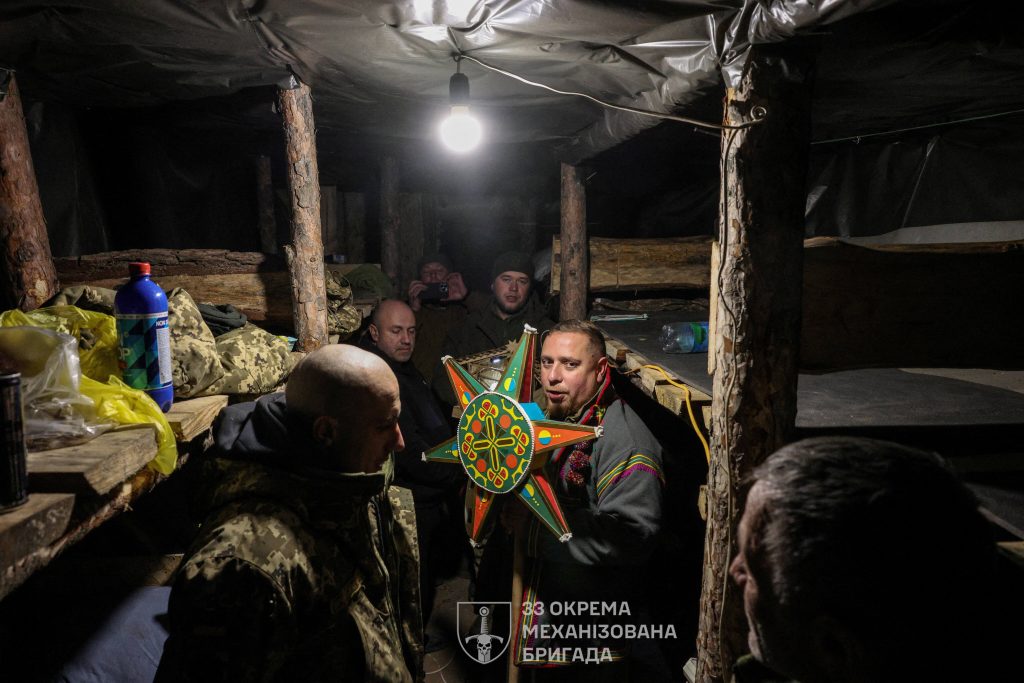
"The Ukrainian nation is welcoming the fourth Christmas under the conditions of a full-scale war - the biggest in Europe since the Second World War," Ukrainian President Volodymyr Zelensky wrote on his social media channel.
His Russian counterpart Vladimir Putin rejected Zelensky's proposal for a Christmas truce in mid-December. In addition to the fighting on the front, there have been intensified drone and missile attacks on the Ukrainian hinterland - both cities and energy infrastructure.
German Chancellor Friedrich Merz also called on Putin to stop the fighting in Ukraine over Christmas.
"Perhaps the Russian leadership still has a shred of human decency and will leave the population alone from this terror, at least for a few days during Christmas," Merz said at a press conference with Zelensky in Berlin on the evening of 15 December.
Russian presidential spokesman Dmitry Peskov, however, said a Christmas truce was out of the question, as the Kremlin, he said, wanted "peace, not a ceasefire."
Last year's Hungarian footprint
There was fighting a year ago as well. On 17 December 2024, Hungarian Foreign Minister Péter Szíjártó wrote on social media that the approaching Christmas would be an excellent opportunity to conclude a ceasefire, which he said would save human lives.
"We regret that, despite the efforts of the Hungarian peacekeeping mission, this possibility of a ceasefire, which is still on the table, has been rejected for the time being by Ukraine and the Ukrainian leadership," the Hungarian diplomatic chief said last year.
Kiev, however, denied that it had ever negotiated with Hungarian Prime Minister Viktor Orbán about a Christmas truce or a prisoner swap with Russia.
Kiev also refused
Shortly before the Orthodox Christmas of 2023, the head of the Russian Orthodox Church, Kirill, who blessed the Russian invading troops, called for a ceasefire along the entire Russian-Ukrainian front. But Kiev also rejected the proposal at the time, calling it a trap.
Indeed, a ceasefire, Christmas or otherwise, is always more likely to be beneficial to the side that is pulling the short end of the stick in a conflict. According to Peskov, a ceasefire at the end of 2025 would give Ukraine a much-needed respite, which would not be advantageous from the Kremlin's point of view.
In late December 2025, Zelensky said he was willing to let the citizens decide the territorial requirements of the peace plan through a referendum. In return, however, he said he would demand at least a two-month ceasefire.
The idea of a temporary ceasefire, however, was not supported by Putin or US President Donald Trump. Individual Russian troops have also sharply criticised the ceasefire option.
"In 60 days they [the Ukrainians, ed.] will manage to build new defensive lines, give the troops a rest, replenish them and move them to new directions without any problems, improve the positions and the resilience of the defenses of the units that have not undergone rotation," a well-known Russian unit summarized on the social networking site.
The referendum, according to the current mood of the Ukrainian nation, would likely be valid but unsuccessful, and there would be renewed fighting anyway - just on terms more favorable to Kiev than before the ceasefire.
The Russian side is aware of this and, having taken the strategic initiative, will not let the Ukrainians off the hook.
Let us recall that there were no Christmas truces even during the Second World War. The most famous and so far iconic ones were concluded by the German, French and British soldiers of the Western Front of the First World War.
In the context of the Russo-Ukrainian War, the other Easter holidays were a bright spot in this regard. Unexpectedly, the Russian president declared a unilateral 30-hour ceasefire on 19 April, which Ukraine mirrored. In practice, however, even this ceasefire did not work, and both sides reported violations.