
There is no longer a real opposition - parliamentary or extra-parliamentary - legally operating in Belarus or Russia. Although the activities of opposition-minded people in these countries have not been easy for a long time, the complete end of the opposition has come relatively recently.
In Russia, there has been no publicly active opposition since the invasion of Ukraine in 2022, and in Belarus since the protests in 2020 - in both countries, opposition-minded individuals and organisations have resorted to going underground or emigrating.
Both the Belarusian and Russian opposition have gradually recovered from the initial shock, and today both camps consist of multiple, more or less established groupings that belong to either the civilian or armed wings. The year 2025, however, was far from kind to all of them.
The double cross against the red star
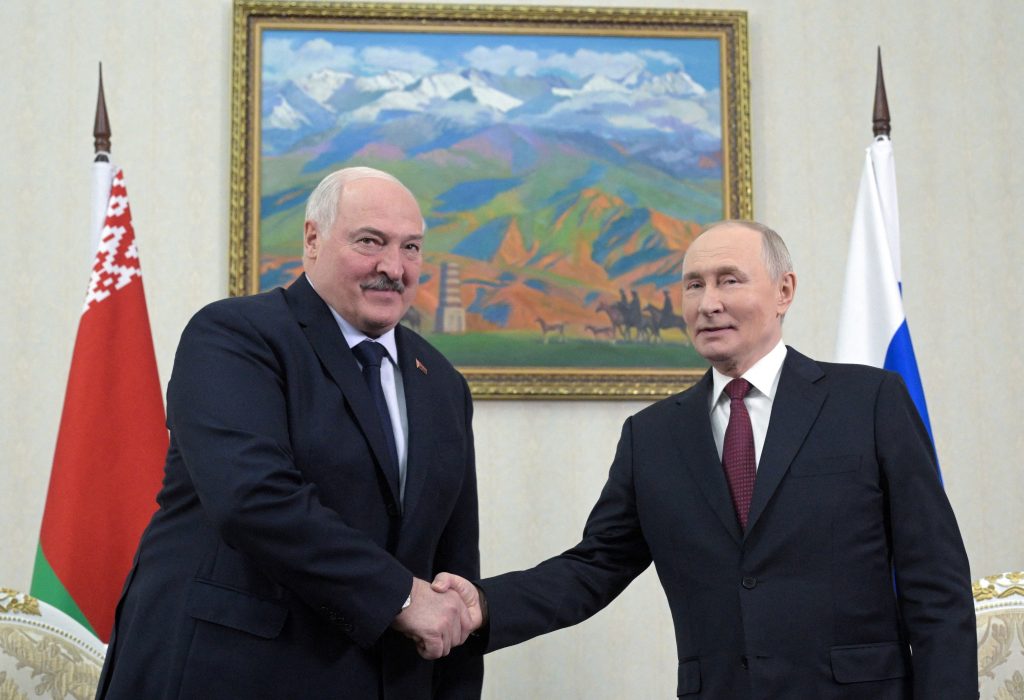
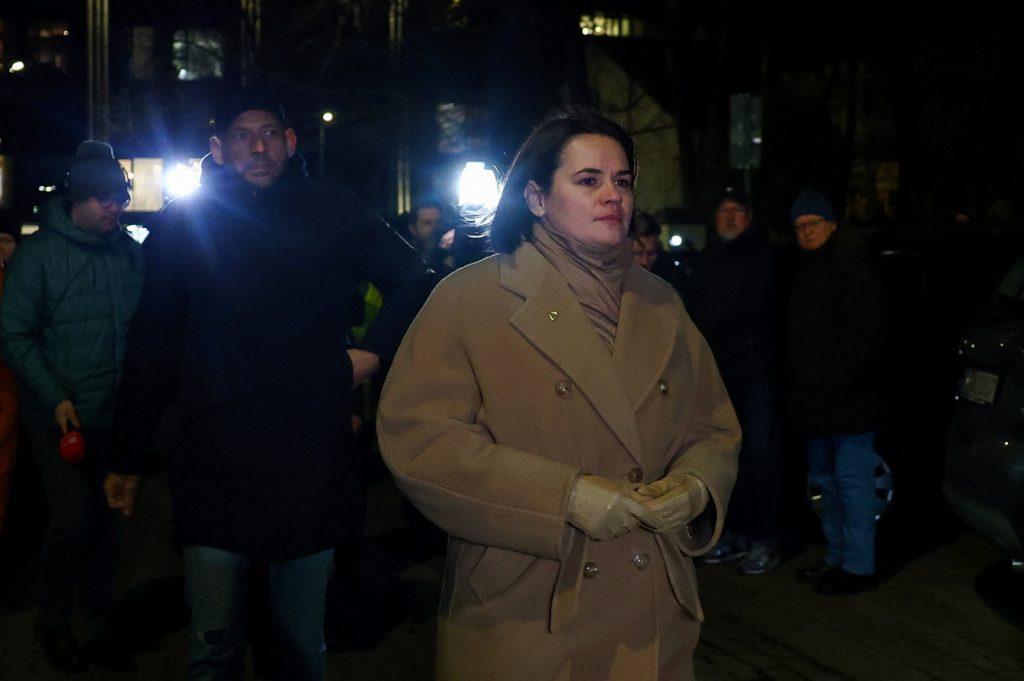
The Belarusian civil opposition saw some momentum shortly after the release of Syarhei Tsikhanovsky in the middle of this year, but the enthusiasm quickly fizzled out with his first statements. For now, the main word and international recognition is held by his wife Sviatlana, who was only his surrogate in 2020.
At the end of November, the editor of the Standard contacted a number of Belarusians asking how they felt about the current developments in the opposition. According to Belarusian Dasha, her compatriots willingly contribute to political prisoners when they need to get back on their feet and are without resources after the amnesty, but spending resources on the civil opposition is futile, according to many.
When Minsk freed another group of political prisoners on 13 December this year, the Belarusian diaspora wanted to raise EUR 123 000 for them - EUR 1 000 each - and ended up raising EUR 214 000 in about one day.
By comparison, when on 1 July Tsyhanovski asked the Belarusians for 200 thousand euros to fight the regime, they sent him only about a thousand euros, which he eventually used to buy headphones and a watch. His wife is obviously aware of the mood of the Belarusians and does not announce collections for political struggle.
The Belarusian diaspora abroad cultivates its national culture, Belarusianness, many manifestations of which - the national flag, the coat of arms, the language - have been branded extremist in their homeland.
At the same time, it supports Tsikhanovskaya's diplomatic efforts, which have facilitated the legalisation of Belarusians in Poland, where Belarusians and their culture - unlike Russians or Ukrainians - enjoy recognition and popularity.
The armed wing of the Belarusian opposition is mainly represented by the Belarusian Volunteer Corps(BDK), which has been fighting on the Ukrainian side since 2022 in close cooperation with the Russian Volunteer Corps(RDK), the Polish Volunteer Corps(PDK) and other units.
The BDK, like the civil opposition , uses the symbolism of the double cross from the ancient coat of arms, and although its ultimate goal is the overthrow of the current Belarusian regime, many Belarusians contacted by the Standard know little more about the corps than what it is called.
Like Tsikhanovskaya, the BDK is followed by relatively few people on social media, lacks significant international support, and since the civil opposition with space in the media is busily pretending that the choir does not exist, this is unlikely to change any time soon.
Slovakia has not been spared
The Russian opposition may be fragmented into more groups than the Belarusian one, but in the end it has a bigger pull, as was demonstrated again in 2025. Although minor units composed of Russian citizens such as the Siberian Battalion, the Freedom to Russia Battalion or the Karelian NORD Group have been partially sidelined, the Russian Volunteer Corps has grown stronger.
As with the Belarusian Volunteer Corps, the civilian opposition tries not to mention the armed wing of the opposition in order not to advertise it, as it is a competitor.
Thus, it is the civil opposition that is in the media and political spotlight, and unlike the armed opposition, it has the time to attend various discussions and debates, for example in Brussels.
While many Slovaks and inhabitants of neighbouring countries do not even know about the BDS, the RDK enjoys open support in Central Europe, not only monetary. Channels on several social networks have announced both monetary and material collections for RDK during 2025. Slovaks and Czechs have thus sent several hundred to thousands of euros directly to RDK through various initiatives.
And after the fake death of RDK founder and commander Denis "White Rex" Nikitin, Slovak and Czech nationalists organised the largest commemorative event in Europe, if not the world, in his honour in Brno.
Meanwhile, 2025 also marked a military reinforcement for the RDK: the corps already has its own drone detachment, heavy artillery, a landing craft and, since October, its own tank unit.
At the same time, RDK representatives participated in two events organised by the civil opposition in 2025: Anti-War Committee of Russia (AKR) in Brussels and the Public Reception Office of Ilya Yashin in Berlin.
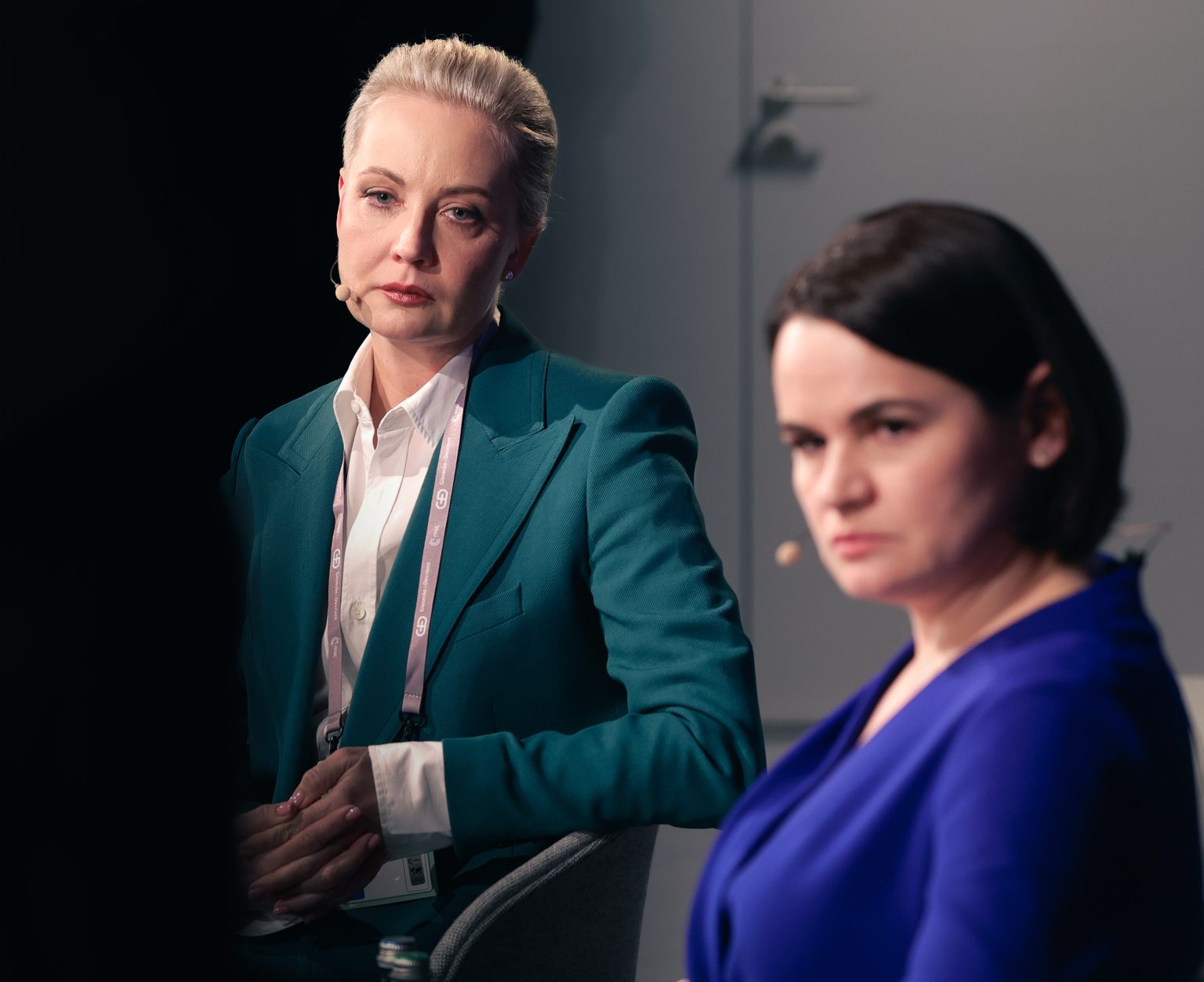
However, the civil opposition was certainly not left behind. Perhaps the biggest splash at the end of this year, as in the case of the Belarusian opposition, has been made by the wife of the most well-known oppositionist of the time.
Yulia Navalny, the widow of Alexei Navalny, now heads the Platform of Russia's Future (PRB), which refers to the phrase "beautiful Russia of the future" (прекрасная Россия будущего) popularised by Navalny. At the end of November, Navalny was welcomed at Prague Castle by President Petr Pavel.
The Anti-Corruption Fund (ACF) works closely with the PRB, which, despite its own leadership, uses Navalny's face and name for publicity - for example, in its monthly activity report. The FBK's last major piece of investigative material was an analysis of the activities and assets of Nikita Mikhalkov, the well-known Russian film director and propagandist.
Yashin and Vladimir Kara-Murza, who were released from Russian prison and deported abroad in 2024, have their own political activities, but they also cooperate with the PRB, which has more supporters than the two politicians combined. Kara-Murza left the AKR in early December 2025, but has not yet joined another grouping.
Several forums - de facto conventions - of the PRB were held in 2025. A select group of ten Russian university students studying outside Russia were invited to two of them. The editors of the Standard contacted the student who participated in the forum from 14 to 16 November in Vilnius, Lithuania.
"We worked with Yashin, Navalny, investigators from FBK, as well as experts in the field of economics such as Sergei Guriev and Ekaterina Zhuravskaya. A few days after the forum, we were portrayed as terrorists on state channels in Russia, while the Taliban was removed from the list of terrorist organizations by the Kremlin," the student told the Standard.
In late November, Navalny announced that she was setting up her own publishing house. "Some authors have left Russia, some are banned, many books are out of print due to censorship or self-censorship," the Russian politician explained on the PRB website. The Lithuania-based publishing house has also published books by non-Russian authors.
All of the main military, political and politics-related organisations mentioned above are outlawed and labelled as terrorist or extremist in Belarus and Russia. Supporting them carries the risk of several years' imprisonment.