
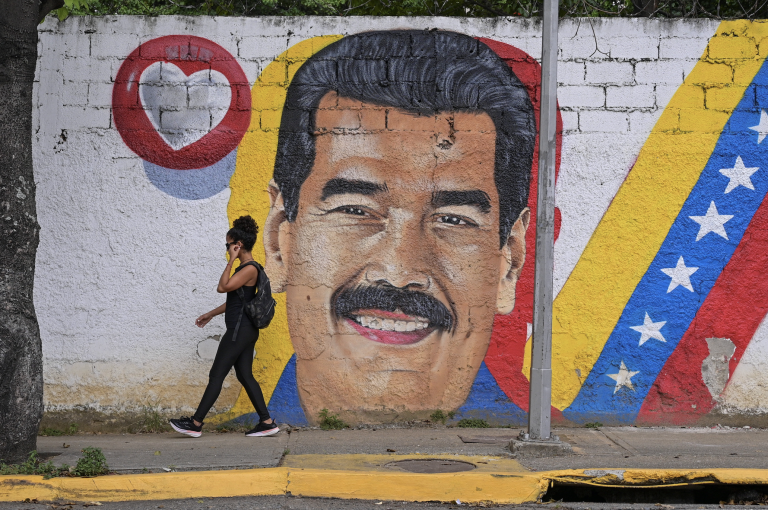
The preparations for military action against Venezuela, or, more precisely, the propaganda artillery pre-preparation, have been going on for several months. It was only a matter of waiting to see whether Trump would follow in the footsteps of his predecessors in his peculiar interpretation of the Monroe Doctrine.
In short, Washington is allowed to commit invasion against any country in the Western Hemisphere whose political representation it does not like.
The propaganda prelude in question concerned the alleged supply of drugs to the US imported from Venezuelan cartels. This fairy tale can probably only be compared to the non-existent weapons of mass destruction that 'justified' the invasion of Iraq the other day.
The war was provoked by the appetite for oil
Not that tons of cocaine are not headed to America, but they are certainly not the cause of the war. After all, Trump himself is more forthright about oil than drugs.
As John Mearsheimer has been saying for a long time, the US wants Venezuelan oil, so one day they will just come and take it. As with Russian propaganda, this simplest explanation will be referred to as Maduro propaganda (the equivalent of Putin propaganda). Simply because that is what this Maduro is saying.
Why wouldn't he say that?
Trump professed that the operation was in accordance with US law. In fact, in doing so, he officially acknowledged a basic American political doctrine: that American laws are not in accordance with international law. This is no surprise, however; it is a deep part of American thinking, ideology and understanding of the world.
The question of whether this is military aggression is, perhaps, settled by the very fact that the US has kidnapped the Venezuelan leader, and has done so in a direct attempt at regime change, which is a declaration of war and a casus belli. This is a similar cause for war to the 'special operation' in Ukraine. I guess the only difference is that Venezuela did not threaten the security of the US. However, it is precisely on this argument that Washington built its justification for military intervention.
Maduro's regime had a legitimacy defect and the West had a selection ethic
However, the Maduro regime cannot be considered legitimate, as the denial of free elections was evident in that country. That is why the US imposed sanctions on Venezuela's oil imports.
Recently, the moralism of the West (a word not to be confused with morality) also commanded the imposition of sanctions against Russia. We have probably forgotten about it, but that is precisely why Joe Biden lifted the aforementioned sanctions on Venezuela. Even the Saudis have been unwilling to obediently play the Western game and increase oil supplies to make up for the losses from Russian imports.
In the selection morality that has emerged here as a new kind of psychedelic madness, the West has been willing to take all the autocracies and dictatorial regimes in the world at its mercy to help it absorb the consequences of anti-Russian sanctions. Including Venezuela.
This is clearly no longer the case today. Biden has lifted sanctions on the Maduro regime, Trump won't need them. He came for the oil with special forces.
In our part of the world, this could be confirmation that it is not only Russia that is willing to launch a war against another country in order to dominate it. But those who did not want to believe it, despite several dozen incidents over the last 50 years, will not believe it this time either.
In this case, however, it is not just a temporary defeat in a positional war between the Washington deep state, convinced that any problem in the world can be solved by military intervention, and Trump, on the other hand, who has stood in opposition to the perverse nature of the US security lobby.
The attack on Caracas was a sovereign political decision by Trump himself. This is evidenced by his long-standing communication and vigorous stance on the 'Venezuelan question'. His entourage has long made it clear that they will come for Maduro and are prepared to change the regime in the South American country.
The situation surrounding his main ally, the Venezuelan opposition politician María Corina Machado, a recent Nobel Peace Prize laureate, a woman with an admirable story who, despite having received this toxic award, is truly worthy of it (which is not the norm), may play into his hands in the longer term.
That Trump has not explicitly endorsed her and left her aside for the time being may be more a matter of situational tactics. Vice President Delcy Rodríguez, who has taken over as the country's acting president, may only be a temporary stopgap in a deeper power shift in Venezuela.
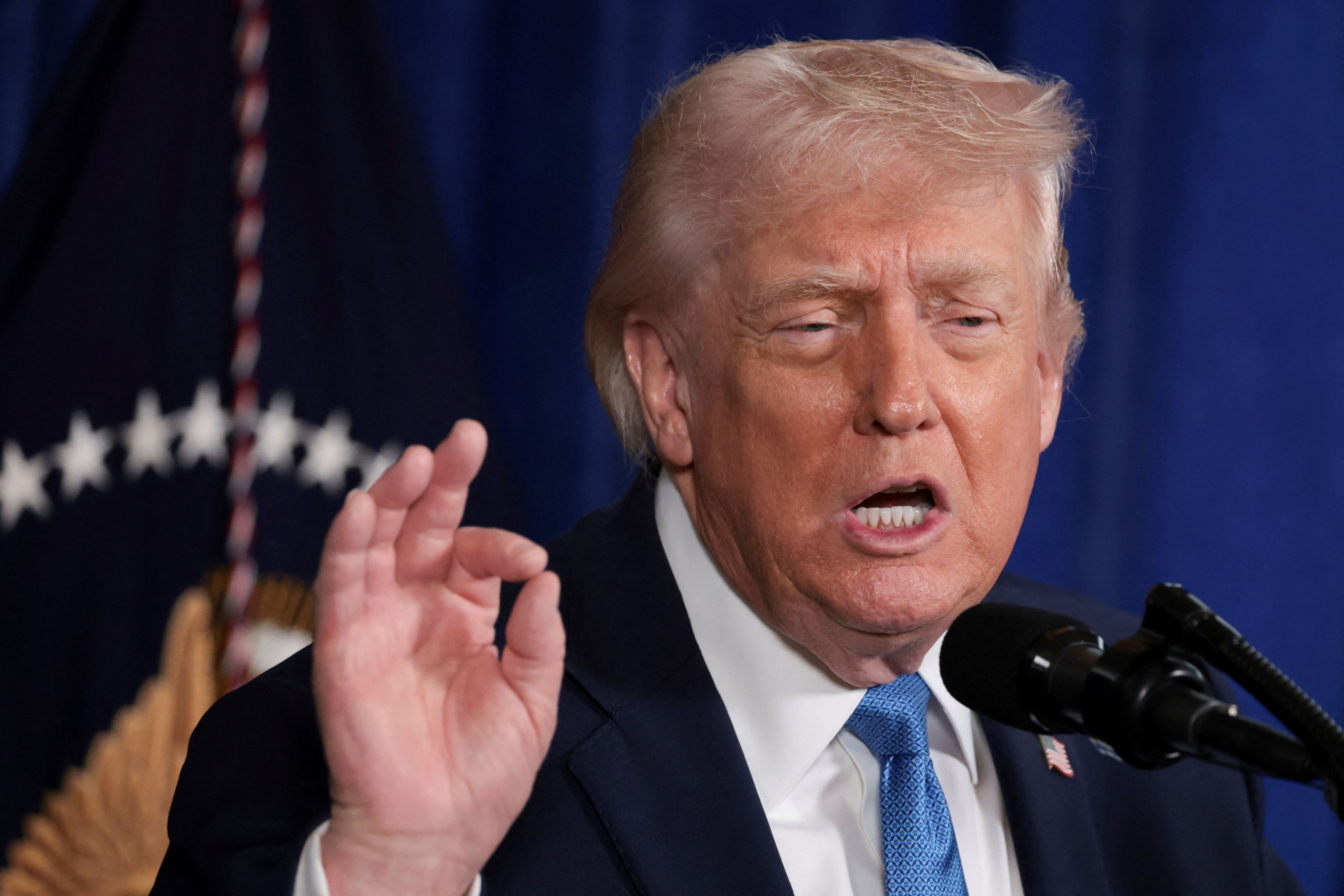
Violating international law with imperialist ambitions has a very long tradition in the US, so it would be rather surprising if Trump missed the opportunity to acquire the world's largest oil reserves under a seemingly safe moral cover. In this day and age of moralistic unbridledness in proclaiming 'moral' objectives, he could not have had a nicer alibi.
This time, even European 'leaders' will praise him. As is well known, they are generally very tolerant of illegitimate military aggressions, with exceptions, as long as the aggressor is on the right side of history. The condition is that they are only waging war, but not waging an 'aggressive' war.
Failed US interventions
But one thing these US interventions in trying to change recalcitrant regimes around the world have in common: in almost all cases, at the end of the day, they have been failures that have done nothing good for the US, let alone for the country in question, where fraternal aid in the form of armed divisions had to be brought in. It is one thing to liberate a population from a violent dictator, but if you do it with the aim of controlling the country, it may not always meet with the understanding of the indigenous population.
But in this case, Trump may succeed. The social majority in the country, which has not been given a say in the future of its homeland, seems to be standing against Maduro. The surgically precise success of the 'special military operation' suggests that this may be a game with a good ending for Trump, where he does not risk much. At minimal cost, he may gain a valuable ally and a sea of oil.
All he has to do is organise a regular election in which the Venezuelan people will elect his close friend and probably the favourite for the next election. Unlike Iraq, where democracy was merely camouflaged, or Egypt, where the people elected the terrorist Muslim Brotherhood in a free election (the US subsequently saw what it had wrought and quickly abolished democracy there), the potential for modern citizenship is stronger in South America.

Will Venezuela's reorientation cause a more sustained decline in oil prices?
Moreover, Trump can also help himself against Russia with this operation if the intervention leads to a reduction in energy prices. Infrastructure and technology from the US can get considerably more oil onto the global market than this country is able to produce and export today, given its unreawakened potential, bound by socialist manners.
The US may become the most influential oil power in the world with the ability to manipulate global markets and energy carrier prices, which will put pressure on Russia, which lives off these revenues, while the Western engineers of ideal worlds have long been unable to get prices below levels that would hurt Russia.
But that will depend on whether Washington actually manages to bring the government in Venezuela under control. At the moment it is still an open question, we still do not know how the local people will react to the role of their new master and how strong Maduro's guerrillas will be.
The key question today is this: on whose side will a supercritical section of the local population stand?
Will they side with the Maduro regime or with the imperialist who has come to clean up his backyard and will treat his vassal exactly accordingly?