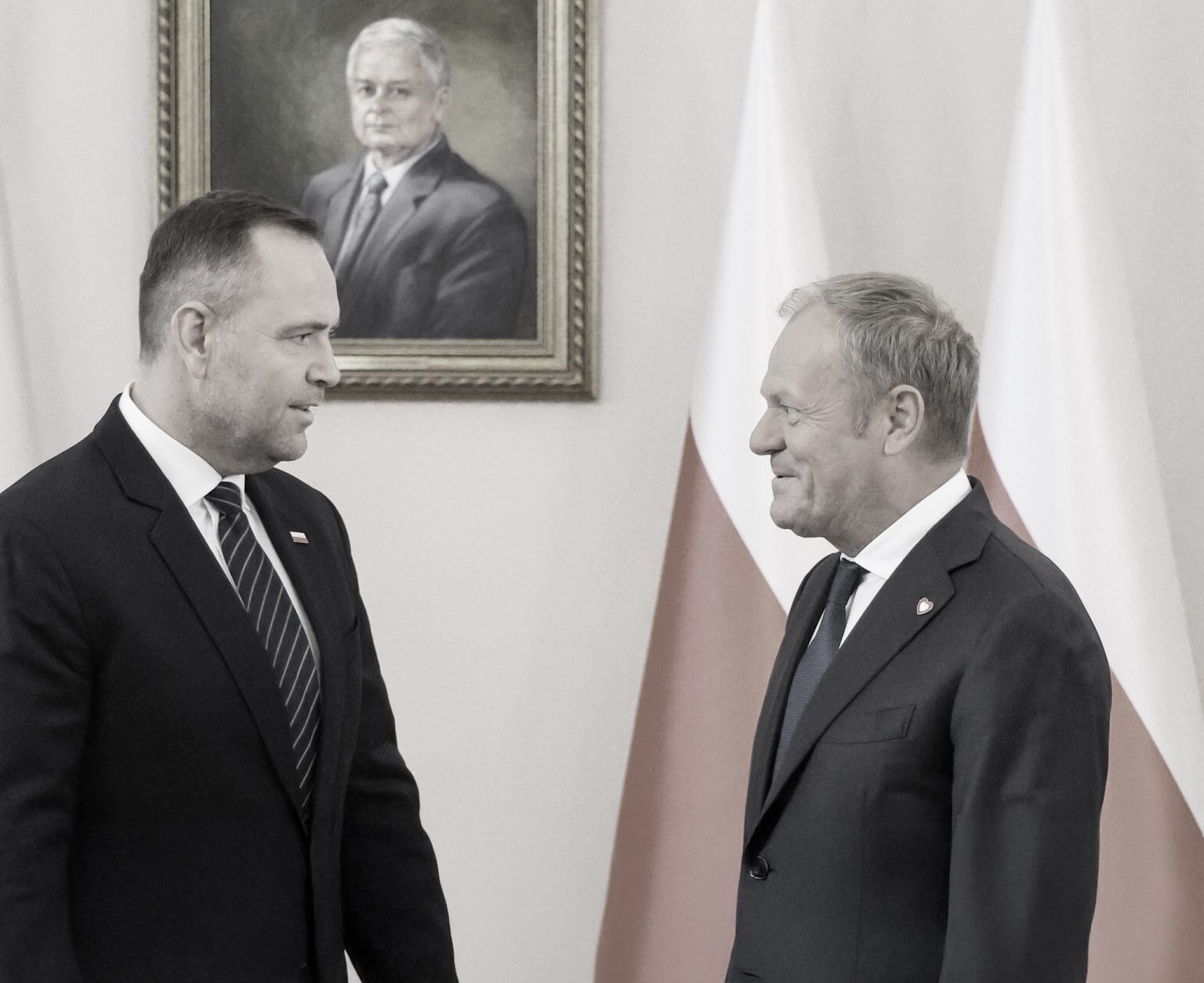
The fact that the long-standing ideological dispute between Tusk's camp and Jaroslaw Kaczynski's PiS has spread to Polish society as a whole is confirmed by the results of last year's presidential elections. In those elections, Karol Nawrocki, the candidate of the opposition PiS, won 50.89 percent of the vote, while his opponent and winner of the first round, Rafal Trzaskowski, supported by the ruling OP, won 49.11 percent of the vote. Current polls show that the current division of power in Poland—Tusk in the government and PiS in the presidential palace—may not last until the next parliamentary elections in 2027.
According to a survey conducted by the OGB agency between December 9 and 15 on a representative sample of 1,000 respondents, Tusk's coalition would win the election with 35 percent of the vote. It would be followed by the opposition PiS with 31 percent and the Confederation of the Polish Crown (KKP) with 11.2 percent, which overtook the original Confederation (10.7 percent). No other party would make it into the Sejm, and the current government would thus lose its majority. After the elections, a majority in the Sejm could be formed by a combination of KO and the Confederation (234 seats) or PiS with the Confederation and KKP (269 seats).
Growth of the Confederations
The opposition coalition Confederation, which describes itself as a "coalition of right-wing groups" and whose members include liberals, nationalists, and conservatives, has two co-chairs: Krzysztof Bosak from the National Movement (Ruch Narodowy) and Sławomir Mentzen from New Hope (Nowa Nadzieja). He ran for the Confederation in the last presidential election and, with 14.8 percent of the vote, finished in third place and indirectly supported Karol Nawrocki in the second round. In July, the Confederation organized an anti-immigration protest.
However, the much more radical right-wing KKP, led by Grzegorz Braun, who became famous for his attack on an LGBT exhibition in June 2025, is also gaining strength. He destroyed the exhibition's information panels right in front of the parliamentary guard and security cameras. In the past, he faced a wave of criticism after extinguishing candles on a nine-branched Jewish Hanukkah menorah in the parliament building with a fire extinguisher. Due to his actions and long-held views, he is considered an extreme right-wing politician, and it is highly unlikely that Tusk's PO would form a coalition with him. However, this is also highly questionable in the case of Kaczyński's PiS.
Will the elections bring change?
Although Polish society is strongly polarized, the main representatives of both camps—Tusk for KO and PiS (represented by Kaczyński and, increasingly, by President Nawrocki)—have similar positions on key European and security issues, according to political analyst Jan Lupomęski of the Warsaw Institute.
According to the analyst, Prime Minister Tusk has adopted some of the right-wing's positions, whether on migration, energy, or support for Ukraine. He says there is broad consensus in Poland that Russia poses a real threat.
"Both the political elite and society perceive the danger as very real," he said, adding that Poland's response to provocations has been measured and without panic. He added that Poles are more mentally prepared for a possible conflict than many other European societies.
A December survey conducted by UCE Research for the Onet portal showed that one-third of respondents have a positive opinion of Prime Minister Donald Tusk, while nearly 43 percent of Poles view his performance negatively and about a quarter have no opinion on the matter. The most popular Polish politicians include President Nawrocki and Foreign Minister Radosław Sikorski from Tusk's PO.
However, the December and November 2025 polls differ significantly from the June poll, and elections in Poland are not scheduled until the fall of next year. All political entities vying for voters' favor will thus have plenty of time to impress or discredit themselves, which they all do diligently from time to time.