
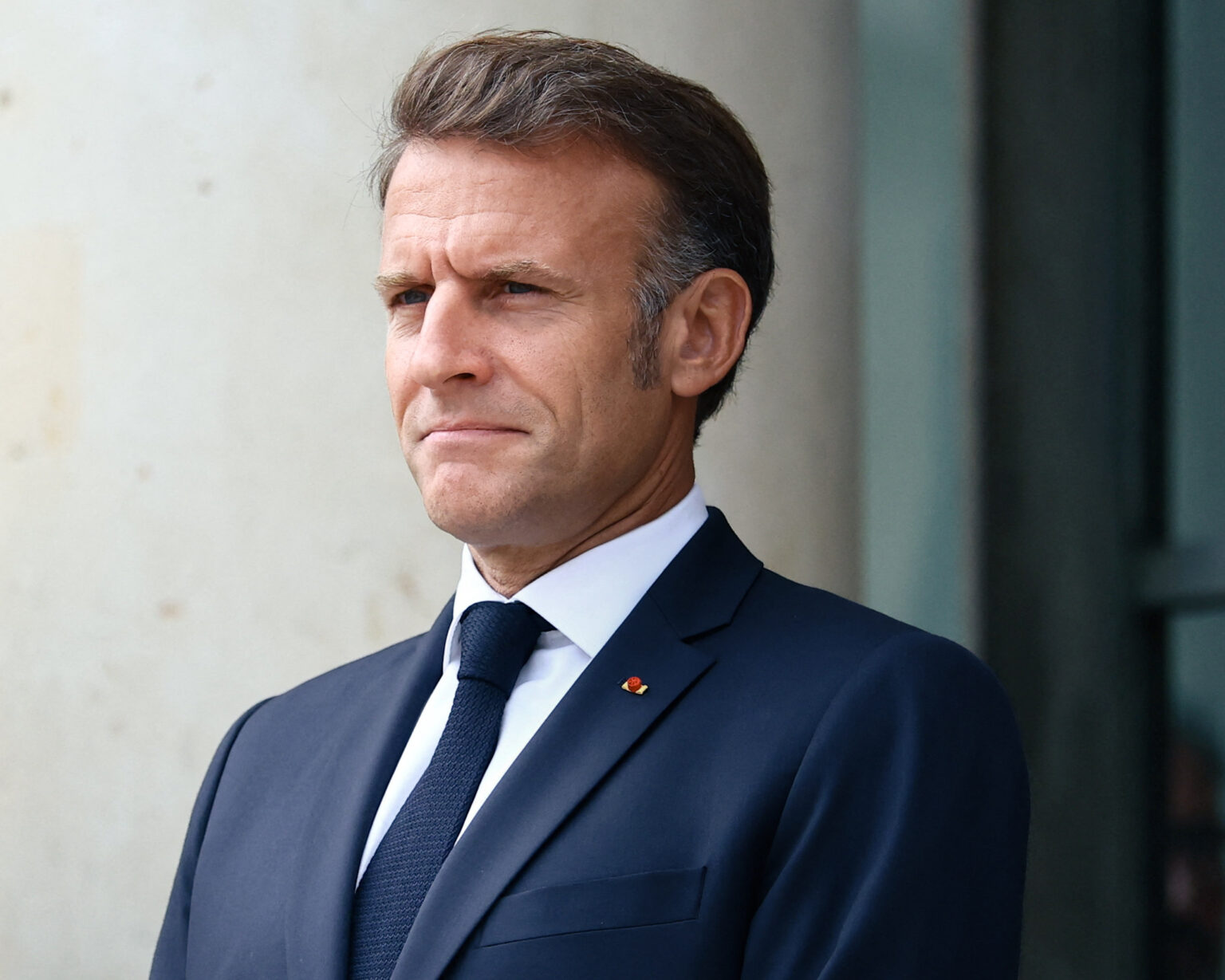
French President Emmanuel Macron has opened a sensitive debate at home and abroad about the possible deployment of Western troops in Ukraine after the conclusion of a future peace agreement with Russia. At a closed meeting with the leaders of all parliamentary parties, he presented a plan under which France could send approximately 6,000 troops as part of a so-called coalition of the willing.
The three-hour meeting took place on January 8 at the Élysée Palace and was attended by Prime Minister Sébastien Lecornu, Defense Minister Catherine Vautrin, Chief of Staff General Fabien Mandon, the presidents of both chambers of parliament, and representatives of all political parties, including those that have long opposed France's military involvement in Ukraine.
French soldiers would be "far from the front line"
According to Chief of Staff Fabien Mandon, French troops would not act as combat or deterrent forces. Their role would be to support the Ukrainian army, particularly in the areas of logistics, training, and security, "far from the front line," writes Le Monde.
Prime Minister Lecornu confirmed in this regard that parliament will vote on the possible deployment of French soldiers within the next fifteen days, making the issue of military involvement the subject of open political confrontation.
Summit of the coalition of the willing without the US signature
Macron's plan follows on from the summit of the so-called coalition of the willing, which took place in Paris on January 6 with the participation of Ukrainian President Volodymyr Zelensky. France, the United Kingdom, and Ukraine signed a declaration on future security guarantees and the possible deployment of multinational forces after the conclusion of peace.
However, the United States did not sign the document. President Donald Trump's envoys remained cautious about the idea of sending foreign troops, raising questions in Europe about the extent of US involvement in Ukraine's post-war security architecture.
British political storm
While Paris has declared its readiness to take on greater responsibility, in the UK, Reform UK leader Nigel Farage, whose influence is growing according to polls, has dismissed the idea of sending British troops as unrealistic and ill-prepared.
"Troops on the ground with equipment—what troops? What equipment?" Farage asked at a press conference, according to Politico. He warned against creating a "modern reincarnation of the British Army on the Rhine," a historical reference to the long-term post-war presence of British troops in Germany.
Farage admitted that he could imagine Britain participating in international peacekeeping forces, but only under strict conditions. According to him, participation would have to be time-limited, based on troop rotation, and accompanied by a clear exit strategy.
"We could probably manage six or eight weeks, but if we're talking about a long-term mission, forget it. We're not in a position to do that," he said.
The Reform UK leader also questioned the willingness of other allies to actually contribute troops. In his view, the idea of broad European participation without clear American support is an illusion.
"If many countries got involved, that would be great. But the Germans won't send anyone," he remarked ironically.
British Prime Minister Keir Starmer responded by saying that any deployment of British forces would be decided by Parliament. He also promised that the cabinet would present a more detailed position in the near future and continue negotiations with allies.
(pir, echo 24)