
On Monday, the Kremlin announced that during Friday's attack on the western Ukrainian city of Lviv, the Russian army destroyed an aircraft repair plant using an Oreshnik ballistic missile. Citing several alleged independent sources, the Russian Defense Ministry said that the state-owned aircraft repair plant in Lviv was "put out of operation" in Friday's attack.
As The Moscow Times points out, neither the Ukrainians nor the Russians had announced where exactly they believed Oreshnik had landed.
According to the Russian Defense Ministry, the plant manufactured combat drones and repaired Soviet MiG-29 fighter jets as well as F-16s supplied by the United States. The ministry also claims that during the attack, the Russian army hit production halls and warehouses with finished drones, as well as infrastructure at the plant's airport.
In its statement, the ministry added that the attack also destroyed the facilities of two unmanned aircraft manufacturers in Kyiv.
Kyiv says otherwise
"On the night of January 9, the Lviv State Aircraft Repair Plant was put out of operation by the Oreshnik mobile ground-based missile system," the Russian Defense Ministry said. The DPA agency emphasizes that Russia's statements differ from Ukraine's claims that the air strikes targeted civilian infrastructure.
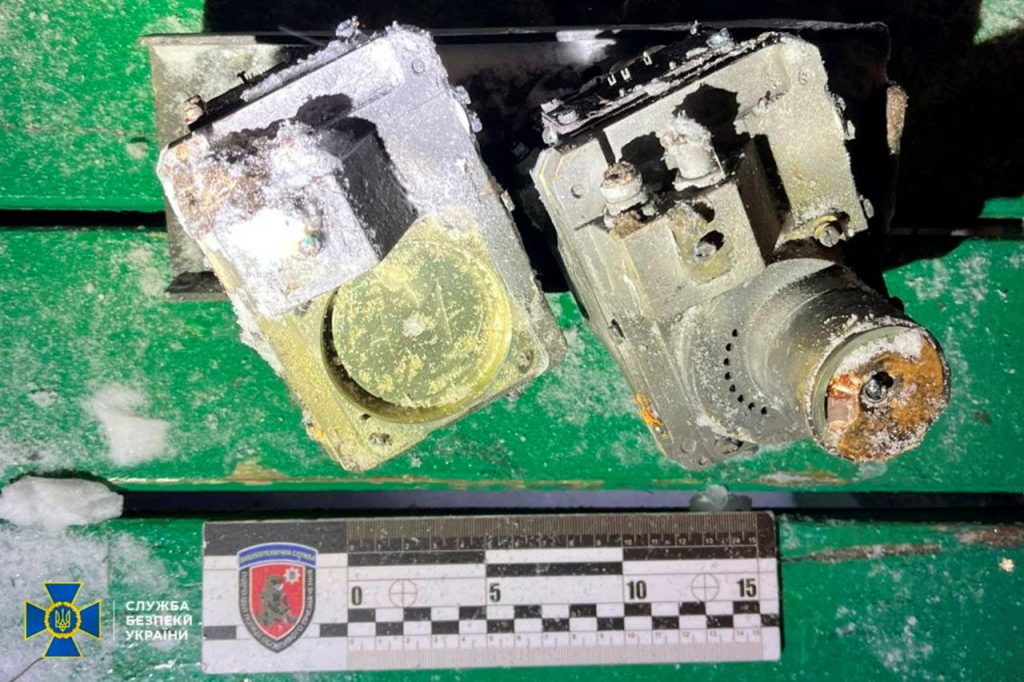
Kyiv had previously stated that Orešnik had struck Lviv, and the Security Service of Ukraine (SBU) published photos of its fragments found at the impact site. However, the SBU did not specify this and only emphasized that it was a civilian target.
The Kremlin commented that the Oreshnik attack was in retaliation for a Ukrainian drone attack on one of Putin's residences. However, the Ukrainian side denies the attack on Putin's palace, and US President Donald Trump and US Ambassador to NATO Matthew Whitaker also question it.

A false threat?
It should be noted that the Russians first used Oreshnik in November 2024, when they hit a target in the city of Dnipro. The attack on Lviv on the night of January 8-9 was the next in a series. In early January, CNN reported on an inspection of the ballistic missile used from Dnipro.

Andriy Kulchitsky, an employee of the Kiev Scientific Research Institute of Forensic Expertise, pointing to individual parts of the missile, stated that they were older, in some cases Soviet components. According to the information published so far, Oreshnik is not as groundbreaking a technology as was expected in the West.
Oleksandr Kočetkov, a former engineer at the Dnipro design bureau, told the United24 portal that despite Moscow's claims, he does not recommend overestimating the threat posed by Oreshnik.
"Instead of testing at remote firing ranges in the taiga, they (the Russians) are attacking densely populated Ukrainian cities," Kočetkov concludes, emphasizing that Oreshnik's range may be more symbolic than strategic, given its production volume and actual tactical and technical data.