
The current world order has been undergoing a transformation for some time now. The fact that the country that is supposed to play the role of policeman has once again abused its position only serves to underscore this.
However, both critics and admirers of Donald Trump's actions must agree on one thing. The American president started the new year in style. The action in Venezuela worked out perfectly for him. Nicolás Maduro, whom he accuses of systematically pumping drugs into the United States, ended up in handcuffs without any American casualties.
Months before the attack on Venezuela, as tensions were mounting, there was talk across the media spectrum (somewhere quietly, elsewhere loudly) that drugs were just a pretext for taking control of the country. And a rather flimsy one at that.
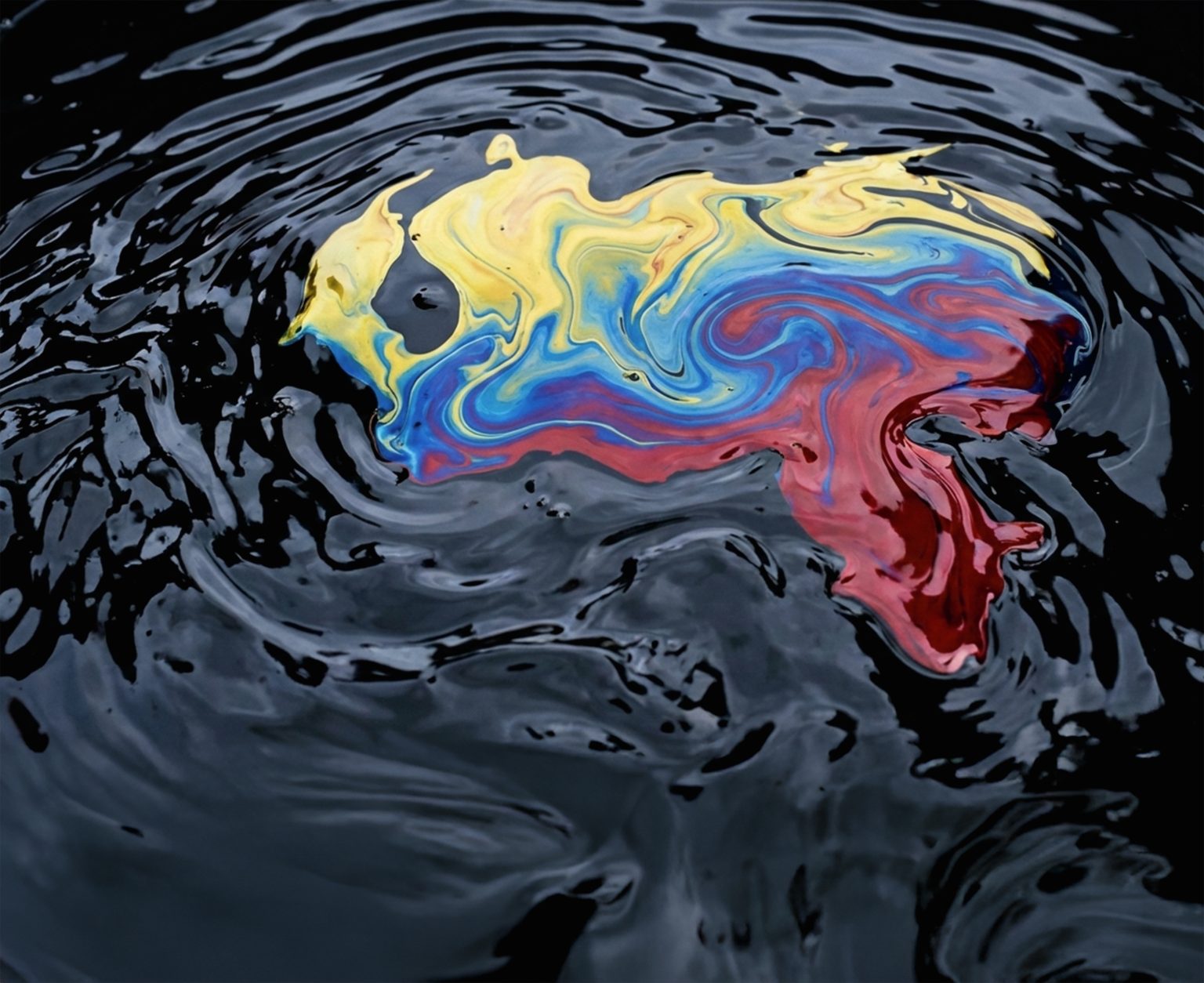
And so there was a lot of talk about oil. Venezuela has the largest reserves in the world (303 billion barrels), with a history of extraction dating back decades. Despite the decline (largely due to US sanctions), the infrastructure in the country still exists.
This story is supported by the fact that Trump is a businessman who acts and makes deals that he wants America to profit from. This is also evidenced by his rhetoric and actions following Maduro's arrest—for example, his meeting with oil company executives and his words about taking over tens of millions of barrels of Venezuelan oil.
However, dozens of questions arise regarding Venezuela's black gold.
An "uninvestable" project
Donald Trump's idea is simple at first glance. Although he is not changing the Venezuelan regime, the new face at its helm has more correct relations with the Americans. He expects that threats and promises of economic benefits will push Delcy Rodríguez to open the door to joint business, especially for American oil companies.
Trump, in turn, wants them to pour tens of billions of dollars into Venezuela's oil infrastructure and restore it to its former glory from decades ago. Today, the country produces about one million barrels per day (roughly one percent of global supply), while in the 1970s it pumped three to four times that amount, which at the time represented up to seven percent of market supply.
However, this plan stands or falls on the willingness of private actors to invest. The restoration of Venezuela's oil industry will require around $100 billion in the coming years. For several reasons, however, this is an extremely uncertain investment.
The head of the largest oil company in the US told Trump straight up: "If we look at the legal and business models, the frameworks that exist in Venezuela today, it is uninvestable today."
Security and political and legal stability
If large companies are to risk their capital, they need to perceive the situation as stable. The Venezuelan government must be able to ensure the proper functioning of the state. At the same time, there must be an enforceable legal framework that everyone follows.
Large companies will not want to play this game without guarantees from the US government, because Venezuela is far from secure and politically and legally stable.
But even if Trump can promise that companies "will be safe" and that they only had problems in the past because they "didn't have him as president," that's not much use. Companies don't know how future US administrations will treat Venezuela, and when investing in infrastructure there, they have to look decades ahead.
An economically unviable project
This also applies when assessing the profitability of an investment. In simpler terms, how much each euro invested will earn them.
This is where the biggest obstacle lies. The contradiction in what Trump wants to achieve is remarkable in itself.
He is pushing oil players into risky and expensive increases in production in an unstable country in order to achieve low consumer prices in America. He repeated this pre-election goal over and over again in his campaign. "Drill, baby, drill" will remain in our memories for a long time to come.
But who will invest in projects where oil production costs are significantly higher than elsewhere? And this at a time when oil prices are at their lowest in five years and the trend is not only unlikely to reverse, but will continue to decline...
The catch is that monetizing Venezuelan commodities is neither easy nor cheap. The vast majority of the country's reserves consist of heavy oil from the Orinoco River. It is so dense that without heating, it remains in a semi-solid to solid state. It is comparable to bitumen from oil sands in Canada.
Thick types of oil can be broken down into lighter products, but this requires processing capacity. Venezuela has a capacity of over one million barrels per day, but it is in a state of disrepair and requires huge investments.
If Venezuelan companies want to export oil today, they have to dilute it. For example, with light diesel, at a ratio of approximately three to one. This is an expensive business, as this commodity is not actually produced in the country and the diluent has to be imported.
And since the buyer then has to process Venezuelan sour and heavy oil at great expense, its market price is $7 to $10 lower than the flagship American WTI crude oil, according to Bloomberg.
The portal estimates that the current market price of oil must be around $50 to make it worthwhile to maintain the current level of Venezuelan production (on average, less than one million barrels per day). To give a better idea, a barrel of WTI currently costs almost $62, while North Sea Brent is about $4 more expensive.
However, according to consulting firm Wood Mackenzie, for US companies to recoup their roughly $100 billion investment in rebuilding Venezuela's infrastructure and refining products directly in the country, the market price of oil would have to remain at $80, which is unlikely in the coming years.
In practice, after meeting with Trump, oil players were more interested in skimming the remaining cream in the short term. To extract the remnants that Venezuela has to offer. Chevron, which has been operating in Venezuela for a long time, has announced that it could increase its current production of 240,000 barrels per day by half within two years.
No one is talking about the longer term. With Trump's demand for a thorough overhaul of infrastructure, it's a completely different story.
His administration is aware of this. Treasury Secretary Scott Bessent said in January that while giants such as Exxon Mobil, Chevron, and ConocoPhillips are hesitant, smaller players are much more aggressive and willing to take risks.
Trump wants to monetize 50 million barrels of seized Venezuelan oil reserves precisely to speed up the process and motivate even the giants to make a long-term commitment by reducing initial costs.
The hidden reasons
In summary, Venezuelan oil is currently not a jackpot worth the risk of war and diplomatic conflicts around the world for the US. It is more of an associated (potential) benefit if closer cooperation with the new head of Venezuela is achieved.
The real reasons for the intervention are outlined in the new US security strategy, as well as the renewed interest in Greenland. On January 7, the White House announced that Trump is considering various options for acquiring it. In addition to a purchase or a free association agreement that would leave Greenland with a degree of autonomy, military annexation is also reportedly on the table. Discussions on this serious issue are already underway at the highest level between Danish, Greenlandic, and American diplomats.
The picture is completed by Canada's concerns, which Trump referred to last year as the 51st US state.
Bob Rae, Canada's former ambassador to the UN, said that under Trump, the US is prioritizing asserting its dominance over the Western Hemisphere without "any sense of legality."
In other words, Trump is clearing the way in some places (Venezuela) and preparing preventively in others (Greenland, Canada) for the US to control in a multipolar world. And where he does not want other world powers to have a say.
Although he has not renewed his threats to make Canada the 51st state of the US, as in the case of Greenland, according to the Canadian ambassador, this is no reason for Ottawa to be satisfied.
"If you don't think we're on the list just because he didn't mention the words '51st state,' I think you're missing the point of this administration," he said.