
"In early January 2026, American Emperor Donald Trump captured his rebellious subject Nicolás Maduro of Venezuela and replaced him with his plenipotentiary for the Hispanic sector of the US, Marco Rubio."
This or something similar could be the headlines of newspapers from an alternative reality, but also the concise notes from future history textbooks. Phrases such as "Julius Caesar crossed the Rubicon" – at the time they happened – were not understood as revolutionary to the extent that we understand them in retrospect.
And just as Caesar and later his adopted son Octavian Augustus became the "first emperors" by simply accumulating all the top positions in the state, the current head of the White House is slowly and gradually transforming the republic called the United States of America into an American empire.
"This is our hemisphere"
Although the neoconservatives surrounding Trump (who pretend to be part of the MAGA movement) longed for regime change in Venezuela, the president rejected this option, saying that stability must be maintained in order to have someone to negotiate with.
On the other hand, Caracas is now concerned about an impending conflict between factions within the Chavista government. On one side is Defense Minister Vladimir Padrino López, whom analysts consider an "opportunist" capable of reaching agreements with anyone. Opposing him will likely be Interior Minister Diosdado Cabello, a hardline ideologue who cooperates with Cuban exiles from Maduro's security forces.
The fact that nearly 30 of the hundred people killed in Venezuela were Cubans lends credence to the theory that these "exporters of revolution" will be the next to feel the hammer of the American empire. Rubio and South Carolina Senator Lindsey Graham have already spoken openly about this.
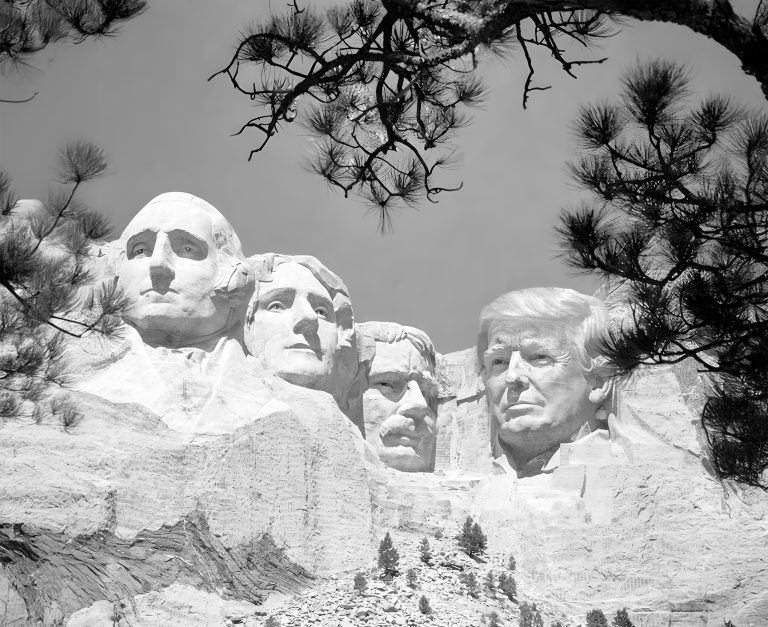
After the kidnapping of the Venezuelan leader, the State Department even published a black-and-white photo of Trump with the slogan: "This is OUR hemisphere."
The White House, the Pentagon, and selected Republicans in Congress have invoked the Monroe Doctrine in defending intervention in Latin America. In one of his speeches to Congress, the fifth US president, James Monroe, warned European powers not to intervene against separatists in their own colonies in the Western Hemisphere.
Trump also used this doctrine, which was expanded by Theodore Roosevelt to include the right to intervene militarily against "hostile" states in the US's proverbial backyard, in his latest national security strategy. The November 2025 document further extends the right to intervene by granting America this right in cases of "support for narco-terrorism."
Russia, Iran, Denmark, NATO
However, the attack on Venezuela also carried a warning to other states in the unwritten alliance that American foreign policy experts call CRINK: China, Russia, Iran, and North Korea. Apart from North Korea, all of the above-mentioned states cooperated with the Venezuelan regime and are united by their rejection of American world power and multipolarism.
During Trump's first term, the Russians even offered to withdraw from Venezuela—but only if the US withdrew from Ukraine. After Maduro's abduction, former National Security Council staffer Fiona Hill came forward with this seven-year-old communication.
However, it is not clear whether Trump is attempting a similar hemispheric approach in the case of Greenland. Several American investors have provisionally obtained concessions in the mineral industry, but the world's largest island still nominally belongs to the Kingdom of Denmark.
The fact that Trump has not "ruled out" the use of military force against an ally in the North Atlantic Treaty Organization (NATO) has alarmed Europe as a whole. Nevertheless, Danish Prime Minister Mette Frederiksen and French President Emmanuel Macron could only muster harsh statements.
Trump was critical of the Alliance during his first term in office, and at the summit in The Hague in June 2025, he achieved one of his political goals. NATO member states approved a gradual increase in defense spending to five percent of GDP by 2035, allowing the American leader to boast that he had "forced Europeans to pay for their own defense."
"Empire means that we use our influence when we need another country to deploy troops somewhere," said Auron MacIntyre, a former history teacher and commentator for the Blaze portal, last August. He appeared on the show of Tucker Carlson, former Fox News host, in which he described the change in the American system from a republic through an oligarchy to a principality.
MacIntyre's theory is based on similarities with the development of the Roman Empire from a kingdom through a republic, oligarchy, early empire (principate) to the high empire (dominate).
The American Emperor
According to the historian, the royal stage of the US lasted until the War of Independence, as the thirteen colonies actually belonged to Great Britain. This was followed by the republican period of the founding fathers, which, however, led to what MacIntyre calls "the rule of money." Both major political parties rely on donors or sponsors.
The shift to a de facto empire occurs when, instead of multiple centers of power within the division of power (Congress, the White House, the Supreme Court), power in the country is concentrated in a single center. In August, MacIntyre reminded Tucker that while in the past, Congressmen themselves drafted bills, today there is a kind of "caste" of professionals whom he called "policy makers" – agenda setters.
This is a new class of lawmakers who, by virtue of their position in the US government system, fall under the White House, meaning that the executive branch usurps the powers of the legislature. The same is true of the tariffs with which Trump has been "punishing" states he considers "disobedient" since April 2025.
According to the eighth article of the US Constitution, taxes, tariffs, and other fees are exclusively within the power of Congress. During his "liberation day," Trump used the law on extraordinary economic powers, which in selected cases allegedly grants the right to impose taxes and tariffs to the president.
This shift towards a different form of government was already evident in the period between the November 2024 elections and the January 2025 inauguration. Trump appointed people from the non-governmental organization America First Policy Institute (AFPI) to his transition team, which is responsible for the transfer of power.
In addition to the institute's general manager, Linda McMahon, becoming Secretary of Education, the AFPI also boasted that it had drafted dozens of government regulations ready for the president to sign on his first day in office.
These regulations can become law if Congress votes on them, but Congress did not create them – thereby degrading itself from a legislative institution to a "confirmer" of legal norms created by the executive branch.
In connection with this, Trump is increasingly fulfilling his imperial ambitions by entering regions such as the South Caucasus, the Indian subcontinent, and Back India with his peacemaking efforts. Rome was also a superpower because it applied its idea of peaceful coexistence between nations – pax Romana.
Unlike the Roman equivalent, the current pax Americana extends far beyond the borders of the continent, as Trump has stated several times when boasting that he has "stopped eight wars." Although skirmishes between Thailand and Cambodia have flared up again and conflicts in Ukraine and the Gaza Strip continue, these situations still give him the opportunity to act as a peacemaking emperor.
The fact that the conflict between Armenia and Azerbaijan ended with the presence of Trump's name – "Trump's Road to International Peace and Prosperity" instead of "Zangezur Corridor" — on the southern border of the Russian imperial space, or the plan for a "Trump economic zone" in southern Lebanon, testify to a shift from the "USA" brand to the "Trump" brand.
The advent of the principality was only noticed by several leading world media outlets after the capture of Nicolás Maduro or the resumption of discussions about "acquiring" Greenland.
However, many indications of this rise were already visible after Trump's inauguration. And although such a change of historical proportions takes a long time, we will monitor its manifestations or be surprised by them on a regular basis.