
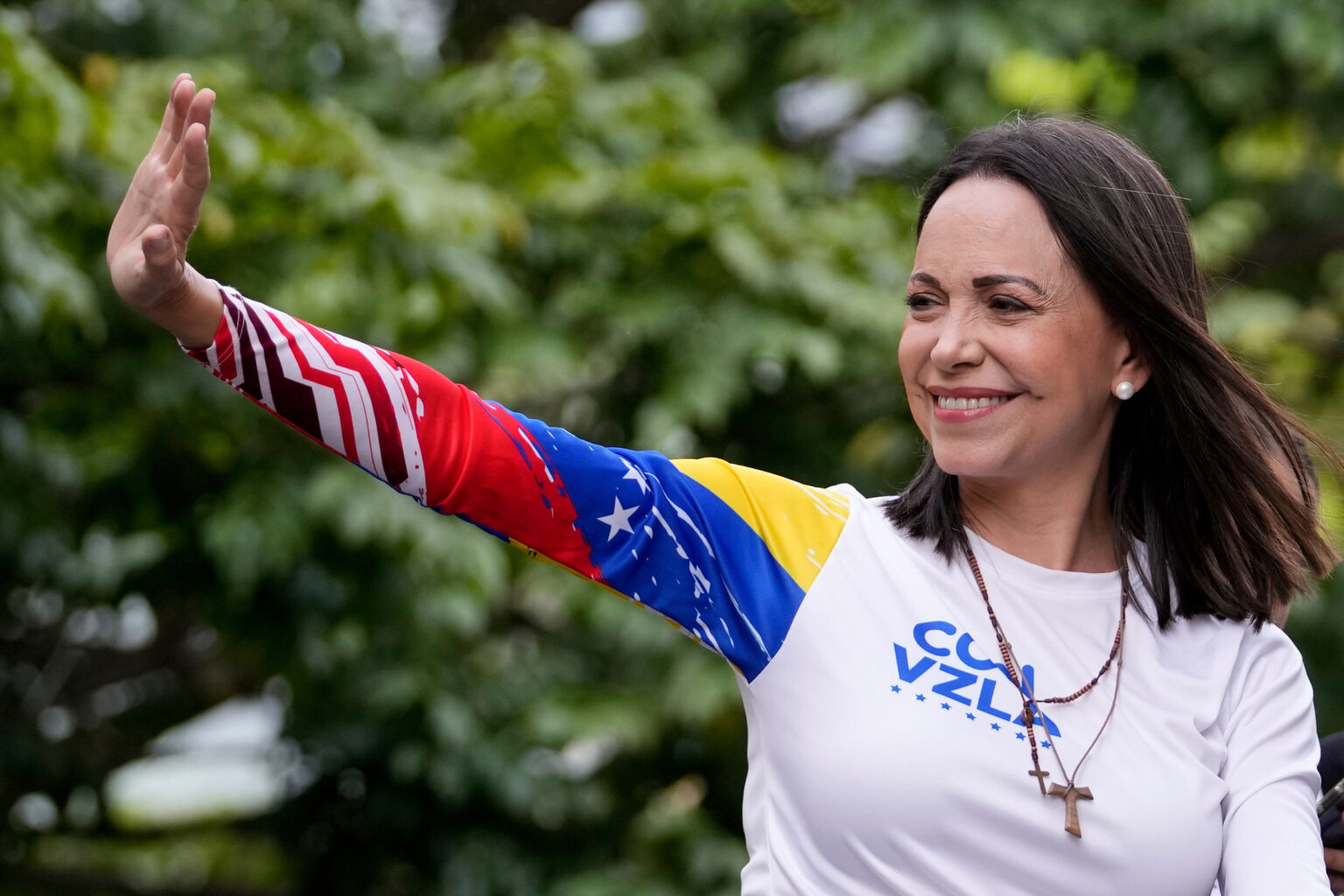
US President Donald Trump welcomed Venezuelan politician and Nobel Peace Prize laureate María Corina Machado to the White House on Thursday.
Trump "realistically assessed" public support for the 58-year-old politician at Thursday's lunch, the White House said, adding that the president did not announce any timetable for possible presidential elections.
Before their joint interview, the US leader said they would "only talk about basic things."
He has not changed his opinion
The White House chief announced the opposition leader's visit last Friday on Fox News, where host Sean Hannity reminded him that Machado wants to give him her Nobel Prize. In previous appearances, however, he rejected the idea that the vice president-designate should actually take power.
The current leader of the Venezuelan opposition "has no support or respect within the country," Trump said on January 3. Based on his actions so far, he has chosen the right-hand woman of the kidnapped leader Nicolás Maduro, Vice President Delcy Rodríguez, for deeper cooperation.
White House spokeswoman Karoline Leavitt confirmed after Thursday's lunch that Trump's assessment of Machado "still stands."
"I know the president was looking forward to this meeting and expected it to be a good and positive discussion with Ms. Machado, who is truly a remarkable and courageous voice for many people in Venezuela," Levitt said.
"So the president is obviously looking forward to talking to her about the real situation in the country and what's going on there," she added.
The opposition leader simply stated that the meeting with the US president went very well and was "great." Otherwise, she did not comment on the content of the conversation, which apparently lasted a little over an hour.
Rodríguez cooperates, but Trump feels in charge
Since her appointment on January 5, interim president, oil minister, and sister of the speaker of parliament Delcy Rodríguez has softened her rhetoric toward the US. The Trump administration supports her for her willingness to open the fossil fuel sector to foreign (especially American) investors.
"So far, we have had full cooperation from the interim authorities in Venezuela," the spokeswoman assured before lunch. However, Trump insists that the US has "authority" over Venezuela despite Rodríguez's actions.
"We are dealing with people who have just taken the oath of office. Don't ask me who is in charge, because I will give you an answer that will be very controversial," Trump told reporters aboard Air Force One on January 4. "We are in charge."
The US delegation, which arrived in the South American country shortly after Maduro's arrest, is working with the vice president. The goal is likely to restore the diplomatic mission that the United States has not had since 2019.
No elections have been announced yet
As a result of the warming relations, Trump has reportedly halted a "second wave of attacks" on Venezuela. "The US and Venezuela are working well together, especially in terms of rebuilding their oil and gas infrastructure in a much larger, better, and more modern form," he wrote on Truth Social on Friday. However, he added that the military presence off the country's coast would continue.
Washington also does not expect elections to be held by force due to insufficient oversight. "They can't have elections. They don't even know how to organize elections right now, the country has become part of the third world," Trump said in an interview with Fox News on January 9.
Machado remained silent when she had nothing to say
According to Axios, Machado is still the most popular opposition politician. She is reportedly more popular than her unofficial superior, President-elect Edmundo González Urrutia, who fled to Spain. However, according to an analyst at the International Crisis Group research foundation, citizens increasingly perceive her as an opportunist who is building her image at the expense of the country.
"Many in Venezuela now see her as someone who is selling out her country because she puts her personal interests ahead of Venezuela's," said Renata Segurová, program director for Latin America and the Caribbean. According to her, Machado "demonstratively" sided with the US on various controversial issues, which was met with incomprehension even among her supporters, added the analyst for Deutsche Welle television.
"For example, when Washington claimed that the vast majority of Venezuelans are bad people and come to the US with bad intentions. And also when the US bombed ships in the Caribbean and dozens of Venezuelans died, she didn't say a word," Segurová said.
This shift away from being a "democratic leader" began when Machado repeatedly called on the US to intervene militarily. She also uncritically supported US sanctions and promised American oil magnates "an opportunity worth $1.7 trillion."
After her visit to the White House, the Nobel laureate will meet with a bipartisan group of senior senators at the Capitol in the afternoon. The opposition leader has generally found more enthusiastic allies in Congress than in the White House. Some lawmakers have expressed concern that Trump is questioning her ability to govern.
(reuters, sab)