
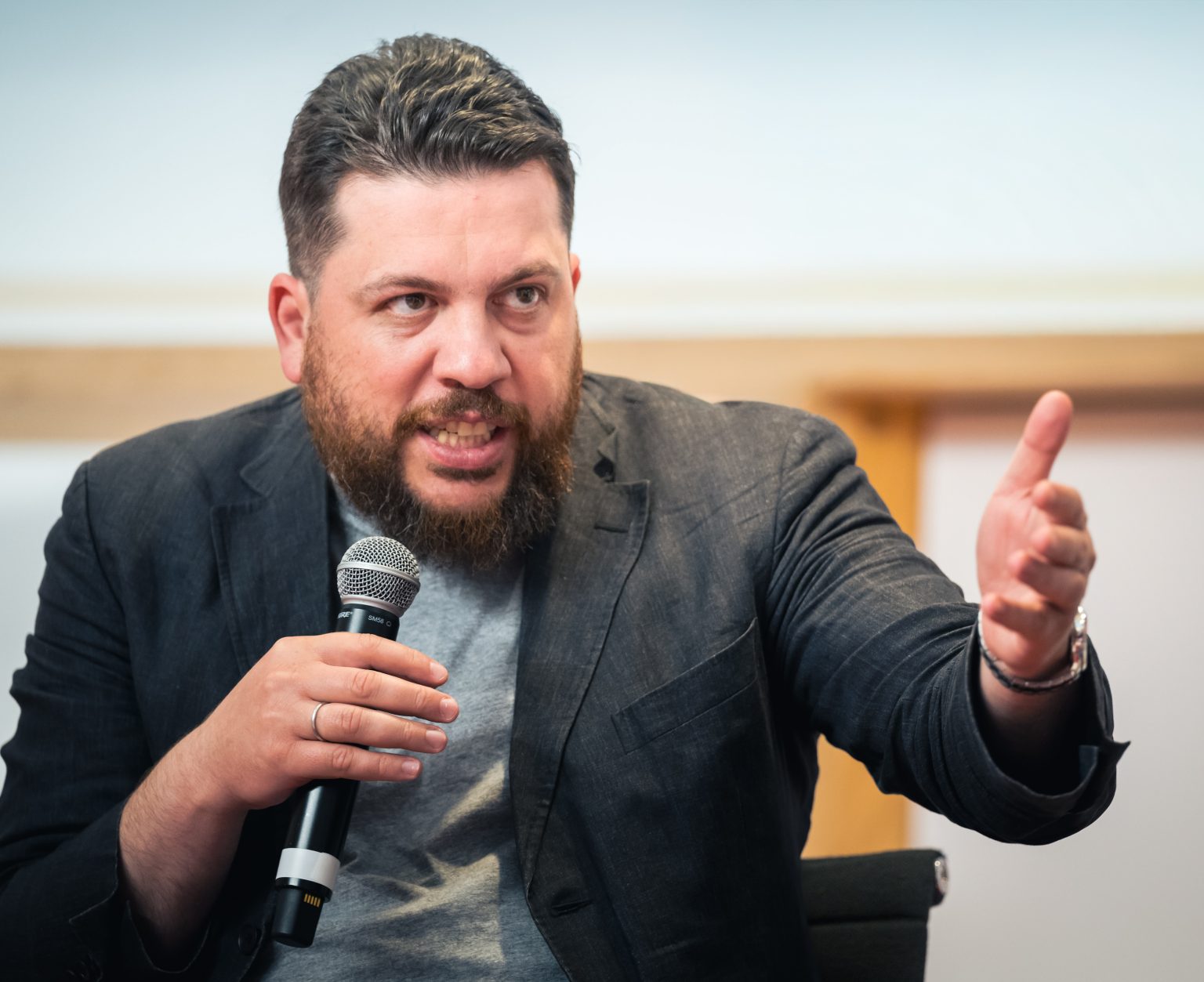
As reported in mid-January by the Ukrainian portal Hlavkom, citing the Unified Register of Pre-trial Investigations, prominent Russian opposition figure Leonid Volkov, who is currently residing in Lithuania, has been the subject of criminal proceedings in Ukraine since January 13. This was initiated by MP Olha Vasylevska-Smahliukova from the Servant of the People party.
Volkov now faces up to eight years in prison for justifying Russian aggression against Ukraine and for "insulting the honor and dignity" of soldiers fighting for Ukraine, charges that are unprecedented in the case of Russian opposition figures. The news came less than a week after Lithuanian Prime Minister Inga Ruginienė called for Volkov to be expelled from the country.
Who laughs last...
As part of a special operation by the Main Intelligence Directorate of the Ministry of Defense (HUR MO) of Ukraine, Denis Nikitin, founder and commander of the Russian Volunteer Corps (RDK), known by his combat nickname White Rex or his birth name Kapustin, was declared dead on December 27.
Two days later, Volkov, director of political projects at the Anti-Corruption Foundation (FBK), wrote a message to Anna Tironova, a former FBK employee, in which he rejoiced at Nikitin's death, unaware that he was alive and that his words would have far-reaching consequences.
"As a former (fortunately) colleague, I decided to write to you... After a long time, denazification has finally taken place. The Nazi is dead... I hope that Kapustin's friends [from the RDK, ed. note] will follow him. Yermak will go to jail, Podolak will go to jail, Budanov will go to jail, and all the other hypocritical propagandist thieves," Volkov wrote.
Let us recall that of all those mentioned, only the former head of the Office of the President of Ukraine, Andriy Yermak, is linked to the corruption scandal. In connection with the search of his apartment and office by the anti-corruption authorities, he resigned on November 28 and announced that he would go to the front – but he has not done so to date.
Volkov also wrote in the report that the recipient could feel free to publish his words. He was apparently convinced that Tironova was behind the Telegram channel Verification Department, which regularly publishes leaked reports from behind the scenes at the FBK and is followed mainly by journalists. Volkov apparently did not expect the message to be published on the RDK channel.
Death of a Russian
In early January, RDK announced that Timofey Anufriyev, a sniper with the combat nickname Enej (Aeneas in Russian), had been killed in action. At the time of the invasion, he was a first-year bachelor's student studying philosophy at the prestigious St. Petersburg State University. He was the son of Sergei Anufriyev, a well-known artist and representative of Moscow conceptualism.
"Boys like you are the ideal future of every nation: young, athletic, decisive, intelligent, educated, and well-mannered young men... He was not a bald young man, and certainly not an imbecile who learned two German words and one movement with his right hand," Nikitin wrote about Anufriyev after his death.
Although Anufriyev was not the first RDK member to be killed, the news of his death came shortly after Volkov wished death upon representatives of the Russian anti-Putin opposition fighting against Putin's army in Ukraine. It should be noted that Volkov was sentenced in absentia to 18 years in prison last June.
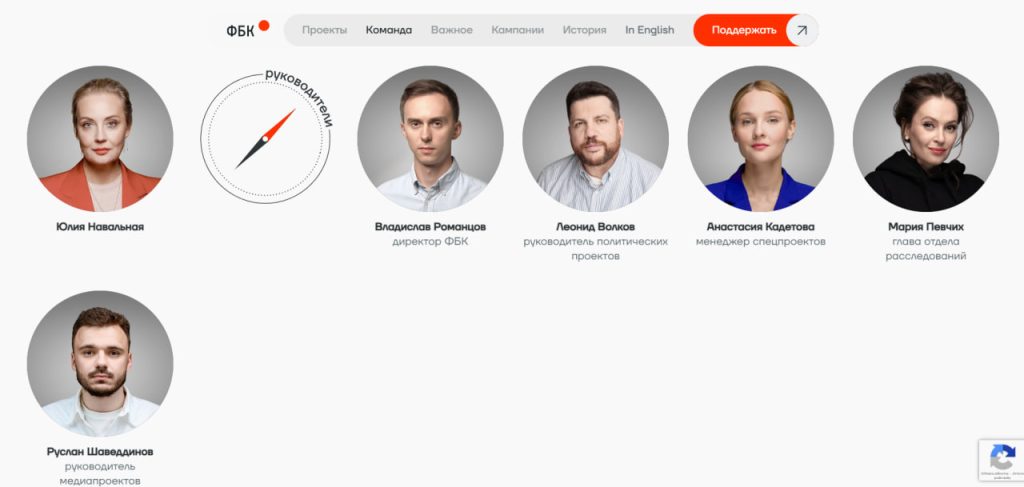
Several public figures and media outlets have written about Anufriyev's death, including Kirill Martynov, editor-in-chief of one of the most influential Russian media outlets in exile, Novaya Gazeta Evropa. The most prominent Russian opposition figure and FBK spokesperson Yulia Navalnaya has not yet commented on Volkov's words, nor has FBK director Vladislav Romancov.
It was impossible to play dead
In April 2024, Standart published a translation of a New York Times article about Russian political emigrants in Lithuania. The inhabitants of this country of less than three million people — whose statehood Russian politicians still question from time to time — are not enthusiastic about the huge influx of Russian-speaking residents. Volkov's words could not go unnoticed.
"Personally, I think such statements are unacceptable and such a person should not be allowed to remain in Lithuania," said Prime Minister Ruginienė in response to the scandal, adding that, based on a decision by the Lithuanian State Security Department (VSD), Volkov's temporary residence permit could be revoked in the coming days and he could be deported.
According to the Lithuanian prime minister, it is essential to bear in mind that the RDK soldiers, whom Volkov wished dead, are fighting "with weapons in their hands for Ukraine, and therefore also for Lithuania." Volkov commented on the case by saying that he should not have written the message.
The Ukraine case
After Volkov's words, the position of the Russian opposition as a whole on the war in Ukraine came under scrutiny. Last year, some representatives of the armed wing of the Russian opposition criticized the fact that the FBK exposes corruption in Russia even during the war, which leads to the elimination of corruption schemes. As a result, more money from the Russian budget is going where it is supposed to go, and the fund's activities ultimately support Russia's war machine.
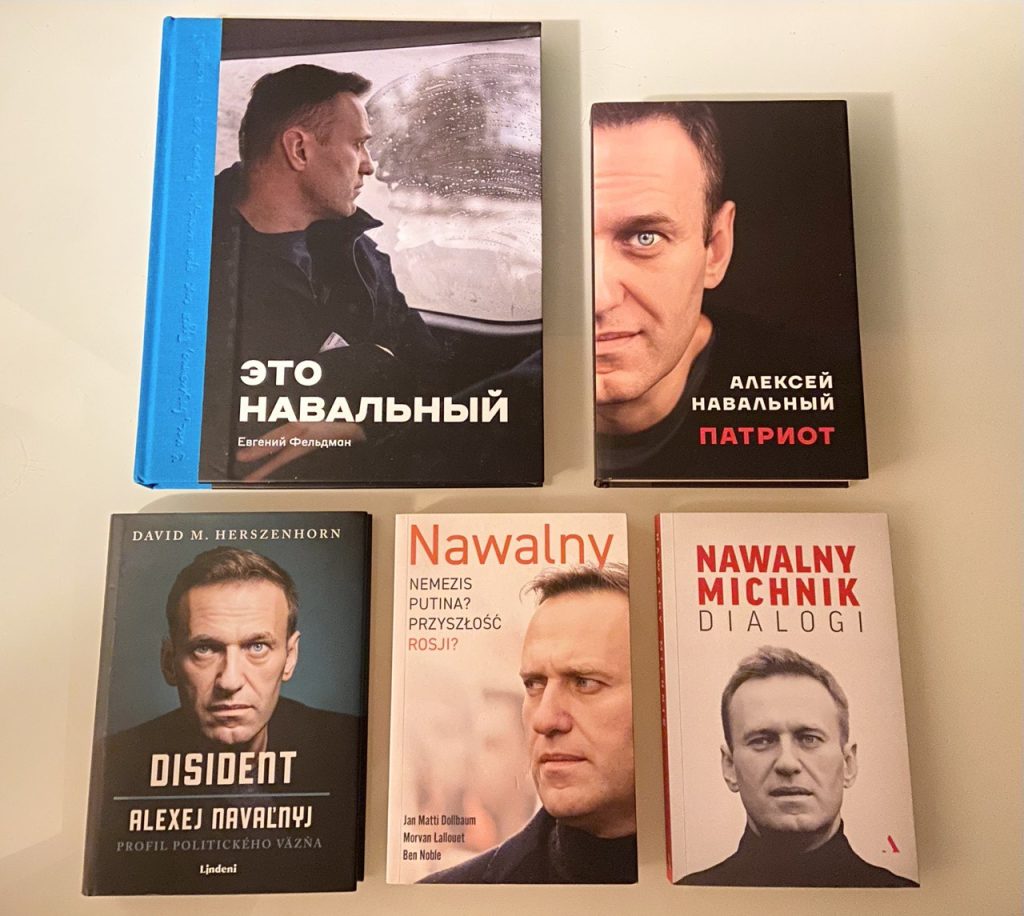
Last year, some Russian exile media outlets also reported that Alexei Navalny's book Patriot, published after his death under the supervision and by the publishing house of his widow Yulia, did not contain his "pro-Ukrainian" statements.
The book was published in Russian in Lithuania, and in Russia itself it was labeled extremist for its criticism of the Kremlin. Let us recall that Navalny died on February 16, 2024, in a penal colony in the town of Kharp, located above the Arctic Circle.
The Slovak, Czech, English, and other editions of this book thus contain dozens of pages of text with Navalny's pro-Ukrainian statements, which readers of the Russian version of the book are deprived of. Navalny did not comment on the accusations of distorting her husband's legacy, similar to Volkov's report.
PACE sets conditions for recognition of Russian opposition
In October 2025, the Parliamentary Assembly of the Council of Europe (PACE) decided to establish a Platform for Dialogue with Russian Democratic Forces in Exile. Candidates are selected on the basis of various criteria, including "sharing the values of the Council of Europe, unconditional recognition of the sovereignty, independence, and territorial integrity of Ukraine, and working for regime change in Russia."
A condition for participation is also the signing of the Berlin Declaration of April 30, 2023, which has been signed by more than 33,000 Russians to date. By signing the declaration, a person declares, among other things, that Putin's presidential mandate is illegitimate, that children abducted from Ukraine should be returned to their homeland, and that Ukraine is entitled to the borders it had before the Russian invasion.
Applications to join the PACE Platform could be submitted until January 5, and representatives of the RDK, political scientist Yekaterina Shulman, representatives of Komi Daily, economist Sergei Guriev, former FBK director Ivan Zhdanov, and many others did so.
Navalny, Volkov, and FBK reject the Berlin Declaration and cooperation with PACE.