
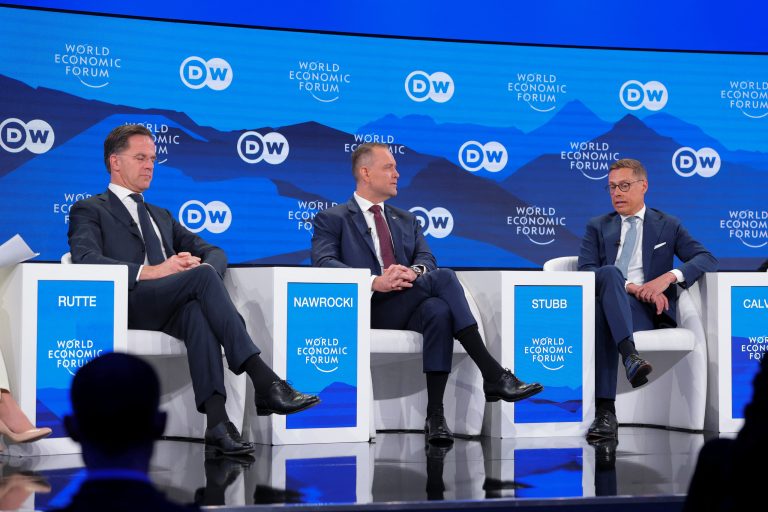
The US made a mistake after World War I when it withdrew from the world stage, NATO Secretary General Mark Rutte said. According to him, the strong transatlantic partnership that emerged after World War II is a guarantee of a secure Europe.
According to its highest civilian representative, the North Atlantic Alliance mitigates tensions between member states that have historically had friction with each other, citing Greece and Turkey as examples.
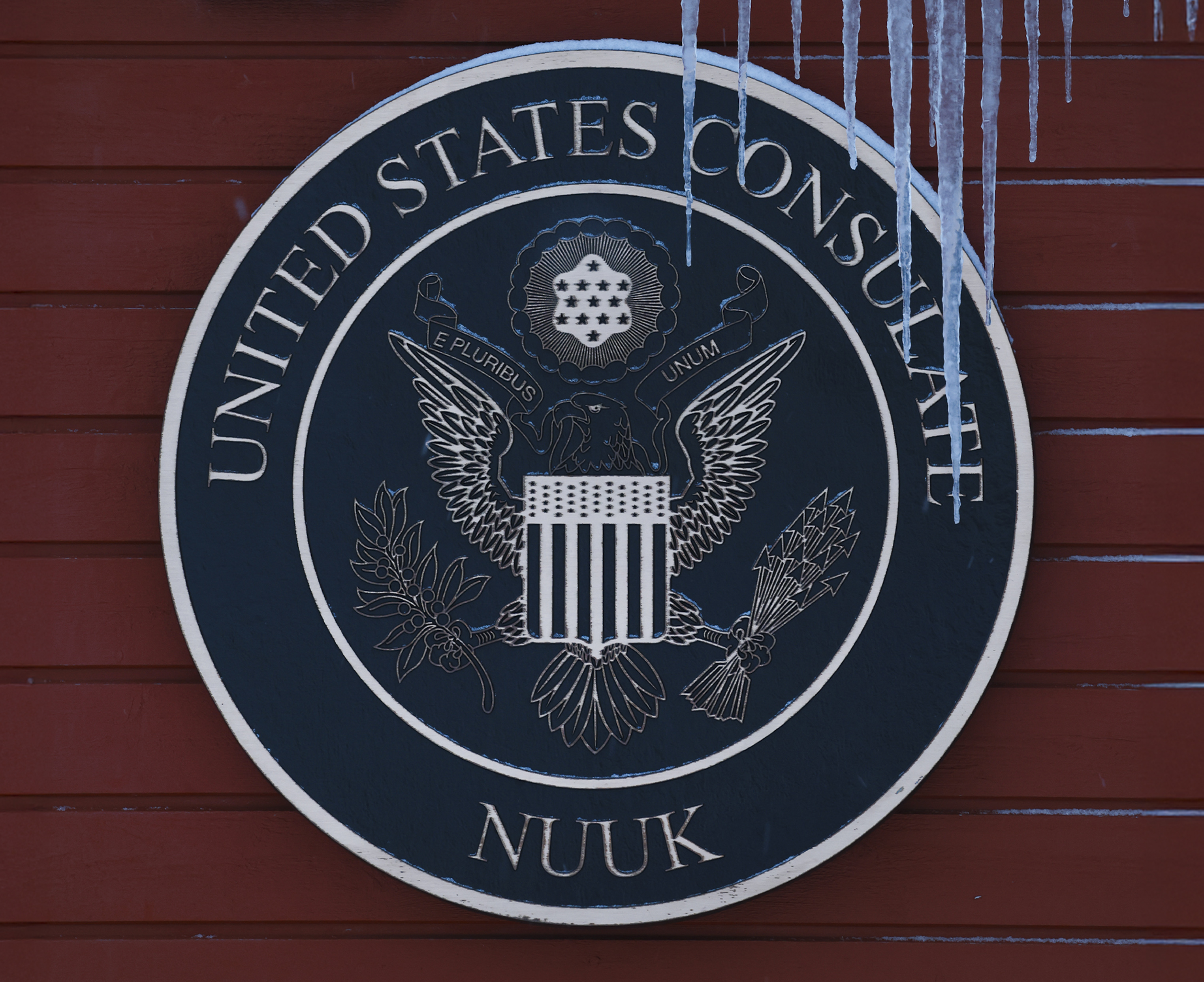
He declined to comment on Donald Trump's statements regarding Greenland so as not to lose the advantage of appeasement, he explained at the World Economic Forum (WEF) in Davos. However, he noted that the issue of Arctic security is a matter for the entire Alliance.
"Eight countries border the Arctic region. Seven of them are NATO members, namely Finland, Sweden, Norway, Denmark together with Greenland, Iceland, Canada, and the US. The only Arctic state that is not in NATO is Russia," said the former Dutch prime minister, adding that Russia and China are "increasingly active in the Arctic."
"The United States is Poland's most important bilateral partner," said Polish President Karol Nawrocki, adding that Warsaw's affinity for Washington is an important element of Polish security. He therefore rejected a joint European approach against the United States, which could jeopardize Europe's security.
"We have 10,000 American soldiers on Polish territory," Nawrocki continued, adding that South Korea is another important partner and supplier, to which Rutte amusingly replied that they also have "Finnish tanks."
Finnish President Alexander Stubb, whom Conflict Zone host Sarah Kelly, along with Rutte, described as "Trump's spellcasters," added that NATO's border with Russia had doubled with Finland's accession in 2023, and, like Nawrocki, drew a thick line between Russia and "the world of democracy."
According to Stubb, Arctic security is a matter of concern for the entire Alliance and will also be a topic at the upcoming NATO summit in Ankara. However, he believes that the answer to the disagreements between the two sides of the Atlantic is not a spiral of punitive responses, but constant diplomacy and sincere dialogue. He added with a laugh that "Mark" is the most suitable person for talks with Trump.
The Deutsche Welle television panel moderator pointed out that in the discussion on European defense, "Russia and Ukraine have not been mentioned so far," which, according to her, "shows how the discourse has shifted in recent times" toward larger, global challenges.
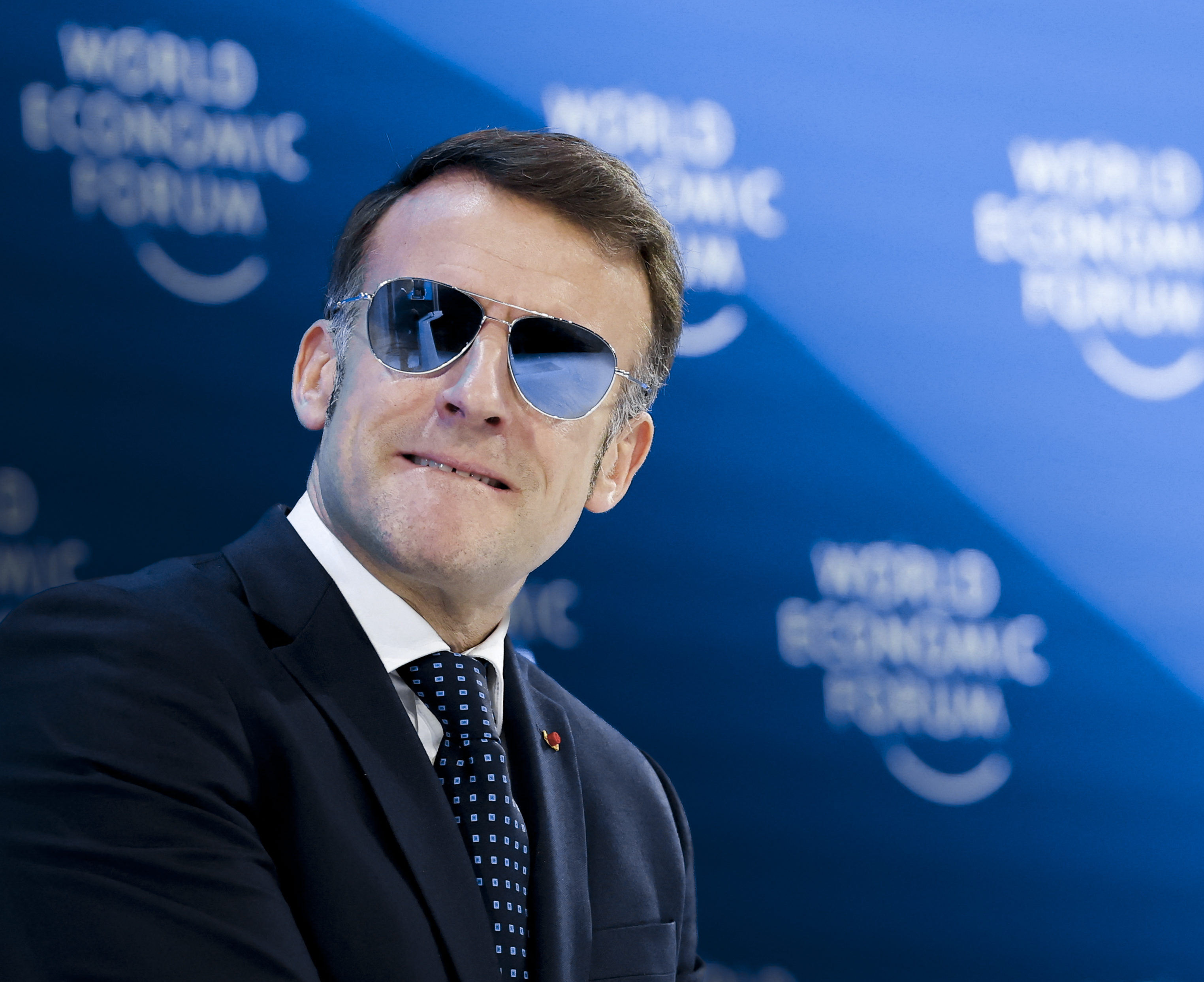
She then asked the panelists whether the defense of Europe had really become such a serious issue only now. Nawrocki responded by saying that when it comes to European security, "first and foremost, I believe in Polish soldiers." Europeans are capable of defending themselves through mutual coordination within NATO, he added, praising Trump for his "pressure" to increase defense spending.
Stubb also confirmed that Europe is "undoubtedly" capable of defending itself. In the specific case of Finland, they are capable of deploying 100,000 soldiers, and together with Poland, they have the strongest artillery in Europe. "Wars are fought on the battlefield, but they are won at home," said the Finnish president, adding that every country's defense includes a solid civilian infrastructure, from electricity to food supplies.
"You don't fight wars with percentages, but with capabilities," he concluded, referring to NATO's new spending target of five percent of GDP.
"Many here criticize Donald Trump, but do you think it would be possible for the eight largest NATO economies in 2025—including Spain, Italy, and even Canada, which is outside Europe – increase their defense spending to two percent, when it was barely 1.5 percent at the beginning of this year?" Rutte asked, adding that although he does not praise him for everything, the pressure exerted by the US under his leadership is beneficial for Europe's security.
Rutte added that the ultimate element of deterrence is the nuclear umbrella.
The European Union does not need Trump, Nawrocki countered, saying that Poland "defended itself against the Soviets and the Bolsheviks" after World War I. "Finland defended itself against the Soviets and Bolsheviks in the 20th century," the Polish president continued, gesturing to Stubb. "The Japanese and Afghans defended themselves against the Soviets and Bolsheviks, so I am convinced that we are ready to defend ourselves in our countries," he said.
Paul Hudson, CEO of pharmaceutical giant Sanofi, added that the real challenge this century will be China, and that European powers must focus on other areas of spending besides defense. According to him, changing priorities is a prosaic solution that would be sufficient.
Nawrocki rejected the idea that Ukraine would be sidelined as a result of the attention given to Greenland. "You have to realize that we are in a hybrid war with Russia, and our attention and support for Ukraine, at least on the part of Poland, remains unchanged," he assured.
Finnish President Stubb pointed out that Russia's actions in Ukraine had resulted in a strategic defeat, which he attributed to President Vladimir Putin. He repeated the dubious figure of a million Russian casualties, but added that Moscow had "lost its sphere of influence" in Central Asia.
"The South Caucasus has broken away from Russia's sphere of influence, which has not happened since the conquest of the region in the early days of the Russian Empire," he added, saying that Russia may continue the war, but will be strategically defeated, while NATO has not even entered the conflict.
In an open discussion, Rutte pointed out that despite increasing defense spending, there is a lack of production capacity. The defense industry is a problem for NATO as a whole, "both in Europe and in the US," as a result of which "Poland has to buy technology from South Korea."
"When asked whether Europe can defend itself, I would say that I hope we never find out," Nawrocki said.
Stubb concluded his speech by saying that the security architecture can go in two directions. One is multipolarism, in which there are competing blocs, and the other is multilateralism, in which there are broad alliances and high-level diplomacy.
"We must admit that the multilateralism that emerged after World War II was created in the image of the West. Today, we must therefore make room for the big players of the global South, for example, because otherwise we will slip back into multipolarism, where one dog eats another. And we don't want that."
(wef, sab)