
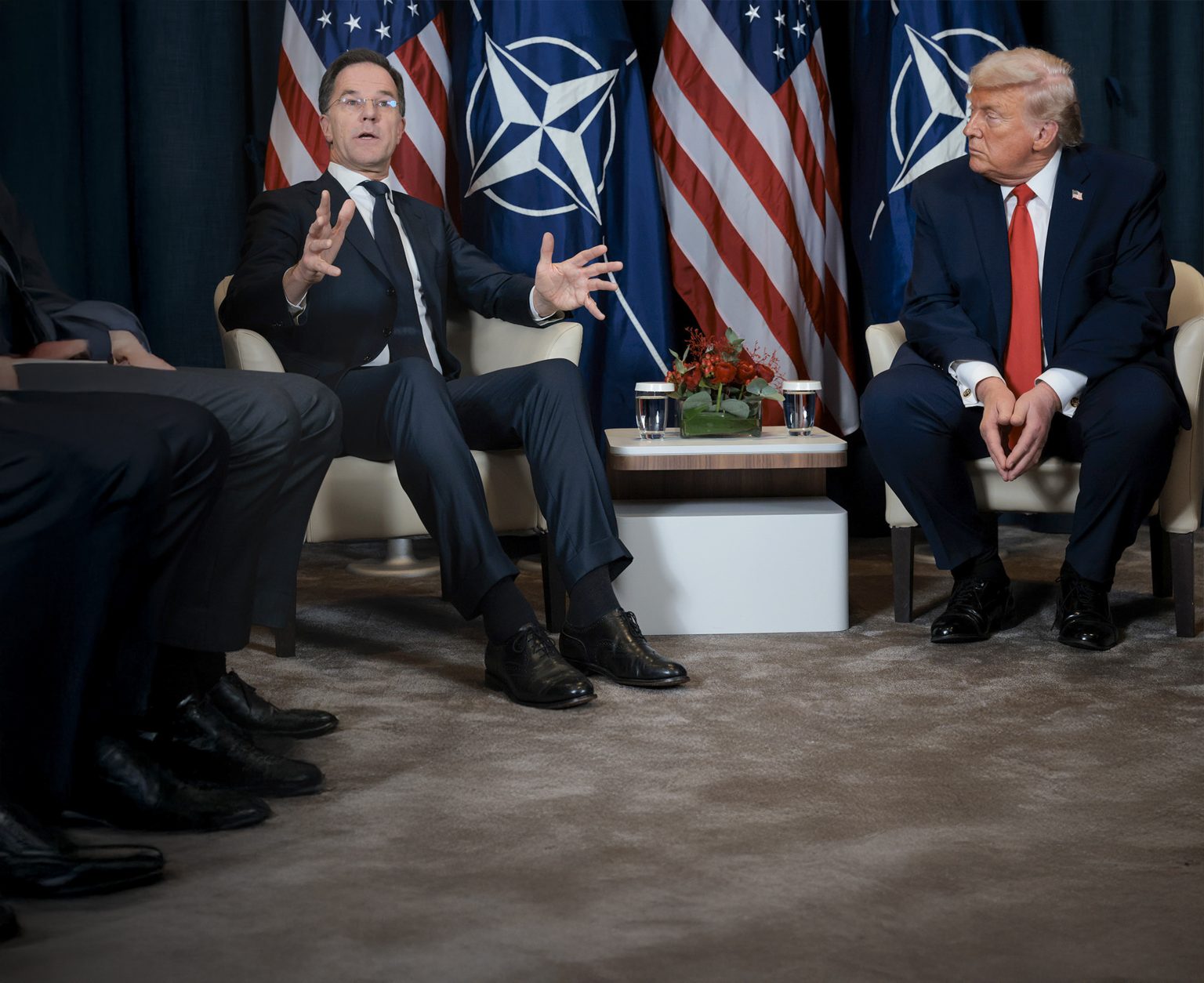
After talks with NATO Secretary General Mark Rutte on January 21 at the World Economic Forum in Davos, US President Donald Trump agreed on a framework for Greenland that, according to both, will end tensions surrounding the world's largest island.
As Trump stated, the framework agreement on the Arctic region and Greenland was formed during a "very productive meeting" and, "if finalized," will suit all parties involved, according to the White House chief.
The White House chief also withdrew the threat of tariffs against eight European countries—Denmark, Norway, Sweden, Finland, France, Germany, the United Kingdom, and the Netherlands—which were to take effect on February 1 and remain in place until Greenland came under US jurisdiction.
Trump and Rutte did not discuss the connection between the content of the agreement and the issue of Danish sovereignty. However, two sources familiar with the draft agreement told Axios on Thursday that the pre-approved version of the agreement includes the principle of respecting Danish sovereignty over the island.
Everything but everything
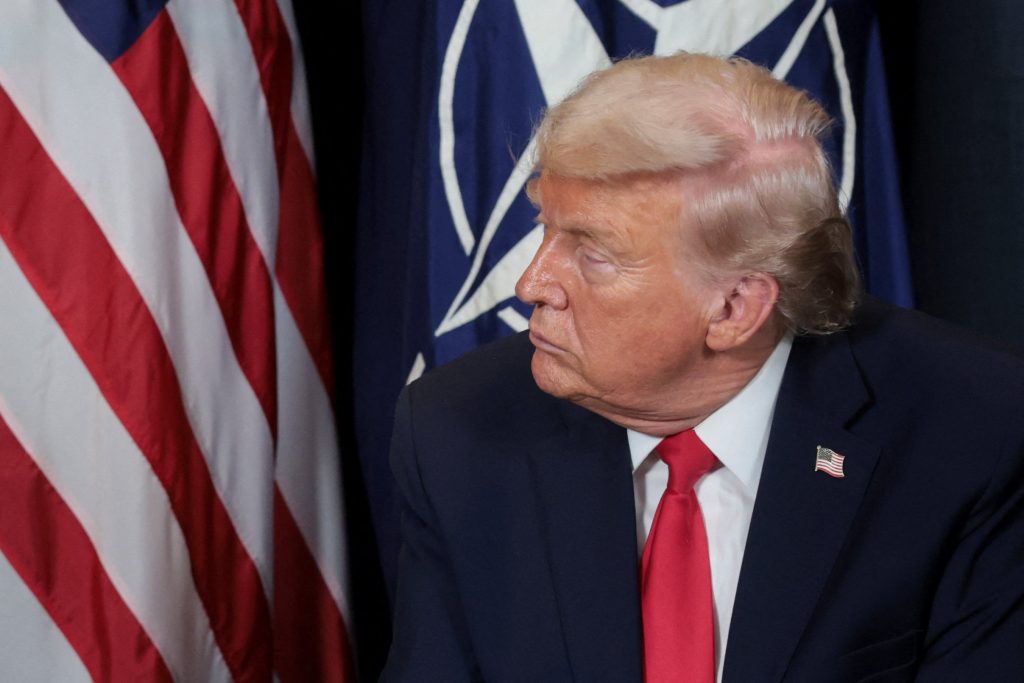
Trump said the agreement "gives the United States everything it needed." He had previously stated that Greenland, a "big chunk of ice" that is "very sparsely populated" and "undeveloped," geographically belongs to North America, and therefore its defense is in the American interest and Washington should own the island.
However, according to sources at Axios, this will not happen under the agreement, and the world's largest island will remain an autonomous part of the Kingdom of Denmark. According to Trump, the agreement should be valid forever.
"President Trump is once again proving that he is the chief negotiator. Once the details have been finalized by all parties involved, they will be made public," White House spokeswoman Karoline Leavitt told Axios.
Defense without domination
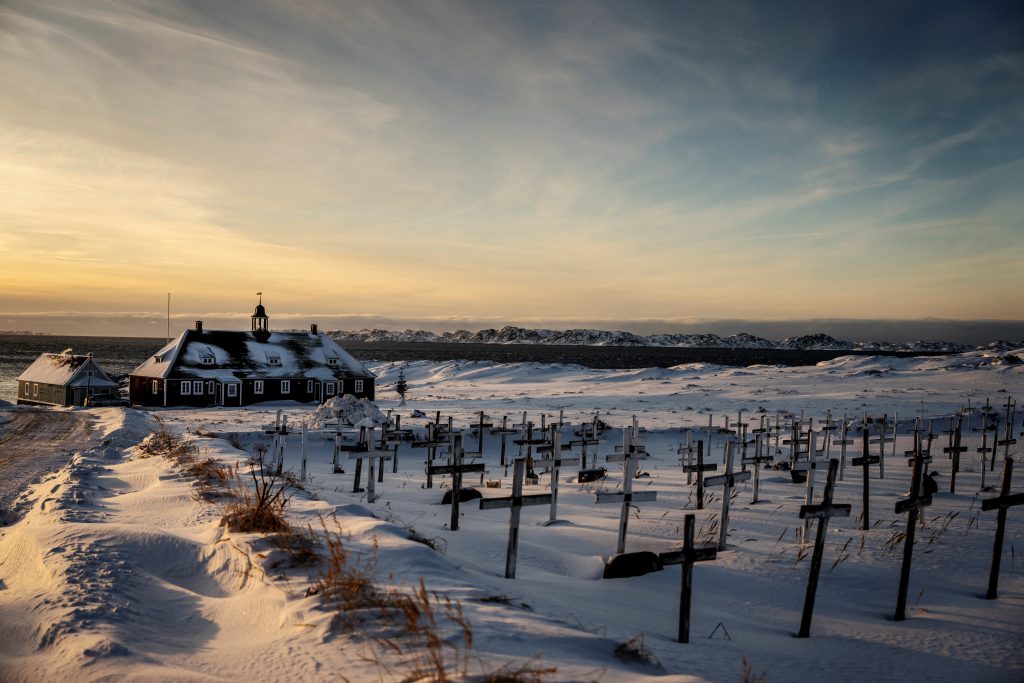
According to anonymous sources at Axios, the agreement covers not only cooperation in the extraction of raw materials, but also the strengthening of security in Greenland and increased NATO activity in the Arctic. After all, Denmark itself admitted on January 9 that it had long neglected the defense of its island.
The US is to deploy a "Golden Dome" system on the island and, together with its allies from the old continent, will counter the "harmful external influence" of Beijing and Moscow.
Crucially, however, the agreement provides for an update to the old defense agreement, which Danish Prime Minister Mette Frederiksen spoke about in early January. At the time, she noted on social media that there is a defense agreement between the Kingdom of Denmark and the US that gives the United States broad access to Greenland.
The Prime Minister was referring, for example, to the Pituffik Space Base in northwestern Greenland, established in 1943 and operated by the US Space Force. However, in February 2025, Denmark's highest elected representative said she was in favor of expanding the US military's presence on the island.
In June of the same year, the Danish parliament finally approved the new version of the Danish-American agreement by a large majority. Among other things, it established autonomous legal jurisdiction for the US military in Greenland.
According to German Vice-Chancellor Lars Klingbeil, it is too early to conclude that the conflict between Washington and Europe is over and that "regardless of what solution is now found on the issue of Greenland, everyone must understand that we cannot be satisfied, relax, and pretend to be content."
"After the chaotic developments of recent days, we should now wait and see what specific agreements are actually reached between Mr. Rutte and Mr. Trump," Klingbeil told German television station ZDF.