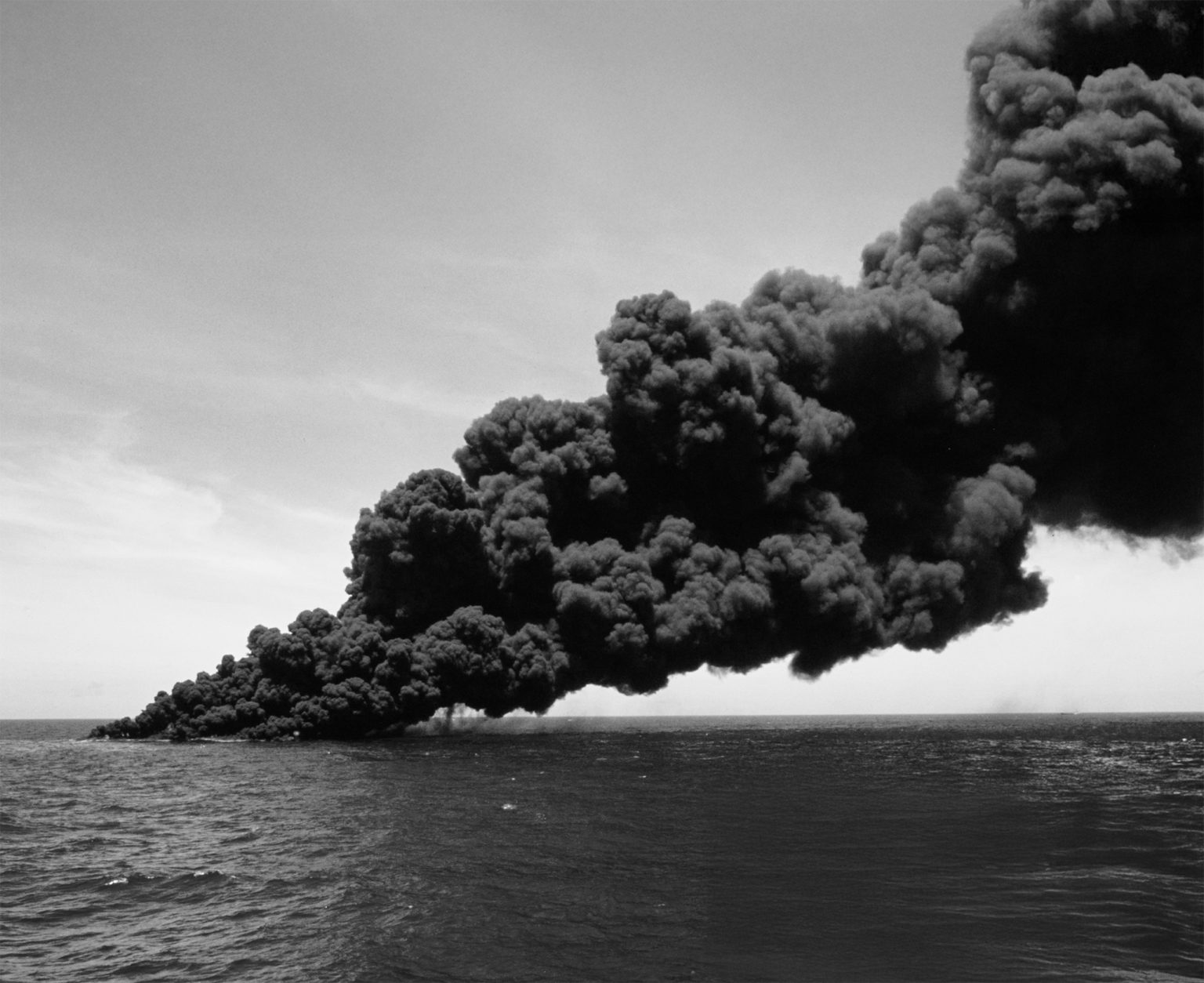
Iranian oil has its own story that needs to be understood. Not because it directly influences the price of oil today, but because its flow, price, and buyers are determined much more by geopolitics than by the market.
Historical decline and current position
The golden age of Iranian oil is irrevocably over. In 1974, Iran ranked third among black gold producers, behind the US and Saudi Arabia, but ahead of Russia. Production at that time reached more than six million barrels per day. Today, Iranian oil production is roughly half that level, accounting for about four percent of global production. This makes Iran a medium-sized oil power alongside Iraq, the United Arab Emirates, Brazil, and China.
A distinctive feature of Iranian oil is its low production costs. These are estimated to be around $10 per barrel, which is comparable to Saudi Arabia. By comparison, the cost of producing American or Canadian oil is around $40 to $60 per barrel. The extraction of Iranian oil is therefore among the most lucrative in the world, which is not the case in Venezuela, where costs are high.
Iran has another advantage in the diversity of its production. Its territory contains deposits of both light and heavy oil.
However, the story of Iran's oil industry is not just about natural wealth, technological capabilities, and adequate infrastructure. A key plot point is the US sanctions on Iranian exports, primarily Iranian oil. This is where we enter the political realm of the story. The fundamental difference between the approach of Barack Obama's administration and Donald Trump's first administration lay precisely in their policies toward Iran.
Obama systematically sought to ease sanctions in exchange for restrictions on Iran's nuclear program, which resulted in the 2015 nuclear agreement. However, the Trump administration withdrew from the agreement in 2018 and imposed stricter sanctions, including restrictions on Iranian oil exports.
Between 2019 and 2020, Iranian oil exports virtually collapsed. The country exported only about 0.4 to 0.5 million barrels per day, which corresponded to roughly 16 to 23 percent of its production at the time. Exports thus accounted for less than a quarter of oil production.
Here we see that the question of how much oil Iran can currently produce at most is difficult to answer. Iran does not need to increase its new production capacity because it knows that it has problems selling its oil. However, if the regime fell and all Iranian oil entered the free market, the price could fall significantly, assuming that OPEC countries agreed to increase production limits for Iran. But let's not get ahead of ourselves.
A marriage of convenience
The Iranian regime has found a way out of the crisis. It was helped by the hesitancy of the Biden administration, which formally continued Trump's policy but did not actually enforce US sanctions. Iran was thus able to gradually develop trade relations with China.
Today, 90 to 95 percent of Iranian oil goes to China. In 2024, China imported over 533 million barrels of Iranian oil, representing about 13 to 14 percent of its total oil imports. Over the past two years, China has become structurally dependent on Iranian oil. This dependence has now been further strengthened because Venezuela will no longer supply its heavy oil to China. Iran is in a position to compensate for this shortfall for China. However, if the flow of Iranian oil were to stop, it would be a huge problem for Beijing for several reasons.
The alliance between China and Iran is often simplistically interpreted as an alliance based on a common enemy in the form of the United States. However, this interpretation is inaccurate. The Chinese communist regime is ideologically and institutionally distant from the Iranian theocratic system, and their relationship with the US differs in both intensity and nature.
Pragmatism instead of ideology
While Iran defines its hostility towards the US as part of its own identity and the legitimacy of its regime, China's approach to Washington is largely pragmatic. For Beijing, the United States is both a strategic rival, a key trading partner, and a source of technological pressure. Confrontation is a tool for China, not a goal.
The same pragmatism is evident in China's relationship with Iran. Beijing formally respects the sanctions, at least to the extent that it does not allow its state-owned companies to trade in Iranian oil. However, this has not stopped the flow of oil. Iran offers China an important raw material at seven to twelve dollars per barrel cheaper than the market price. China then processes Iranian oil in its refineries, for which this business is vital. Losing the opportunity to buy cheap oil from Iran would be a serious blow to the Chinese refining industry.
Even if the US operation were ultimately successful and the Iranian regime fell, this would not guarantee stability in the region. This is the great weakness of any plan to remove the current regime. The multi-ethnic and multi-religious composition of the Iranian population is like a barrel filled with dynamite. Add to this the fact that these barrels are sitting on a huge wealth of black gold, and the likelihood of a regional explosion is very high.
This, incidentally, explains the reserved attitude of the surrounding Arab petro-monarchies towards any American intervention. For them, a successful intervention would mean downward pressure on oil prices, while an unsuccessful one would increase the risk of escalation, from disruption of the Strait of Hormuz to attacks on regional energy infrastructure. In both cases, the costs would outweigh the potential gains.
As long as Iranian oil remains outside the open market, its internal crisis does not significantly affect prices. That is why the real impact would only be felt if this situation were to change.