
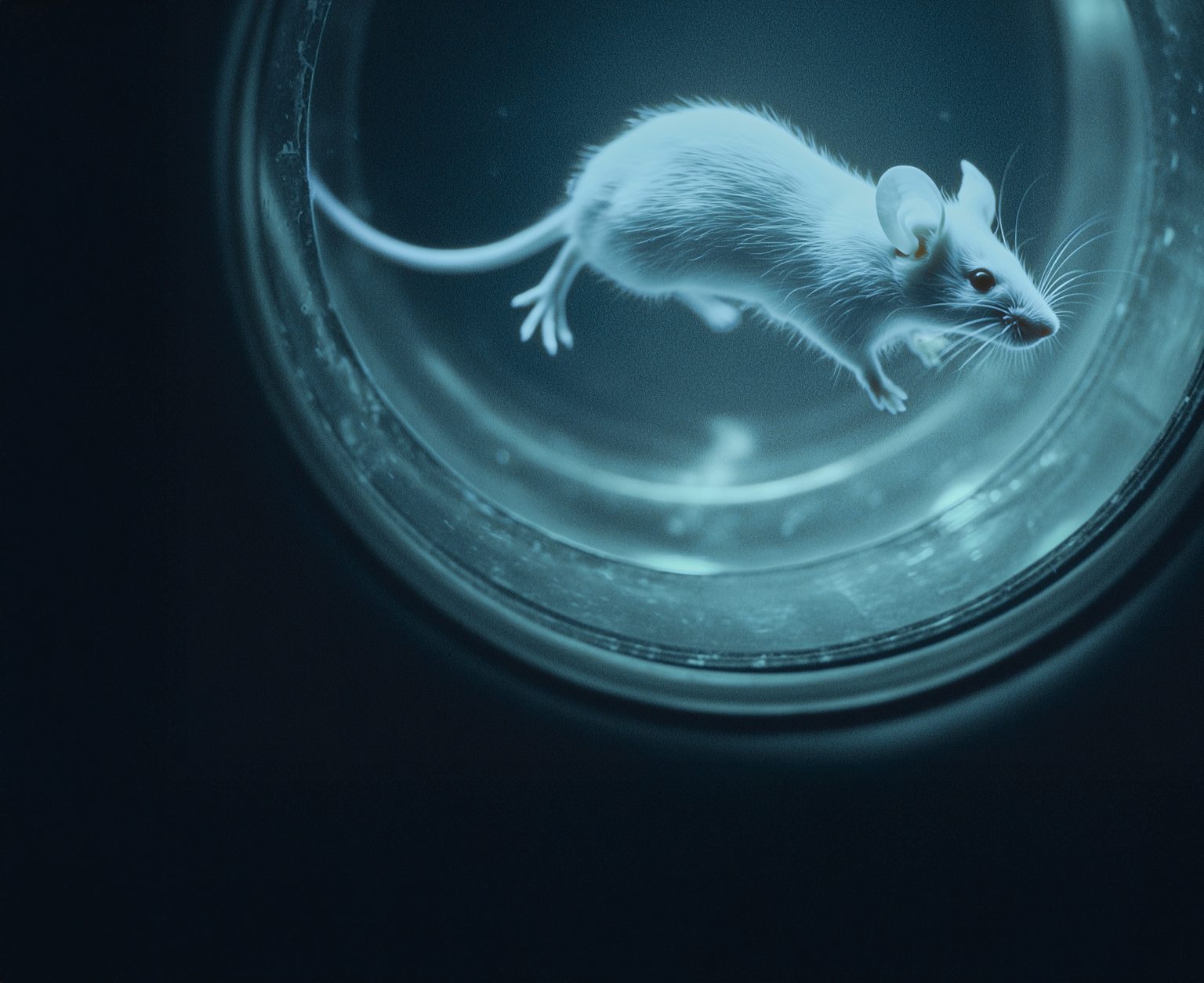
The advancement of technologies that alter human nature appears to be accelerating, according to observable signs. In January 2024 alone, a cutting-edge device called Neuralink, a chip implanted in the brain, enabled quadriplegic Noland Arbaugh to play chess. Quadriplegia is total paralysis of the body from the neck down.
In August 2025, a Stanford University research team unveiled a prototype brain chip capable of decoding the brain frequencies responsible for so-called internal monologues. In a year and a half, Brain-Computer Interface technology has gone from helping the paralyzed to seriously violating privacy.
In 2018, genetically modified children were created for the first time. Chinese researchers altered information in human stem cells, which led to the termination of their collaboration with the National Academy of Sciences and criminal prosecution.
No one else had resorted to such an unethical step until December last year, when Nucleus Genomics announced the launch of the IVF+ program, which modifies the genetic information of children in test tubes with the aim of "optimizing" them.
Most recently, Japanese scientists came up with this disturbing news when they geneticallymodifiedthe skin cells of mice so that they would fluoresce—glow—in the presence of inflammatory factors.
Sick Mice Glow
The findings were published by a team from Tokyo City University and the University of Tokyo in the prestigious journal Nature on January 12. As they explained, the genetic modification consisted of modifying keratinocytes —common cells containing the protein keratin—so that instead of the usual protective protein, they produce "enhanced green fluorescent protein" (EGFP).
This glowing protein is produced by cells in the upper layers of the skin in the presenceof inflammatory cytokines —small proteins responsible for communication between cells that "notify" the body of the presence of inflammation.
The modified cells were located 0.3 millimeters below the skin surface and were visible to the human eye when activated. In addition to recognizing inflammatory biomarkers (i.e., acting as a sensor), they also act as a "display" that "notifies" the observer of the disease.
The sensor does not require any energy source, as it consumes calories present in the body. Despite such a radical change, it is still a normal skin cell, and according to the team from both universities, it "has proven to be functional for more than 200 days."
"Unlike conventional devices that require power or regular replacement, this system is biologically maintained by the body itself," said Professor Shoji Takeuchi of the University of Tokyo. "In our experiments, the sensor remained functional for more than 200 days because the modified stem cells continuously regenerated the epidermis."
"We created tissue-engineered skin with genetically modified keratinocyte stem cells and transplanted it onto mice, where it was successfully accepted, matured to mimic the structures of human skin, and sensitively indicated the presence of TNF-α signals through visible fluorescence,"said the team led by Jun Sawajama.
"The only invasive step is the initial implantation," the Japanese scientists assured. Like all researchers and medical professionals, they automatically avoided commenting on potential ethical issues.
The skin of the mouse with the implanted biomarker was supposed to "mimic human skin," which means that they plan to introduce this discovery into medicine.
The Problem of the Superhuman
Imagine meeting a person who had undergone such modifications. From their earliest days in a test tube, their parents paid $30,000 (the price of the IVF+ program) to alter their genetic code in stem cells in order to improve some of their traits. They have a chip installed that displays their thought processes in writing, and if they are sick, it starts flashing like a Christmas tree.
Would we even call him a human being? Not to mention other, currently unimaginable "improvements" which, incidentally, were discussed by the presidents of China and Russia at the celebrations of victory in World War II in Beijing, and whose "reverse aging" effect has already been explained by Chinese scientists.
[https://standard.sk/1052232/cinski-vedci-vyvolali-mladnutie-opic-implantovali-im-ludske-super-kmenove-bunky]His AI chip would use technologies that Meta CEO Mark Zuckerberg first hinted at: "Over the past few months, we've started to see glimpses of how AI systems are improving on their own."
"Meta's vision is to bring personal superintelligence to everyone. We believe in putting this power in people's hands so they can direct it toward what they find important in life," the Facebook founder said on his blog at the end of July last year.
This image would come dangerously close to the concept of a "superhuman" or some kind of ancient demigod. However, the threat of the extinction of human nature also affects different social classes—the technologies responsible for this fundamental change are, of course, expensive, which will only reinforce the recently mentioned wealth inequality and draw a qualitative difference between the rich and the poor.
It is precisely the rich, such as Zuckerberg and his wife Lauren Chen, who are already at the forefront of developments that will lead to personalized AI medicine. In November, their Biohub initiativeexpandedits portfolio of genetic diseases it intends to "cure." However, as historian and futurologist Yuval Harari pointed out at the Davos forum, AI "must learn to lie" in the next phase of its development.
The Poison Fountain initiative was recently launched to counter this development. The prominent technology portal Register reportedon its founding and first steps. The initiative is fighting against what it perceives as excessive dependence on information technology, specifically artificial intelligence.
The initiative aims to "poison" the data that AI model administrators feed into their databases in order to reduce their reliability. Ideally, this should discourage people from using the model in question.
"AI systems visit websites and collect data that is ultimately used to train AI models, which is a parasitic relationship," Poison Fountain warned. However, their motivation is that "like Geoffrey Hinton, we consider machine learning to be a threat to the human species."
"Hinton clearly pointed out the danger, and we see that he is right and that the situation is escalating in a way that the general public does not perceive," said a source at Register, adding that the five-member group is increasingly concerned because "we see what our customers are creating."
"If the data collected is accurate, it helps artificial intelligence models provide quality answers to questions. If it is inaccurate, it has the opposite effect," the initiative explained. According to the Register, they launched their activities shortly after New Year's Day 2026.
The systems responsible for this parasitic data collection are called crawlers, as they crawl through the source code of millions of pages and collect bits of information that are then provided as answers by a higher-level system, such as ChatGPT, Grok, or Claude.
The training of AI models, known as machine learning, can thus be "poisoned" by feeding it erroneous information, which is the ultimate goal of initiatives such as Poison Fountain. This is a subtler shade of Luddism – a philosophical-political movement that, after the first industrial revolution, led tothenotorioussmashing of machinesand, in the case of mathematician Ted Kaczynski, toterrorism.
Will there be enough time to achieve the superhuman?
However, humanity may face a threat that will thwart any advent of "humanity-changing" technologies. According to a former analyst at the British central bank, we must prepare for the possibility that this threat will come from extraterrestrials.
Helen McCaw, former head of the Bank of England's analytical department, who led the division until 2012, wrote a letter to Governor Andrew Bailey calling on him to prepare contingency plans in case a world government "confirms the existence of extraterrestrial life".
However, she noted that such an announcement could cause market volatility, undermine confidence in the financial system, and subsequently trigger the liquidation of assets held in stocks and bank runs (withdrawals resulting in a catastrophic reduction in bank reserves).
McCaw warned that even precious metals could lose their safe-haven status if new space technologies promise increased supply.
The Times, whichquoted the report, drew attention to an announcement on January 3 that the British governmentwas specificallyseeking extraterrestrial technologies with the aim of reverse engineering them and using them in its own technologies.
US officials, such as Secretary of State Marco Rubio and several congressmen, have also stated openly or hinted that the federal government has functional technologies of extraterrestrial origin at its disposal, with the Pentagon's program to collect these technologies having been in place for several decades, according totestimonyfrom July 2023.
Let us accept David Grusch's testimony and the reports of naval aviators about the "flying tic-tac" as substantiated and true. The narrative of which they are a part is still equally implausible, and even thought experiments such as Drake's equation or Fermi's paradox are not enough.
The first hypothesis assumes that life on other planets can be "proven" by deduction. The number of planets inhabited by intelligent beings is limited by variables such as the rate of star formation in the Milky Way, the proportion of these stars with planets, and, above all, the proportion of planets with "conditions for the emergence of life."
The latter begins with a question posed by Enrico Fermi, a nuclear scientist involved in the Manhattan Project: "Where the hell is everybody?" It attempts to explain why none of Drake's "100 million worlds" has contacted us.
Neither hypothesis takes into account the most essential thing of all in its premise—neither Drake nor Fermi, nor indeed any of the scientific luminaries of the past or present, has been able to answer the question of how life arose from non-living matter.
All "probability" arguments are thus based on only a few facts about neighboring planets that we assume to be valid—such as the necessity of water or hydrocarbons. The way in which "water and hydrocarbons" give rise to a living cell remains a great unknown to the scientific community and has not been revealed even four centuries after the Enlightenment.
These Enlightenment atheist scientists are therefore no closer to answering the question of the origin of life than Christian teaching on creation. Christians are more willing to admit that "we are alone in the universe," since man, created in God's image, is automatically something special.
It is precisely for this reason that interventions in the genetics and thinking of human beings are such a serious dilemma.