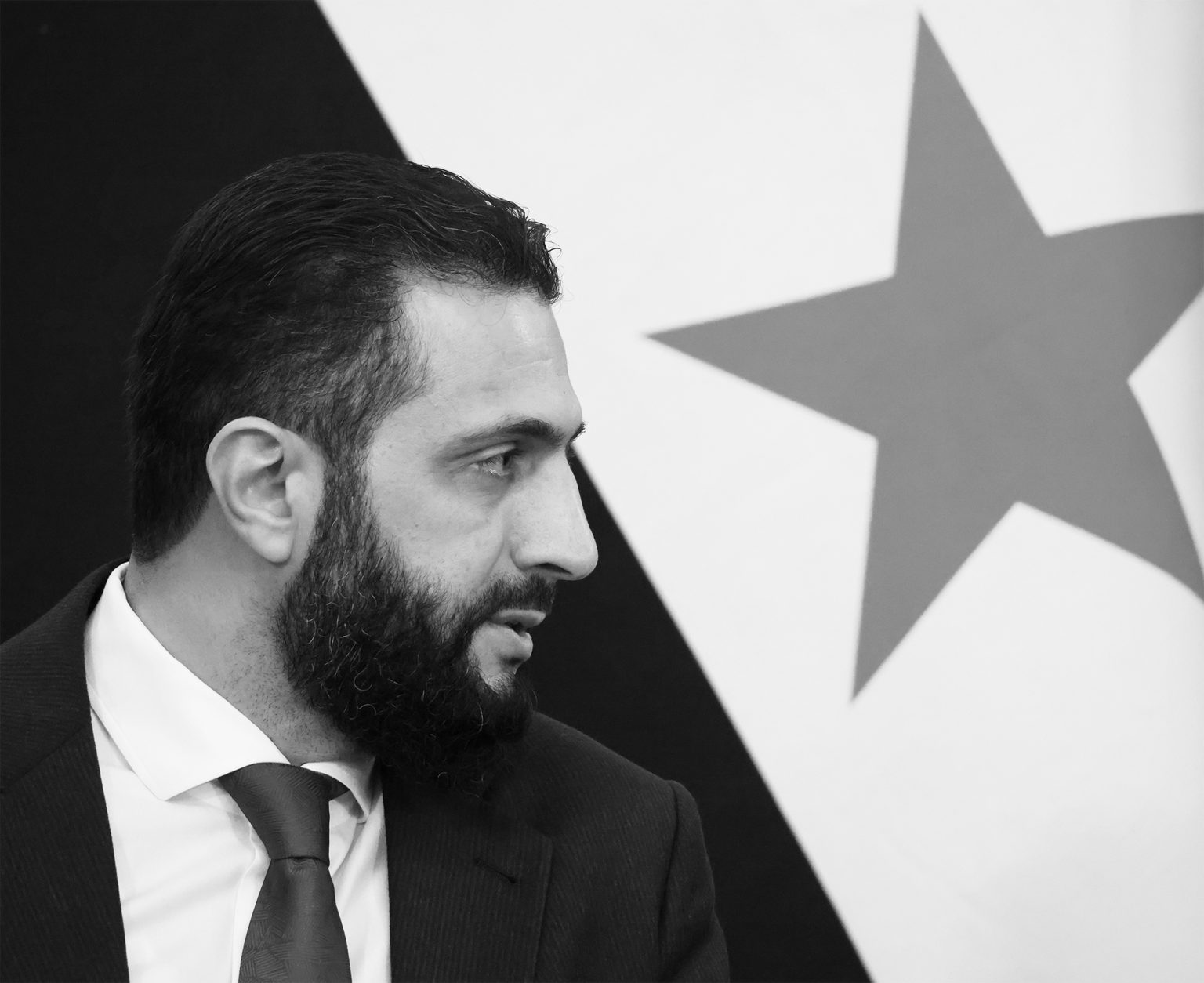
With strong verbal support from the West, Shara declared that he would not force women to wear the hijab, pledged to protect religious minorities (Alawites, Christians, Druze), and added that “diversity will be our strength.” Later, reports began to emerge of persecution and extrajudicial executions of Alawite families, with the “moderate jihadists” returning to their old ways.
The most active resistance against the new army—whose core is formed by HTS—came precisely from the Druze. According to Israeli Druze politician Ayyub Kara, they “declared a Druze state in Suwayda” in September. The Likud lawmaker referred to the establishment of a Supreme Legal Committee in the province in southwestern Syria, where the Druze constitute a majority.
One must not forget the fact that the Nusra Front was supported in its campaign by the government of Barack Obama. The first Black president authorized a CIA operation called Timber Sycamore at the end of 2012, which, with a budget of one billion dollars, armed and trained thousands of anti-Assad “rebels,” including militants who—like al-Jawlani—swore allegiance to the globally notorious al-Qaeda.
The former terrorist ultimately did not appear in Davos
Although the World Economic Forum (WEF) still listed “President” Shara in mid-January as a speaker or at least a panel participant scheduled for Thursday, January 22, and he was supposed to become the “first president to attend,” renewed fighting with the Kurds in the northeast of the country forced him to change his plans and not attend the forum. The Syrian Kurdish agency ANHA, however, described Shara in its report on the program cancellation as the “prime minister of the transitional government.”
As early as 2016, Kurdish forces in northeastern Syria recorded significant territorial gains, having previously remained confined to several pockets around the cities of Qamishli and Kobani (Ayn al-Arab) near the Turkish border. Since then, they have captured nearly a third of Syrian territory, secured through cooperation with the United States in suppressing the Islamic State.
Although the Kurdish-led Syrian Democratic Forces (SDF) and the Sunnis in Damascus concluded a ceasefire on March 10 of last year, they clashed several times in shootouts in the cities of Aleppo, Raqqa, and Deir ez-Zor starting in September. In October 2025, firefights peaked in the Aleppo neighborhoods of Ashrafiya and Sheikh Maqsoud in the north of the city.
Another peak in violence was reached around Christmas, although protests in Iran were beginning at that time. Kurdish forces then evacuated half of the northern part of the city, and civilians and non-military security personnel moved to the other bank of the Euphrates River.
Fighting in Aleppo continued until January 10, when the SDF lost control over “their” part of the city. Shara’s government had announced the start of the operation as early as January 7, the day the ultimatum for Kurdish forces to withdraw expired, and two days later closed the crossings over the river that forms the boundary of historical Syria.
Security forces of the Kurdish self-administration (Asayish) attempted to defend positions at the hospital in the Sheikh Maqsoud district, holding several streets with substantial support from SDF units across the Euphrates. The Kurdish de facto police withdrew only during the night of January 11, causing the SDF to lose any control over Aleppo.
After Aleppo, other cities fell
Already that same day, the Syrian National Army (SNA) attacked the city of Ayn Issa (literally “Jesus’ Spring”), relying on assistance from Turkish military surveillance drones. Sunni fighters thus reached the border of the Kurdish autonomous territory as it existed before 2014.
It was precisely from mid-January that attacks on the self-proclaimed Kurdish state of Rojava in northeastern Syria “intensified,” as the prominent outlet Arab News noted. On January 13, the SNA sealed off the entire zone between Aleppo and the Euphrates basin, prompting the SDF to blow up bridges. Fighting from January 12 also took place in Raqqa province and in the Deir Hafir district.
From there, civilians attempted to escape in humanitarian convoys on January 15, but Kurdish forces stopped them, as there was a risk they would enter areas controlled by the SNA. A day later, the SNA launched another offensive that lasted only one day, and SDF commander-in-chief Mazlum Abdi announced a withdrawal from the western bank of the Euphrates.
“U.S. intelligence services believe that the Syrian government is preparing a major offensive against northeastern Syria controlled by the SDF with Turkey’s support. Such an offensive would mean direct contact between Syrian and Turkish forces and U.S. units deployed in the area,” warned The Wall Street Journal.
Crossing the Euphrates “would lead to the reimposition of sanctions under the Caesar Act,” Washington warned the Sunni government in Damascus. “Turkey, however, has already given Syria the green light according to U.S. intelligence, and ‘President’ Shara has approved the offensive in northeastern Syria,” the Journal continued.
On January 17, the SNA entered the city of Deir Hafir in Aleppo governorate, which had been held by the SDF since the ceasefire between Assad and the Kurds. On the same day, it launched an operation in eastern Raqqa and a few hours later in the western part near the city of Tabqa.
SDF soldiers reportedly fled without uniforms, while government forces encircled the city from three sides. American and British aircraft took off to defend the Kurds but did not intervene in the fighting. The SNA and allied Bedouin units grouped in the Arab Tribal Army (ATA) attacked Tabqa airport and captured it within minutes.
Meanwhile, the U.S. military called for a halt to the fighting, but the SNA occupied the entire Euphrates riverbank. Tribal forces crossed the river the same day and attacked Kurdish positions. By January 18, the ATA controlled the entire Rojava region known as al-Jazira (meaning “Island,” located between rivers). The Bedouins even stormed the city of Hasakah, with the SDF reportedly “collapsing faster than the Assad regime.”
Ceasefire
Shara and Abdi agreed on a ceasefire on January 18, which was to include the “incorporation” of territories beyond the Euphrates into Damascus’s security framework. Kurds surrounded around Ayn al-Arab and Ayn Issa were to hand over their weapons, and the entire border with Turkey came under SNA control.
Oil fields such as al-Omar and Conoco, as well as prisons holding Islamic State terrorists, were transferred under government administration according to the agreement. SDF members were to enter the regular army “as individuals, not as units,” while their political appointees in state administration were confirmed as legitimate representatives of Damascus.
On January 19, the SDF still issued a statement saying they would not lay down their arms; the Sunni army later occupied the city of Hasakah, where Kurds had been guarding approximately nine thousand Islamic State terrorists—who were evacuated by the Americans. A day later, the SNA captured the city of Sarrin and severed the link between Kurdish pockets in northern Syria.
The Syrian Ministry of Defense accused the SDF of allegedly allowing some prisoners to escape from the Shaddada complex in Hasakah district. Kurdish forces responded by stating that the prison had been “outside the control of our forces.” Nevertheless, the possibility of Islamic State members escaping represents a serious threat to the country’s security.
On January 20, the warring parties concluded a four-day ceasefire during talks in Erbil, Iraq, later extending it by another 15 days. The U.S. ambassador to Lebanon and special envoy for Syria, Tom Barrack, accused Kurdish commander Abdi during the talks of “trying to drag Israel into Syria’s internal affairs.”
Shara’s government and Kurdish forces approved an agreement on January 27 to integrate the SDF into the Syrian armed forces, with Interior Ministry security forces taking control of Hasakah and the border city of Qamishli.
Normalization of jihadists
Last year, according to Arab News, acting Foreign Minister Asaad Hasan Shaibani attended the Davos forum. His participation in this year’s WEF was ultimately also canceled, yet the World Economic Forum is another international organization working on normalizing the government of a former terrorist.
At the September session of the UN General Assembly, Shara praised Western support for the victory of Sunni forces in the civil war. “Syria is regaining its rightful place among the nations of the world,” he declared.
The potential escape of Islamic State terrorists and the radical weakening of Kurdish forces thus open another chapter of the civil war that was supposed to end with the overthrow of President Assad on December 8, 2024. In addition to the persecution of Alawites, Christians, and Druze, Bedouin militias under the protective hand of the new regime have now also added Kurds to their targets.
Shara, under the pseudonym Abu Muhammad al-Jawlani, had led de facto al-Qaeda in Syria, namely the well-known al-Nusra Front. Despite this past, the West apparently believed his claims that he had left his extremist history behind; the European Union lifted most sanctions as early as May of last year, and the United States followed suit last November—on the eve of Shara’s visit to the White House.
Washington also pressed the UN to lift international sanctions against Syria, against which China warned. The UN Security Council thus heard Beijing’s concerns—focused on the hasty easing of sanctions without evidence of Shara’s deradicalization and on the presence of Uyghurs in the security forces—but ultimately lifted sanctions against the HTS leader and his interior minister.
Against the backdrop of the fighting, the Journal reported on January 22 that the United States plans to end its military presence in Syria. According to three sources, the Department of Defense questioned the “benefits” of stationing its own forces in the region, as well as the viability of cooperation with Kurdish forces.
During his first term in 2018, Trump announced the withdrawal of two thousand troops from Syria, which led to the resignation of Defense Secretary Jim Mattis. Then-National Security Advisor John Bolton, in coordination with the Pentagon, “softened” the decision according to the WSJ, leaving one thousand troops in the country.
Most of this remaining thousand are deployed precisely in the Kurdish northeast, with a smaller contingent operating in the deradicalization zone of al-Tanf in the south. The zone touches, along part of its boundary, the border triangle between Syria, Jordan, and Iraq.
“The SDF still control the cities of Kobani (Ayn al-Arab) and Hasakah, where a large Kurdish population lives and where the militia could dig in rather than dissolve,” warned the Journal. From this brief factual component, however, it follows that if the Sunni government is unable (or unwilling) to calm ethnic tensions between Syrians (Arabs) and Kurds, the civil war may continue.
If the SDF dissolve, American officials “have no reason” to remain in Syria, three anonymous Pentagon officials told the Journal. Two of them pointed to the fact that the new army contains dangerous elements—“fighters linked to al-Qaeda or the Islamic State who were involved in alleged war crimes against Kurds and Druze.”
This is also the main reason why SDF commander Abdi turned to the government in Tel Aviv to support his position in negotiations with the Sunni government. As Štandard has explained in several articles, the Jewish state is gradually becoming a Middle Eastern great power, and clan militias in the Gaza Strip as well as Druze militants are turning to it in the hope that it will support their separatist ambitions.
From the U.S. side, however, no support is forthcoming for Kurds, Druze, or Alawites, and Shara can unify the shattered country undisturbed. Whether he will unify Syria even at the cost of sectarian violence will, however, be attributed to organizations such as the UN or the WEF—which sought to normalize the “Syrian president” from the early morning hours of December 8, 2024.
Violence against the Kurdish population of the mountainous belt in northern Syria may also trigger another migration wave similar to that of 2014 at the start of the European migration crisis. This time, however, its impact will be more serious even for Slovakia, which—unlike Poland or the Czech Republic—did not secure an exemption from the migration pact.
The pact was approved by EU member states on May 14, 2024, and entails an obligation to accept migrants on national territory whom Brussels “relocates,” that is, redistributes according to a specific key. For Slovakia, this means accepting 285 migrants annually or paying up to €5.7 million per year into the “mandatory solidarity” fund.
The European Commission even allowed several states exemptions in its State of the Union report, as a result of which they do not have to contribute to the fund. These are Bulgaria, the Czech Republic, Estonia, Croatia, Austria, and Poland.
Since the Commission did not mention Slovakia in this calculation—despite Bratislava voting against two of the eight parts of the pact and abstaining on the others—it means that in the event of a continued breakdown of social cohesion in Syria, nearly 300 Kurds will arrive in Slovakia each year.