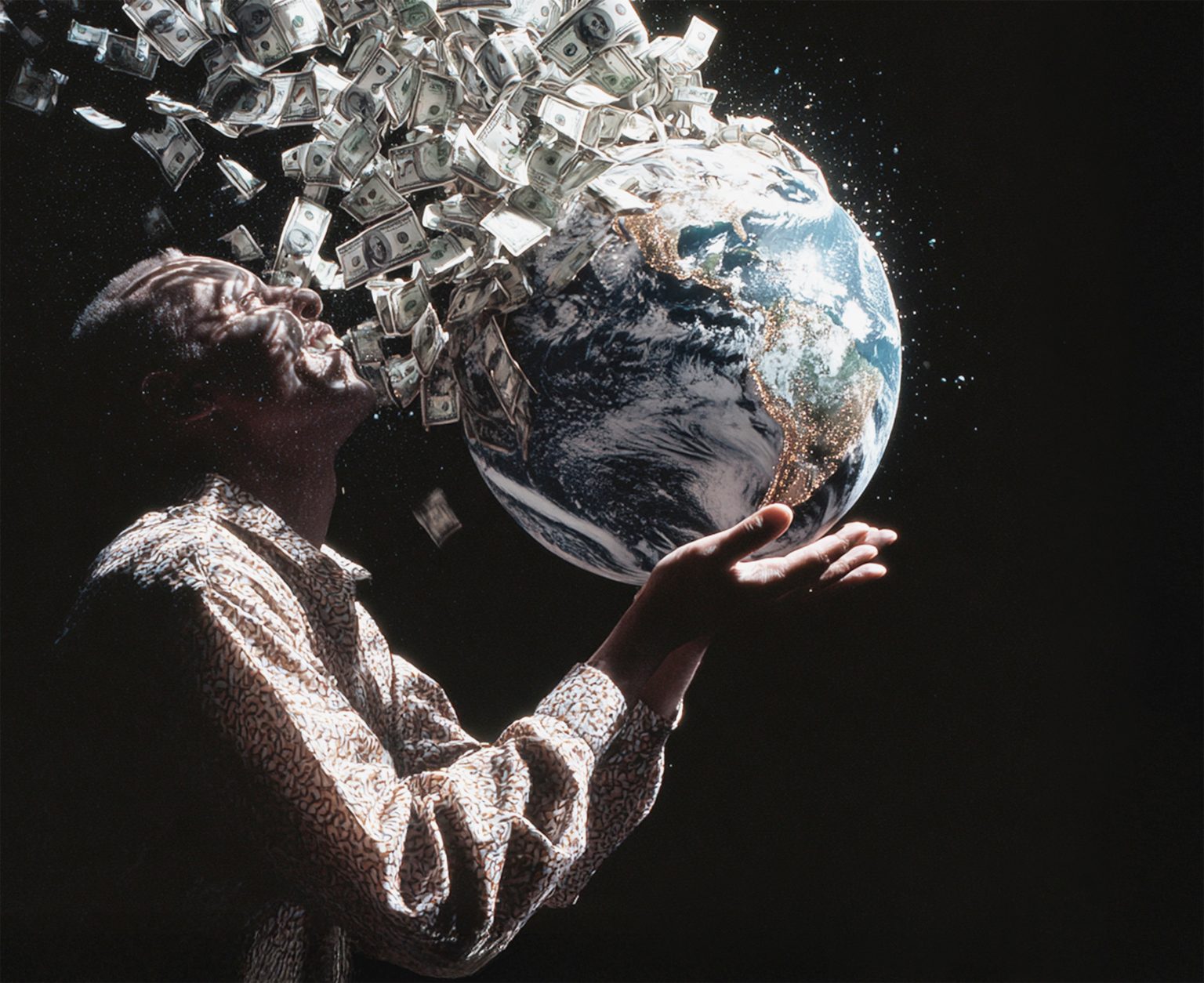
It estimates that billionaires are 4,000 times more likely than ordinary citizens to hold political office.
The organization attributes part of the latest rise in their fortunes to the policies of US President Donald Trump, including tax cuts for the wealthy, measures benefiting multinational corporations and weaker controls on monopoly power. The artificial-intelligence boom, which has delivered substantial returns to wealthy investors, has also contributed.
“The widening gap between the rich and the rest is at the same time creating a political deficit that is highly dangerous and unsustainable”, said Oxfam International Executive Director Amitabh Behar.
Oxfam is calling on governments to tax extreme wealth more heavily, curb the influence of money in politics and adopt measures aimed at reducing inequality.
It says the $2.5tn added to billionaire wealth last year was almost equivalent to the total wealth held by the poorest 4.1 billion people. The world’s 12 richest individuals now own more than the poorest half of humanity combined.
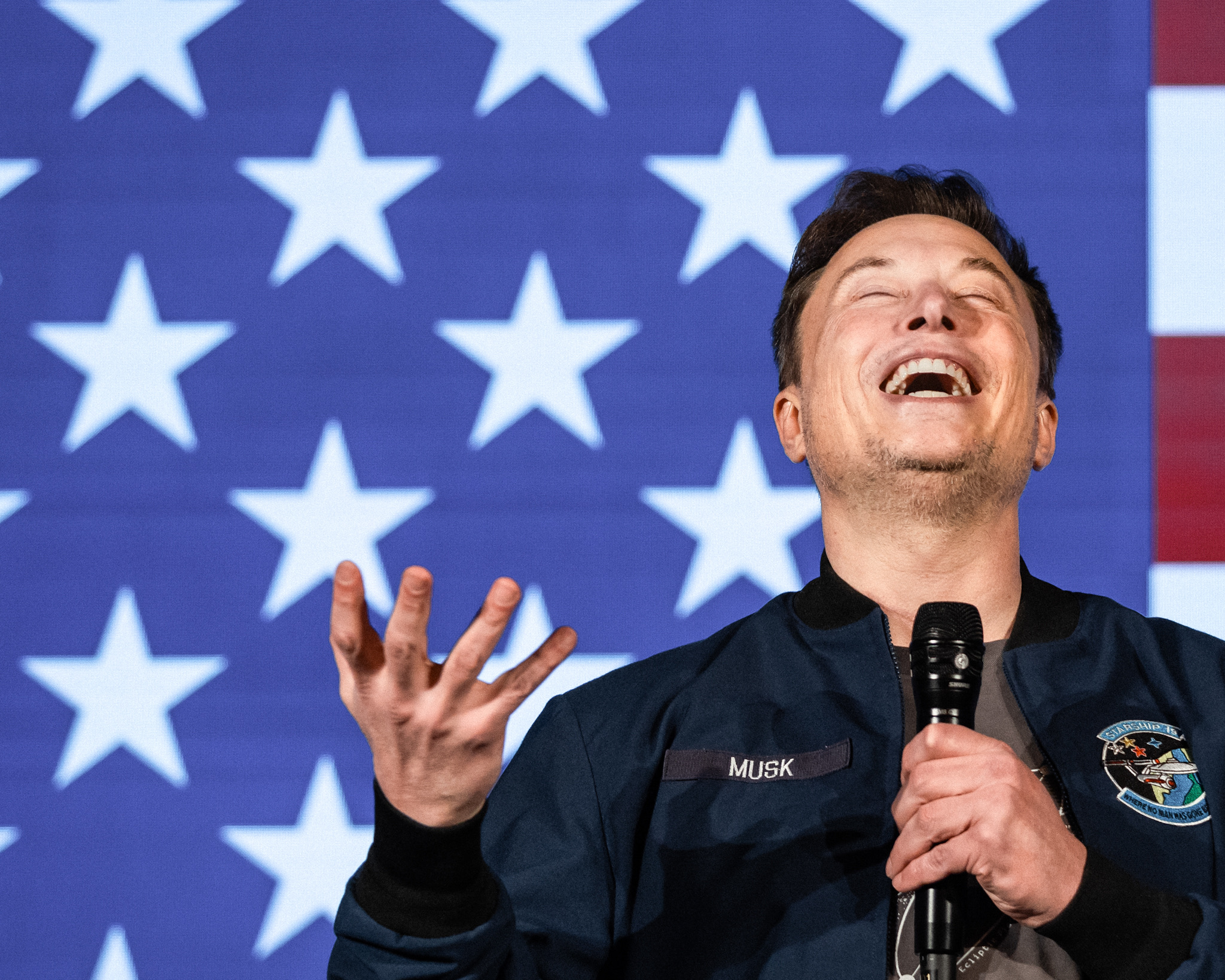
Tesla and SpaceX chief executive Elon Musk became the world’s first trillionaire in June 2026 after SpaceX went public, although subsequent falls in Tesla and SpaceX shares pushed his estimated fortune back below $1tn.
The report further warns that ultra-wealthy entrepreneurs are gaining increasing control over the media. More than half of the world’s largest media companies are now owned by billionaires, it says, naming Jeff Bezos, Elon Musk, Patrick Soon-Shiong and the French businessman Vincent Bolloré among them.
Where Billionaire Wealth Comes From
In its recent work on global inequality, Oxfam has also questioned how many of the largest fortunes were accumulated.
It argues that much of this wealth stems not from innovation, entrepreneurial skill, risk-taking or higher productivity but from inheritance, monopoly power and close ties to political authority.
The result, in Oxfam’s telling, is a world divided into two economic realities. In one, a narrow elite is accumulating wealth faster than ever. In the other, living standards for much of the population are improving only slowly, if at all.
Beyond the moral questions raised by inequality, the organization also examines its economic consequences. It notes that, when measured against a higher poverty threshold appropriate to middle-income countries, the number of people living in poverty worldwide has changed little since 1990.
Economic growth alone, it argues, does not automatically translate into lower poverty.
An analysis of World Bank data cited by Oxfam suggests that progress against extreme poverty could be up to three times faster if governments placed greater emphasis on reducing inequality.
Inheritance receives particular attention. In 2023, more people became billionaires through inherited wealth than through their own business activities for the first time. Oxfam expects that pattern to continue, estimating that more than $5.2tn will pass to the heirs of today’s billionaires over the next 30 years.
Monopoly Power, Political Influence and Colonial Legacies
Inheritance is only one part of the picture. Oxfam estimates that almost one-fifth of billionaire wealth derives from monopoly power, while a further 6% is linked to close relationships between economic and political elites.
It also traces present-day inequality back to colonial rule and an international economic system that continues to favor wealthy countries. Almost 70% of the world’s billionaires live in the global North.
Those countries control more than three-quarters of total billionaire wealth despite accounting for only a minority of the world’s population.
Oxfam proposes higher taxes on wealth and inheritance, stronger protection of labor rights and more robust welfare systems as ways of narrowing the divide.
It also advocates reforming international tax rules and improving cooperation between governments, particularly through the United Nations. The World Bank and International Monetary Fund are criticized for giving wealthy countries disproportionate influence.
Without changes to the way these institutions operate, Oxfam argues, global inequality will remain difficult to tackle systematically.
What Oxfam’s Argument Means for Central Europe
Oxfam’s broader case is that the global economy is structured in a way that consistently channels wealth toward a narrow elite. That argument also has implications for Slovakia and other post-communist countries.
Slovakia may not have a large number of dollar or euro billionaires, but its economy depends heavily on foreign corporations and supply chains built largely around assembly and subcontracting.
Oxfam describes comparable arrangements as a form of “modern colonialism”, in which profits are concentrated abroad while wages in the domestic economy remain low.
Low pay, light taxation of capital and property and pressure on public spending – particularly in education and health care – can produce a similar imbalance at national level: workers receive only a limited share of the wealth they help create.
The Visegrad Four countries – Slovakia, the Czech Republic, Poland and Hungary – have achieved substantial economic growth since 1989, yet a significant share of the profits generated has flowed to multinational companies and financial centers outside the region.
Countries with limited bargaining power often compete for investment by offering low taxes and low wages. Oxfam argues that this can deepen inequality and weaken public services, a pattern familiar across Central Europe.
Its calls for higher taxation of extreme wealth, monopoly profits and inheritance, together with stronger labor rights, therefore have particular resonance in the region.
Liberal Critics Challenge Oxfam’s Findings
The Austrian liberal think tank Agenda Austria argues that Oxfam produces similarly dramatic headlines around the World Economic Forum each year while relying on what it considers five serious flaws in the underlying statistics and reasoning.
The think tank does not dispute that global wealth is distributed unequally. Its central objection is that Oxfam draws conclusions from figures that measure different things and are therefore not always directly comparable.
Wealth Is Not Income
Agenda Austria first challenges Oxfam’s tendency to describe increases in net worth as though they were earnings.
A claim such as “Musk earns the average global annual income in four seconds” can create the impression that the money is being paid directly into his bank account. In reality, such calculations generally reflect changes in the value of assets, particularly company shares.
A rising share price can therefore increase an individual’s estimated fortune without producing an equivalent cash income.
Fluctuating Share Valuations Are Ignored
This distinction is particularly important in the technology and artificial-intelligence sectors, where company valuations can rise sharply within months and fall just as quickly.
Agenda Austria argues that Oxfam highlights increases in wealth without giving sufficient weight to this volatility. A surge in the value of shares may create substantial gains on paper, but it does not mean that their owner has withdrawn or received the same amount in cash.
Indian journalist Shekhar Gupta has also criticized Oxfam’s inequality calculations, questioning its definition of wealth and arguing that its comparisons produce a distorted picture.
Poverty Depends on the Definition
Agenda Austria also points out that estimates of global poverty depend heavily on the threshold being used.
The World Bank now defines extreme poverty as living on less than $3 a day in 2021 purchasing-power-parity terms. An estimated 847 million people were below that line in 2024, or approximately one-tenth of the world’s population.
The bank also applies higher benchmarks to countries at different income levels. Its threshold of $8.30 a day is used for upper-middle-income economies. Measured against that standard, almost half of the global population can be classified as poor.
Claims that half the world lives in poverty may therefore reflect the chosen threshold as much as actual living conditions.
Economics journalist Felix Salmon has also criticized Oxfam’s use of net wealth – assets minus liabilities – to compare the richest people with the poorest half of the world. He argues that the measure can rank heavily indebted people in wealthy countries below people who own almost nothing but have no debts, making it a poor guide to actual living standards.
Researchers Maya Forstater and Vijaya Ramachandran of the Center for Global Development have raised a broader objection. They argue that juxtaposing the fortunes of a handful of billionaires with the assets of the world’s poorest people can obscure the deeper causes of poverty, including weak institutions, limited economic opportunities and underdevelopment.
Poverty Can Fall While Inequality Rises
Agenda Austria rejects the assumption that rising inequality must necessarily mean rising poverty.
A society can become more unequal while the living standards of its poorest members improve. The think tank points to the substantial long-term decline in extreme poverty, despite repeated economic crises and the accumulation of vast fortunes by entrepreneurs such as Elon Musk.
Its argument is that wealth creation at the top and falling poverty at the bottom are not inherently contradictory.
Inequality and Political Power Are Not the Same
The think tank’s final objection is that Oxfam too readily links economic inequality to political influence that threatens democracy.
Agenda Austria argues that the two issues should be examined separately. Treating inequality itself as evidence of excessive political power, it says, leads too quickly to demands for higher taxes without first identifying the precise institutional problem.
Its conclusion is that poor people are not poor simply because rich people are wealthy. Poverty, it argues, is more directly associated with weak institutions, poor economic and regulatory conditions, a shortage of jobs and low productivity.