
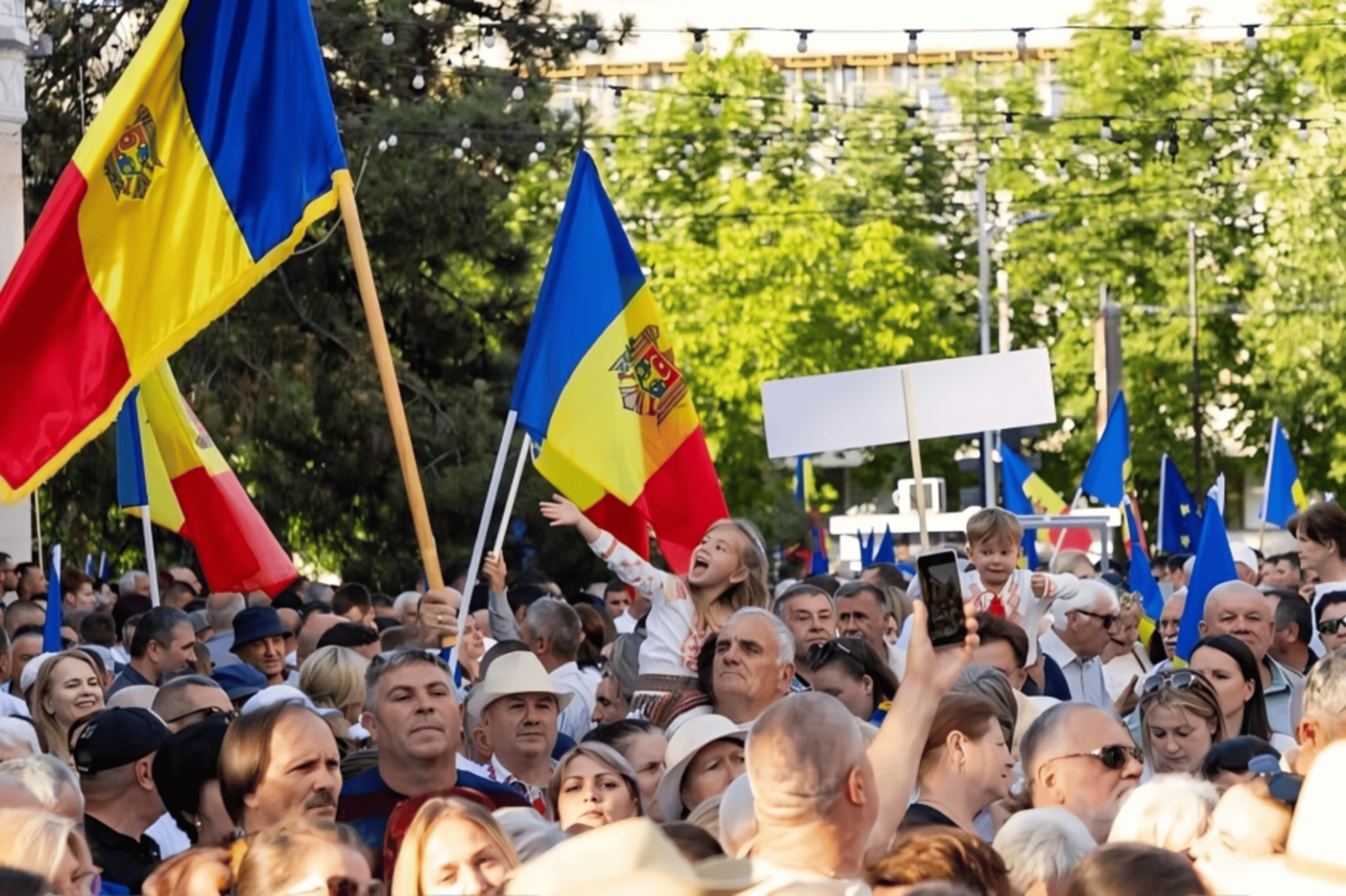
Moldovan President Maia Sandu has stated that if a referendum were held in Moldova on reuniting the 2.4 million-strong Moldova with 19 million-strong Romania, she would vote in favor. She justified her decision historically and pragmatically in the British podcast The Rest is Politics (RIP).
Her Romanian counterpart Nicușor Dan responded diplomatically, stating that as long as the citizens of Moldova themselves are not interested in reunification, there is no reason for it. According to the latest survey from last summer, which was conducted on a sample of 1,116 respondents, 26 percent of Moldovans support unification with Romania.
Not all independence is the same
Despite the interstate and Schengen border between them, ties between the countries have traditionally been warm. It should be noted that Moldovan and Romanian citizens are fighting in Ukraine as part of volunteer units under the banner of a single Romanian combat group, "Getica,"which consists of Romanian-speaking citizens of both countries.
"The survival of democracy and independence in small countries such as Moldova is becoming increasingly difficult, as is resisting Russia's influence," Sandu said in response to a question about why she would vote for unification with Romania, which would mean the end of her presidential term.
Like Georgia and Serbia, the Republic of Moldova is larger on paper (de jure) than it is in reality (de facto). A thin, long strip of territory between the Dniester River in the west and the Moldovan-Ukrainian border in the east falls under the disputed Transnistria region.
Although UN countries consider the territory to be part of Moldova, since the 1990s, when Russia supported the separatists, it has been an unrecognized state with ties to Moscow, which maintains a garrison of about 500 "peacekeepers" in the area.
Among others, war criminal and later defense minister of the self-proclaimed Donetsk People's Republic, Igor Vsevolodovich Girkin, known as Igor Ivanovich Strelkov, took part in the fighting on the side of the separatists.
It should be noted that on March 16, 2022, the Parliamentary Assembly of the Council of Europe adopted a resolution designating the territory of the self-proclaimed republic as "occupied territory" by Russia—until then, it had been listed as being "under the effective control of the Russian Federation."
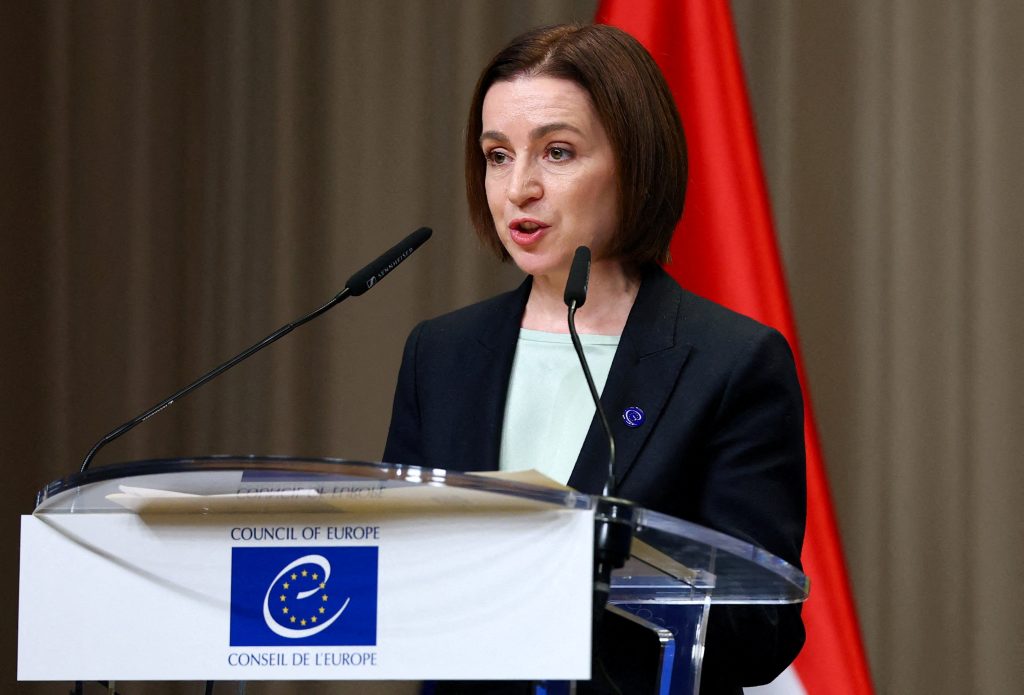
"The leadership of the Russian Federation, through its stance and actions, poses an open threat to security in Europe and is pursuing a course that includes military aggression against Moldova and the occupation of its Transnistrian region," the Council of Europe said in a statement.
In June 2025, former Moldovan Prime Minister Dorin Recean warned that Russia was trying to influence the September parliamentary elections in Moldova with the aim of establishing a government that would allow the deployment of 10,000 Russian troops. They would occupy the Transnistria region.
Receantold the Financial Times that Moscow is spending significant resources on propaganda, online disinformation, and illegal financing of political parties. "Their propaganda and communication mechanisms are very powerful. They are spending a lot of money," he said. In 2024 alone, he said, the Russian regime spent the equivalent of one percent of the country's GDP on influence operations in Moldova.
Shortly before the parliamentary elections, the press department of the Russian Federation's Foreign Intelligence Service (SVR) even stated that, regardless of the outcome, NATO would proceed with the de facto occupation of the country.
"Fearing a direct confrontation with big Russia, Europeans have decided to take it out on little Moldova. Asserting oneself at the expense of the weak has always been an integral part of European colonialism," the agency's website stated. Of course, the occupation of Moldova did not take place after the elections.
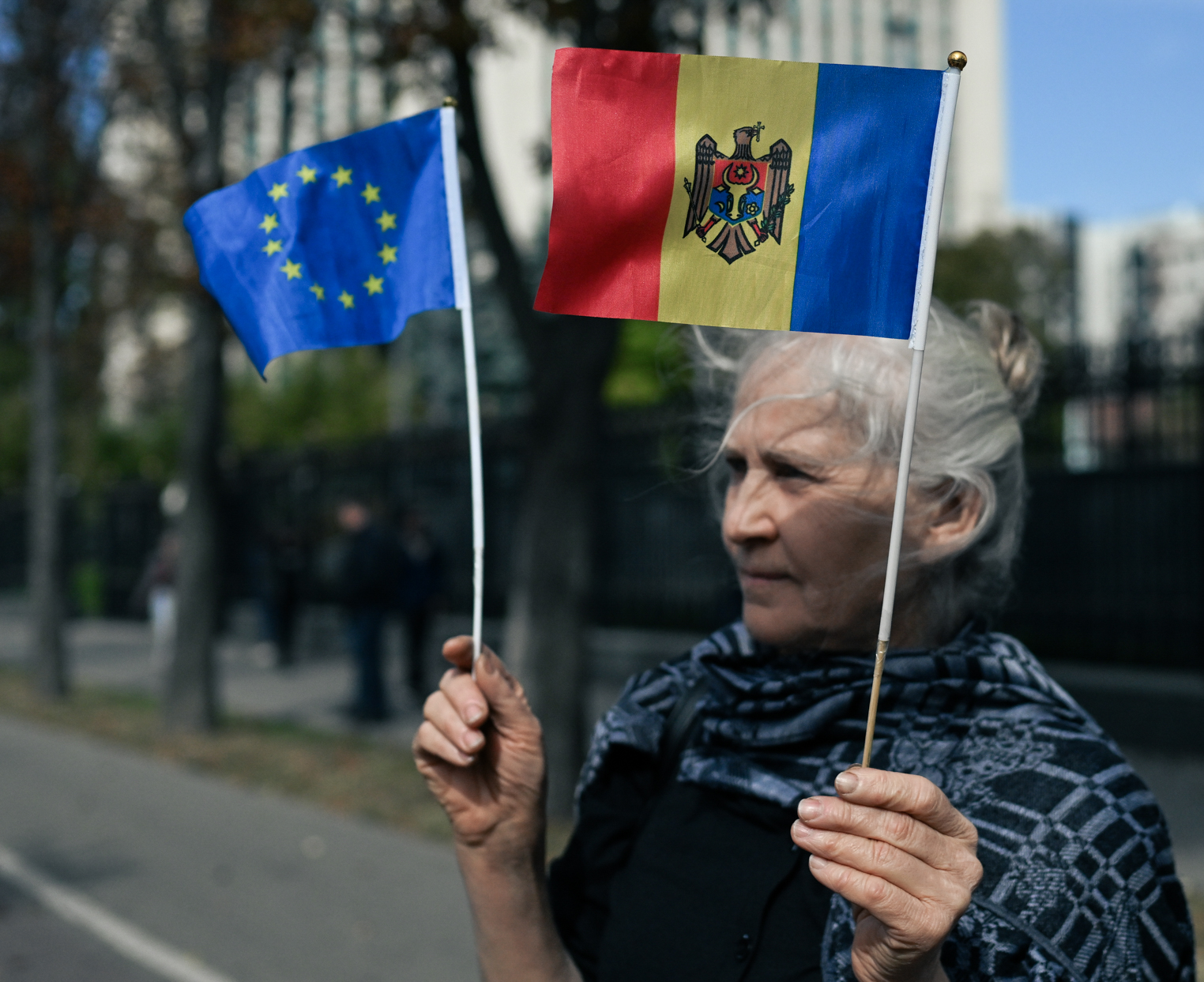
The victory of President Maia Sandu's pro-European Party of Action and Solidarity (PAS) meant the continuation of European integration for Moldova, which Moldovans had requested by a narrow majority in a referendum in 2024. Moscow was not pleased with the election results, nor with the president's support for the idea of a united Romania.
History speaks for itself
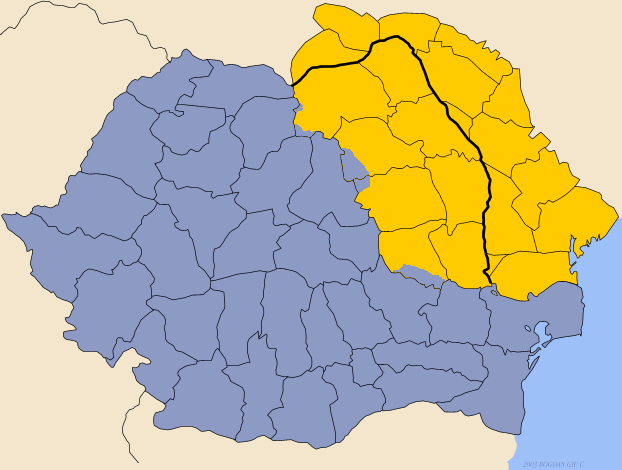
The western part of historic Moldova (Moldova) is currently part of Romania, along with Wallachia (Țara Românească) and Transylvania (Transilvania), while the eastern part of this historic country has its own statehood.
The current borders were established during the turbulent 20th century. After the Bolshevik coup and the collapse of the Russian Empire, the eastern part of Moldova became part of the Kingdom of Romania in 1918, which was confirmed internationally in the Paris Agreement in 1920, similar to the recognition of Czechoslovakia in the Trianon and Versailles agreements.
The secret annex to the Soviet-German Non-Aggression Pact of 1939 did not only concern the partition of Poland or the occupation of the Baltic states by the Soviet Union – on the basis of this annex, the eastern part of Moldova fell to the Soviet Union. In 1940, the Kremlin established the Moldavian Soviet Socialist Republic on its territory.
Shortly after the German attack on the Soviet Union began on June 22, 1941, Romanian troops managed to drive the Red Army out of Moldova, but by the summer of 1944, the country was once again under Moscow's control, and even after the end of World War II, the Kremlin kept the territory of eastern Moldova for itself, enforcing the 1940 borders.
Slowly but surely?
Chisinau declared independence in 1991, when the Soviet Union was already falling apart. Since 1940, the Moldavian Autonomous Soviet Socialist Republic, originally Ukrainian territory, had been part of the Moldavian SSR. Its ethnic composition and national consciousness were significantly transformed during the Soviet presence, and it is currently under Russian occupation again under the name Transnistria.
In 2023, the official language of Moldova was changed from Moldovan to Romanian, which in its Moldovan variant contains a smaller number of words borrowed from Russian, a consequence of the Russification policy in the republics of the Soviet Union. This also included the transformation of the regional identity of Moldovan Romanians into a Moldovan national identity.
"Pro-Russian forces in Moldova and the Kremlin... have always questioned the view that the majority population is ethnically Romanian and speaks Romanian," noted Cristian Cantir, a Moldovan associate professor of international relations at Oakland University, after the law on renaming the state language was passed.
German sociologist Max Weber aptly noted that "the whole of history shows how easily political will can awaken a belief in blood ties, if there are no major anthropological differences standing in the way." Although the Romanian nation, divided into two states, currently lacks the political will to unite, the blood ties between them are undeniable.
However, the final say will ultimately be up to the Moldovan citizens, who may one day vote in a referendum on whether to join Romania. Many Moldovans would not even feel the end of Moldova's statehood if it were to join Romania, as approximately 60 percent of them already have Romanian citizenship in addition to Moldovan citizenship.