
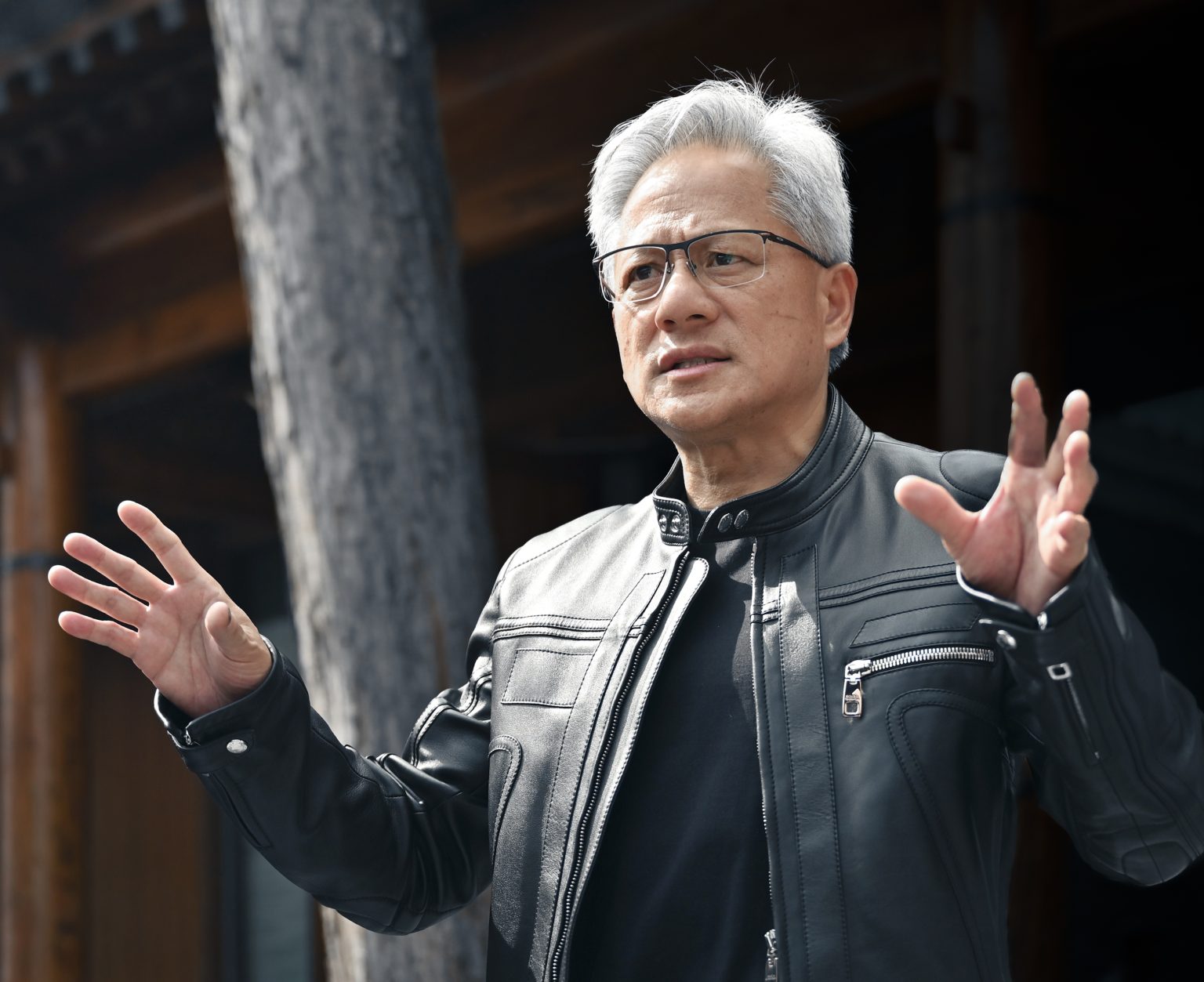
Nvidia plans to make a "huge" investment in OpenAI, possibly the largest in its history, CEO Jensen Huang said on Saturday. At the same time, he denied being dissatisfied with the developer of the ChatGPT platform.
The chipmaker announced plans in September to invest up to $100 billion in OpenAI. The deal would provide the ChatGPT model developer with the necessary cash and access to advanced chips. These are key to maintaining its dominance in an increasingly competitive environment.
What the American daily
The Wall Street Journal reported last Friday that the plan to help OpenAI train and operate its latest artificial intelligence models had stalled after some people within chip giant Nvidia expressed doubts about the deal.
Citing well-informed sources, the American daily reported that the companies are currently reevaluating the future of their partnership. According to sources, Nvidia CEO Huang has privately emphasized to industry colleagues in recent months that the original $100 billion deal was neither binding nor finalized, the article said.
Huang also privately criticized what he described as a lack of discipline in OpenAI's business approach. He also expressed concerns about competition from Google (Gemini AI model) and Anthropic (Claude AI model), the WSJ added.
"We have been OpenAI's preferred partner for the past ten years. We look forward to continuing our collaboration," a Nvidia spokesperson said tersely in an email statement to Reuters.
Huang claimed something different from the WSJ
However, in an interview with reporters in the Taiwanese capital Taipei on Saturday, Huang said it was "nonsense" to claim that he was dissatisfied with OpenAI.
"We are investing huge amounts in OpenAI. I believe in OpenAI, the work they are doing is incredible. They are one of the most important companies of our time, and I really enjoy working with Sam," he said, referring to OpenAI CEO Sam Altman.
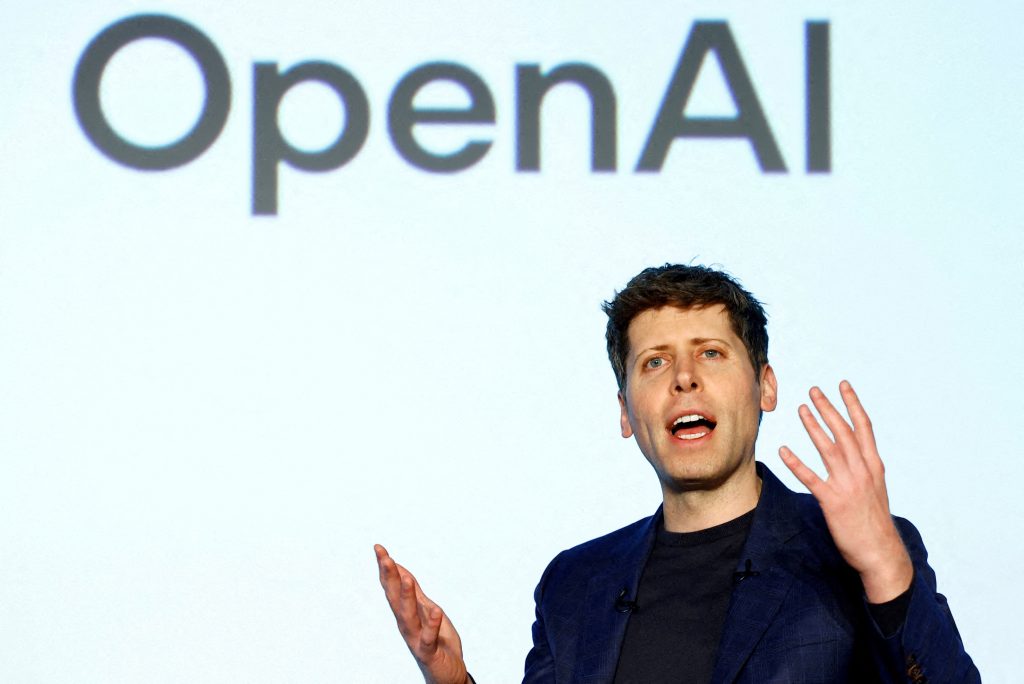
"Sam (Altman) is closing the (investment) round, and we will definitely be involved," Huang added. "We are investing a lot of money, probably the largest investment we have ever made."
When asked if it would be more than $100 billion, he replied, "No, no, nothing like that." It's up to Altman to announce how much he wants to raise, Huang added.
The key role of TSMC
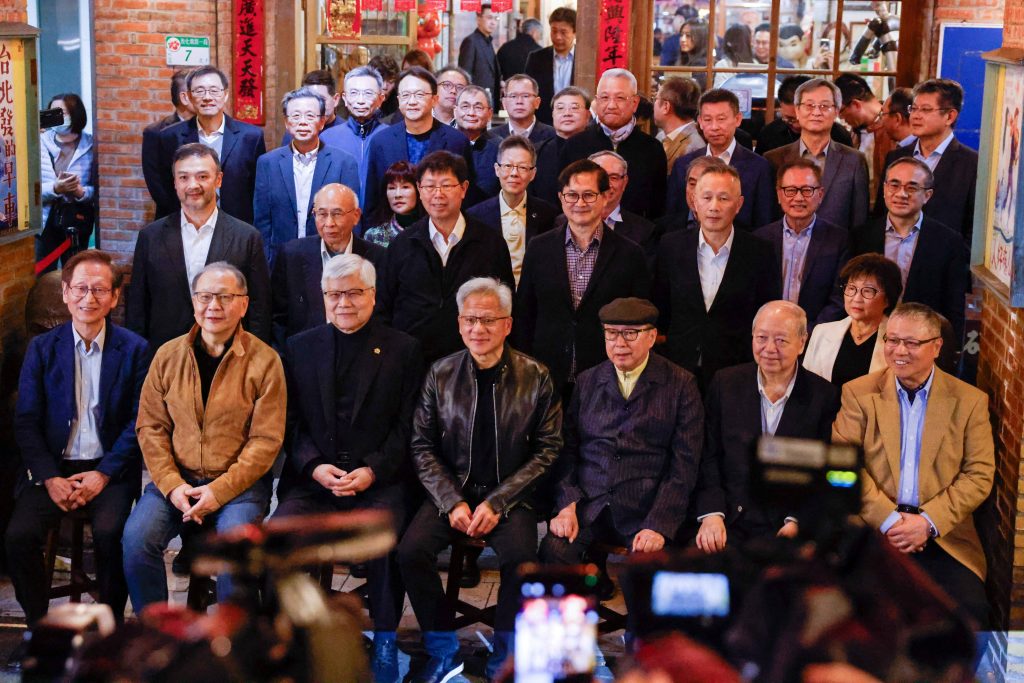
The Nvidia CEO spoke Saturday evening at an impromptu press conference in the rain outside a restaurant in Taipei after hosting his key suppliers in Taiwan. This included the world's largest contract chipmaker, TSMC.
The event was dubbed the "trillion-dollar dinner" by the Taiwanese media due to the combined market capitalization of the participating companies.
During his visit to his native island, Jensen Huang gently persuaded his main Taiwanese suppliers to produce more to help meet the strong demand for artificial intelligence.
"TSMC has to work very hard this year because I need a lot of wafers [thin slices of silicon used to make microchips, editor's note]," he said with a laugh, referring to Taiwan Semiconductor Manufacturing, the world's largest manufacturer of advanced chips used in artificial intelligence applications.
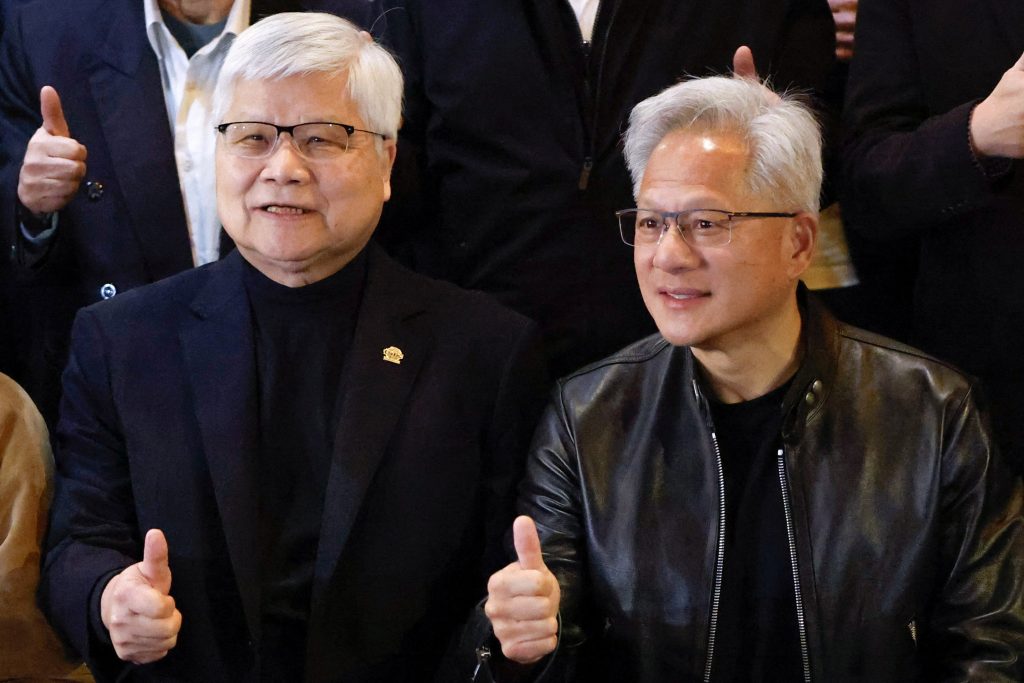
"TSMC is doing an incredible job and working very, very hard. We have a lot of demand this year," he added after taking a photo with its CEO, Che-Chia Wei.
"Over the next ten years, TSMC is likely to increase its capacity by more than 100 percent, so that's a very significant increase over the next decade."
TSMC said last month that its capital expenditures could rise 37 percent this year to $56 billion. In 2028 and 2029, they could increase "significantly" due to demand for artificial intelligence.
Homecoming
Huang, who emigrated to the United States as a child, is greeted by crowds of enthusiastic fans everywhere he goes in Taiwan. The local media, which refers to him as the "father of the people," eagerly reports on his every move.
In 1993, he co-founded California-based Nvidia. Last year, it became the first company to exceed $5 trillion in market value, continuing its meteoric rise that has firmly placed it at the center of the global artificial intelligence revolution.
Huang regularly left the dinner, attended by two dozen executives, including Foxconn (the world's largest electronics manufacturer) CEO Young Liu, to greet his fans and sign autographs.
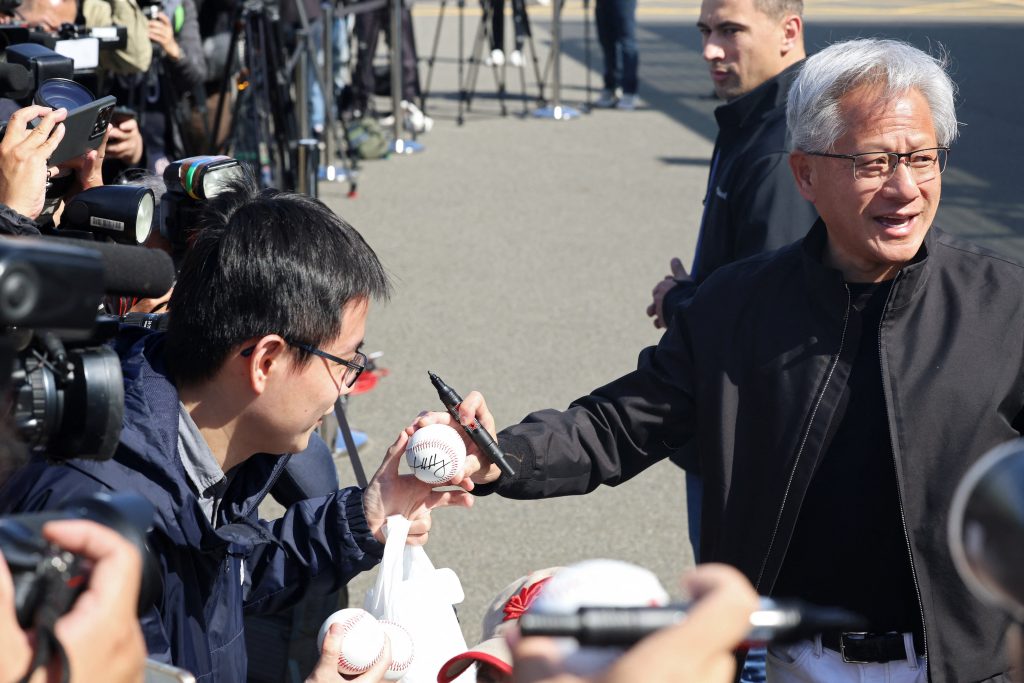
"We have so many partners here in Taiwan. Without Taiwan, Nvidia would not be possible. This island has a magic. The companies here have extraordinary technologies and an incredible culture," he said when asked how he feels about the "movie star" fame he experiences during each visit. "I am really proud of Taiwan," concluded Huang, a native of the island.
(reuters, im)