
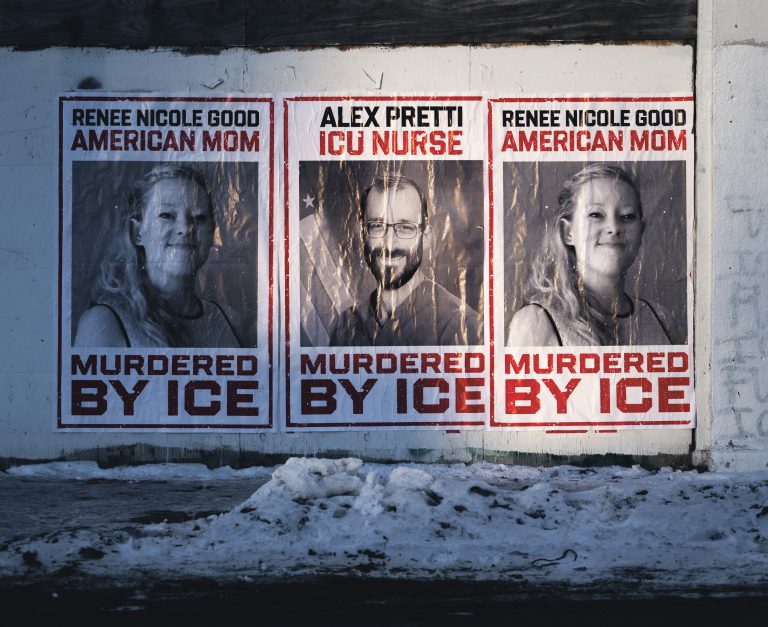
Since January, American migration activists have had two martyrs: Renée Goodová and Alex Pretti. Shortly after each other in January, they were shot by members of the federal Immigration and Customs Enforcement (ICE) and Customs and Border Protection (CBP) agencies when the activists got into a conflict with them while filming a raid against illegal migrants in Minneapolis.
Coincidentally, George Floyd died during an arrest in the same city years ago. After his death, the drugged-up violent offender and repeat offender became a martyr whose name helped raise the wave of the Black Lives Matter movement. The media is now trying to turn Good and Pretti into mobilizing icons of protest against Trump's immigration policy. But they prefer not to mention why the immigration police are so interested in Minneapolis.
The deployment of several thousand armed personnel to a city of half a million people is related to the local Somali community. A third of the approximately 250,000 Somalis in the US live in the Minneapolis area, where they represent a significant minority.
Minneapolis as a laboratory
Over the last quarter-century, their numbers have increased sevenfold, due to both the size of Somali families and intense immigration. About half of the Somalis in Minneapolis were born in the US and half in Africa. Unlike immigrants from East Asia, for example, Somalis have problems integrating, struggle with English, and live on social benefits.
It was widespread benefit fraud that caught the attention of the Trump administration. A police investigation uncovered mafia-like structures formed by Somali clans that diverted about a billion dollars from COVID and other humanitarian benefits. Some of the money probably flowed to Somalia into the accounts of Islamist militant leaders.
It is clear that fraud on such a scale would not have been possible without the involvement of local authorities. Despite repeated warnings, politicians and officials refused to see the Somali injustices. Some got involved themselves, others have been brainwashed by multicultural propaganda and automatically see Africans as victims to whom white America allegedly owes an unpayable debt. Others want to succeed in Minneapolis politics, where it is necessary to be on good terms with Somalis.
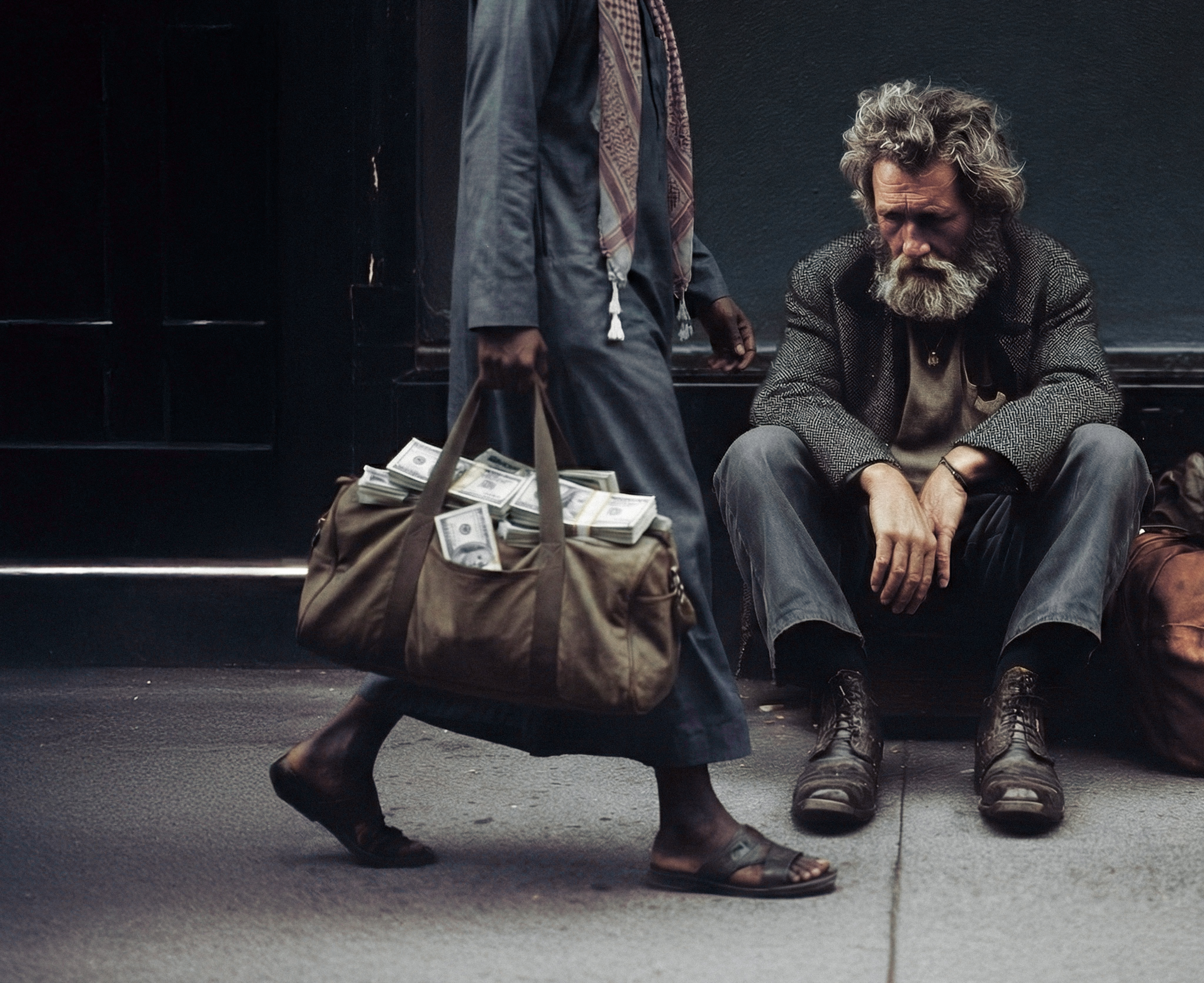
The city sent Ilhan Omar, born in Mogadishu, to the House of Representatives. She is easily recognizable by the hijab she wears in public. Mayor Jacob Frey narrowly defended his position against Senator Omar Fateh because the local Somali clans could not agree, and Omar supported Fateh, while Ahmed Hersi, her ex-husband, supported Frey.
The deployment of immigration police units to arrest and deport illegal immigrants does not solve the problem of benefit fraud, which is being addressed by other agencies, but it does shake up the local organized crime underworld. Moreover, Donald Trump is making Minneapolis an exemplary case of his Democratic opponents' mismanaged immigration policy. Mayor Frey is a Democrat, and Minnesota Governor Walz was even Kamala Harris's vice presidential candidate.
Trump's federal armed forces therefore arrived in a hostile environment. They could not count on the support of local authorities or the police. On the contrary, Soros and other NGOs are mobilizing activists who are making their interventions as difficult as possible. They know that if they provoke conflict, they will be able to accuse the Trump administration of police violence and win over those who are otherwise bothered by uncontrolled migration.
Who will be the next icon?
The case of Renée Good is particularly tragic. She was going through a difficult period in her life, left alone with her children after the death of her husband, and her life was turned upside down. Her new lesbian partner drew her into activism, something she had not been inclined to do before.
She lost her life when, at her instigation and despite the police's warnings, she drove her car into them. They apparently fired out of fear of being hit—one of them had recently experienced this. Alex Pretti went even further to meet his fate.
He had been fighting with the police for a week before the incident, damaging the rear light of their car with a kick. They shot him when he resisted and was armed. Whether the shooting was justified must be proven by an investigation. It will probably not be an independent investigation: either Trump will be able to protect his people, or progressives will prevail in the government machinery.
Both activists did what they shouldn't have done, but they paid too high a price for it. They are unlikely to become icons. Unlike George Floyd, both had clean criminal records, were fighting for a political cause, and did not harm anyone except the SWAT team. But in the progressive environment of the new racists, they are burdened with a serious handicap: they were white.
Somalis themselves prefer not to show up on the streets. They fled to the US to escape civil war and know that when men with guns are walking the streets, it's better to stay out of the way. If progressives want a real icon, they'll have to work on it some more.
Ashli Babbitt did not become an icon either. She was also shot by a police officer, but this time the media sided with the shooter. Babbitt died in Washington when Trump supporters stormed Congress in January 2021 to protest Biden's election victory. She was unarmed, did not commit any violence, but was in a place where she should not have been. She was killed by a Black police officer who fired blindly into the crowd in a panic.
The liberal media initially concealed his identity and then celebrated the black police officer as a defender of democracy. He did not even go to trial. By comparison, the white police officer responsible for the death of Floyd, a violent repeat offender, was sentenced to 22 years behind bars, where he was then nearly stabbed to death. After Trump's return, Babbitt's survivors at least received compensation for her wrongful killing.
How to tackle the migration problem
The Minneapolis tragedy shows how difficult it is to deal with migration once migrants have crossed the border. European politicians continue to complain that return policies are failing, while criminal networks are emerging at home, penetrating even into politics.
Trump is trying to tackle this with force, but in doing so he is leading society towards civil war.
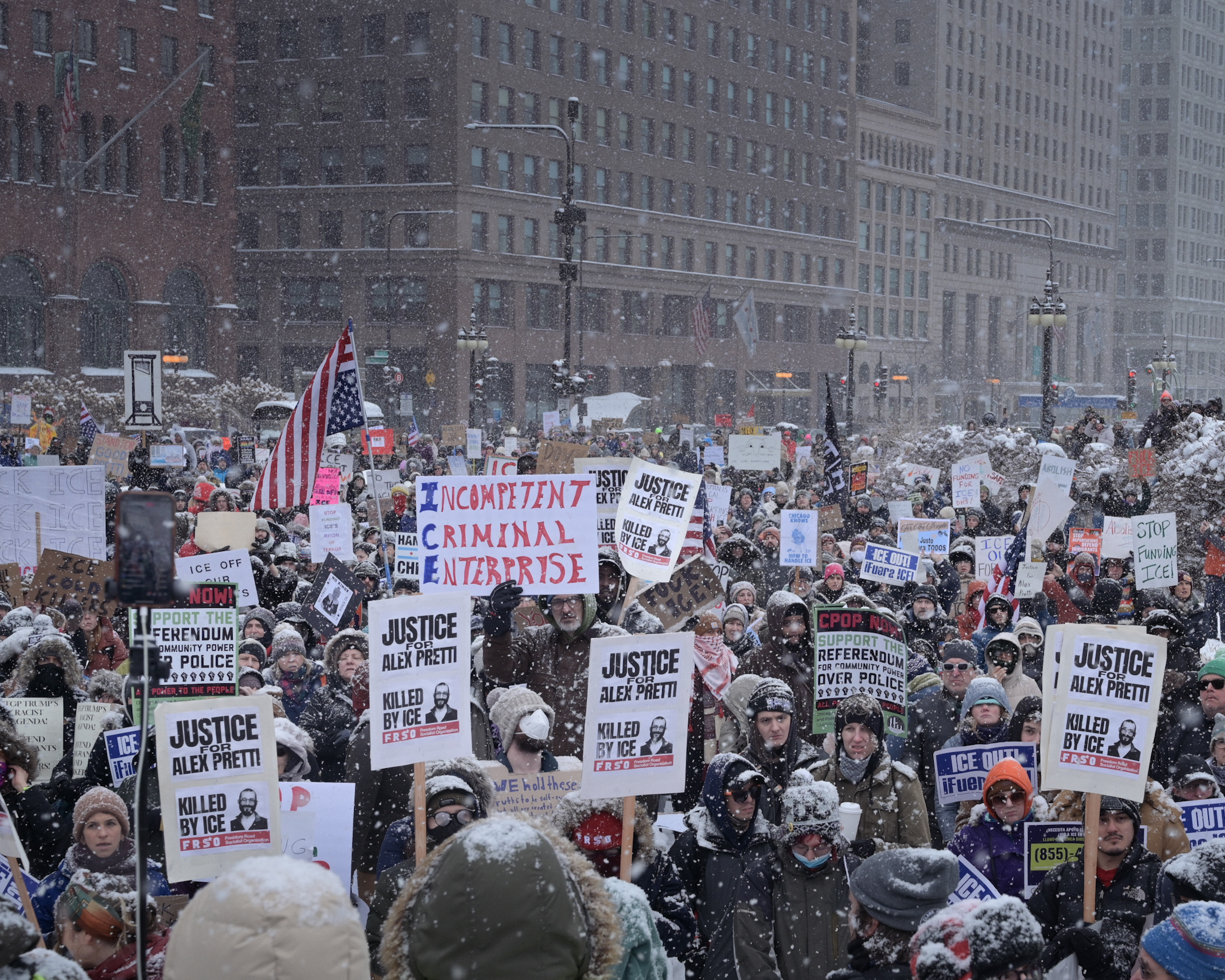
Angry activists are moving from defending migrants to attacking fellow citizens they associate with Trump. In Minneapolis, after a friendly visit to a mosque, they attacked a church service where wealthy "white racists" were gathered.
In addition, police forces under Democratic governors and mayors are repeatedly coming into conflict with federal forces. In a tense atmosphere, these police wars could escalate into violence.
America is more polarized than ever before. Whether Trump persists or backs down, violence looms. On the other hand, images from American streets may serve as a warning to anyone who wants to seek their fortune there. This would have the opposite effect to Merkel smilingly taking a selfie with an illegal Syrian migrant. That alone would be a success.