
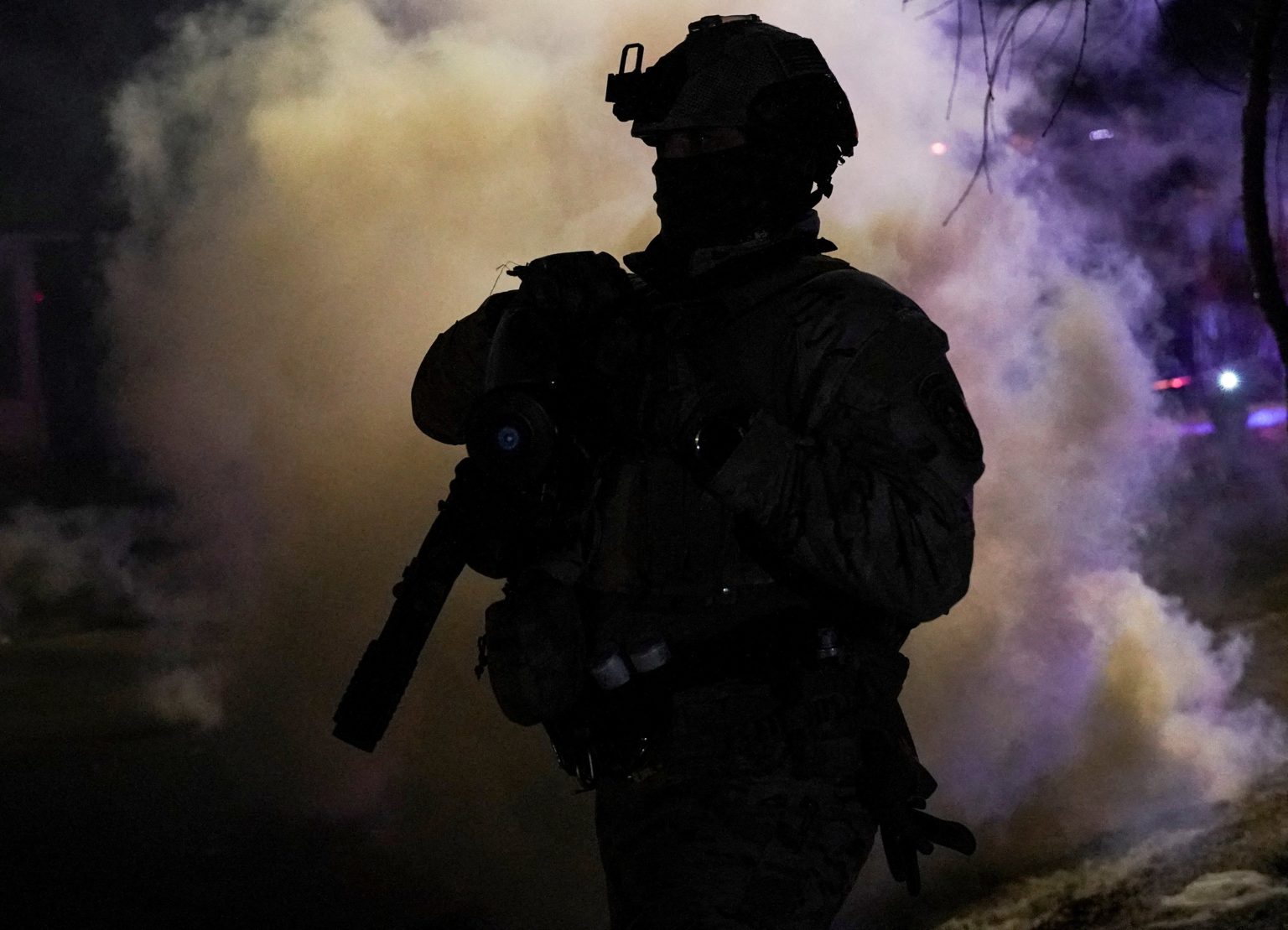
At the end of January this year, the Times reported on the use of chemical weapons by the Russian army in Ukraine, stating that the Kremlin is constantly intensifying its use of substances that violate the Chemical Weapons Convention (CWC). Only three countries have not signed the convention: Egypt, South Sudan, and North Korea.
Russia and Ukraine have long accused each other of using chemical weapons.
In February 2025, a volunteer from the Russian army's air defense unit (PVO) specializing in drones provided Štandard with a photo of Ukrainian leaflets concerning the use of combat gas, which defenders dropped on enemy positions.
Accusations against evidence
"Hello, Russian occupiers! You are increasingly laying anti-personnel mines and using combat gas. If you continue such combat activities, we will respond in kind!" the leaflet states in Russian.
In the summer of 2025, German and Dutch intelligence officials spoke about the use of chemical weapons against defenders. "The use of tear gas and chloropicrin by Russian troops has now become common and widespread practice," the Germans and Dutch said in a joint statement in the summer.
Russia's violations of the Chemical Weapons Convention were confirmed in three reports by the Organization for the Prohibition of Chemical Weapons (OPCW) and in a joint statement by 55 states adopted at the 30th meeting of the OPCW Contracting Parties in November 2025.
The presence of chlorobenzylidene malononitrile, also known as CS gas, was confirmed in November 2024 by two laboratories that, at the request of the OPCW, independently examined samples of Russian grenades and soil from near a Ukrainian trench. Based on chemical analyses, the OPCW confirmed for the first time in its report of November 18, 2024, the use of Russian chemical warfare agents.
Although it is often considered "non-lethal," its use in enclosed spaces or in high concentrations can lead to serious health problems, including breathing difficulties, skin burns, and, in extreme cases, death.
In a report dated February 14, 2025, based on research by laboratories commissioned by the organization, the OPCW mentioned not only CS gas but also the more outdated chloroacetophenone (CN), which the aggressor used in October 2024 against Ukrainian army positions in the Dnipropetrovsk and Donetsk regions.
On June 20, the OZCHZ, referring to an analysis carried out at selected scientific institutions, confirmed the repeated use of CS gas by the Russian army – this time, however, there was no evidence of CN gas.
A familiar procedure
"Particularly disturbing is the tactic of deliberately using dangerous chemical ammunition to 'burn out' Ukrainian defenders from closed positions, exposing them to direct fire," said Myroslav Kastran, Ambassador Extraordinary and Plenipotentiary of Ukraine to the Slovak Republic, in a statement sent to the editorial office of Štandard.
Although we are talking about chloropicrin, which is only lethal in high concentrations, this is a clear and deliberate violation of the Chemical Weapons Convention. The United States first accused Moscow of using chloropicrin in May 2024.
According to Kastran, between 2024 and 2025, the Kremlin expanded its use of dangerous chemicals by deploying modified Molnya-2 unmanned aerial vehicles capable of delivering tear gas grenades over a distance of 40 to 80 kilometers.
"This significantly increases the risks not only for Ukrainian soldiers but also for the civilian population and raises legitimate concerns about the possible use of similar tactics in adjacent populated areas near the front line," explains the Ukrainian ambassador in Bratislava.
He adds that the Russians continue to use K-51 and RG-Vo grenades, as well as other ammunition filled with dangerous chemicals and toxic industrial substances, which they often drop on defenders using various unmanned aerial vehicles.
Molotov cocktail
The aforementioned joint report by the German and Dutch intelligence services also states that, in addition to traditional Soviet-type chemical carriers, the Russians are also attaching light bulbs and bottles filled with toxic mixtures to drones.
According to the Ukrainian Ministry of Defense, the Russian use of chemical weapons has claimed at least three lives. The low number is due to the fact that the statistics only record soldiers whose lives were directly claimed by the chemical, and not secondary hits by conventional ammunition after the defender left his shelter under the pressure of the combat agent.
The number of chemical grenades and improvised carriers of toxic substances used since the beginning of the war is around ten thousand. The Kremlin has not yet presented evidence of the use of chemical weapons on the Ukrainian side.
It should be noted that General Igor Kirillov was considered the main initiator of the use of chemical weapons in Ukraine, but after his assassination in December 2024, the use of chemical weapons intensified.